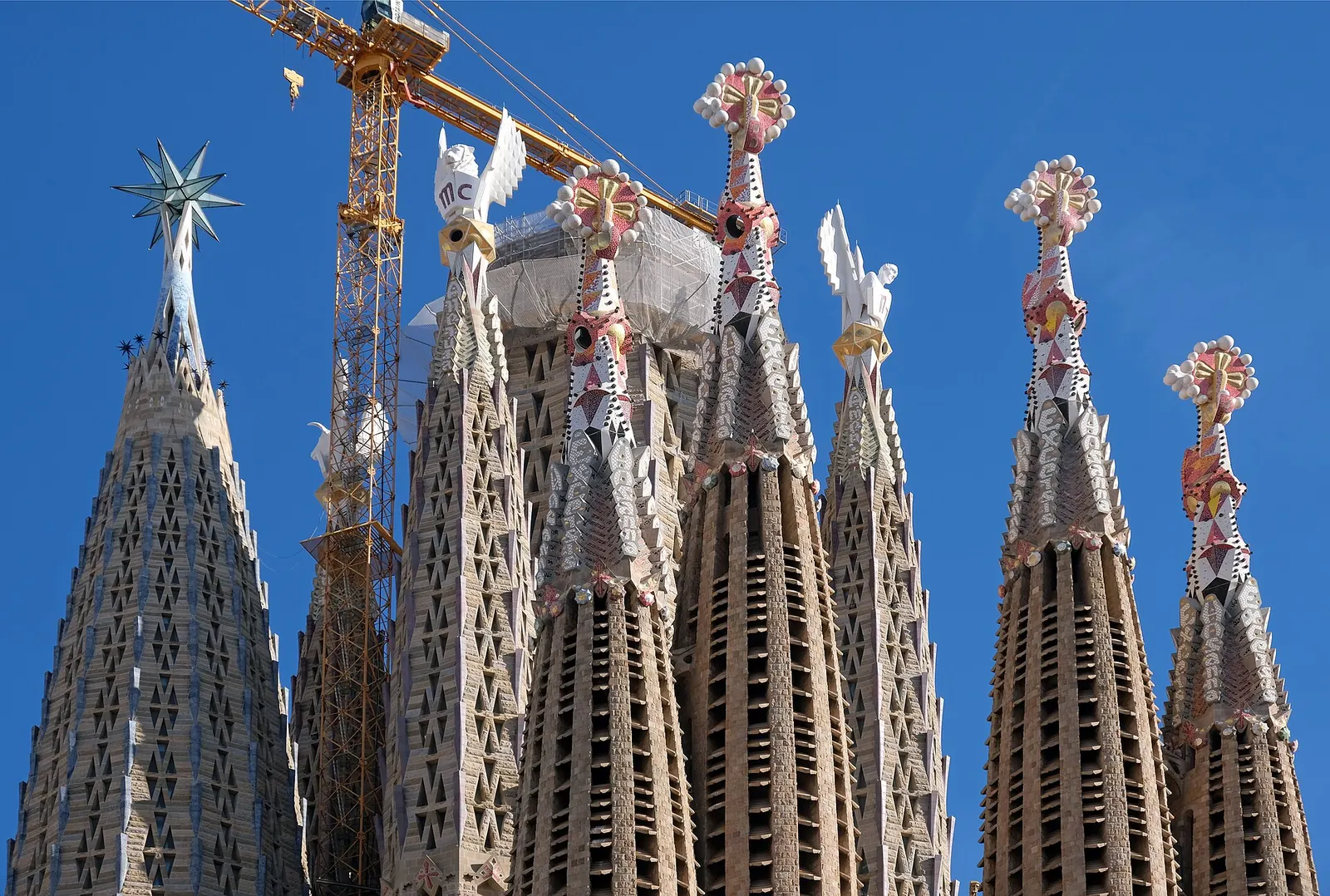
Barcelona combines a walkable old town, striking modernist buildings and city beaches. Evenings start late, so plan long dinners and leisurely strolls.
Good to know
- Best time to go
- May, June, September and October
- Flight from New York
- about 7h 55m nonstop
- Local time
- —
- Currency
- Euro (EUR)
- Languages
- Spanish and Catalan
Flight time is an estimate based on distance; actual schedules vary by airline and route.
Highlights
- Modernist architecture
- City beaches
- Late-evening dining
History
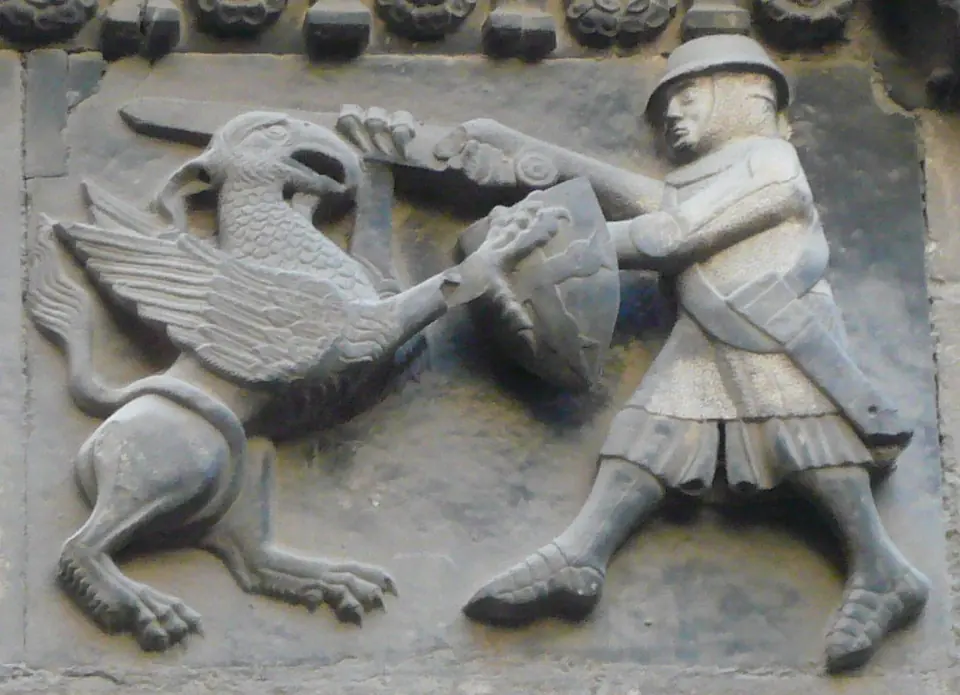
Barcelona was Barcino, a modest Roman retirement town founded around 15 BC under Augustus — you can still walk its walls in the Gothic Quarter's basements. The medieval counts of Barcelona built a Mediterranean empire through the Crown of Aragon, and the city's Gothic churches date from that confident age. Everything changed in 1714, when Bourbon troops stormed the city after a thirteen-month siege in the War of the Spanish Succession; Catalonia's institutions were abolished and the great Ciutadella fortress was raised to watch the citizens. The 19th-century Renaixença revived Catalan language and pride, Ildefons Cerdà's 1859 Eixample plan laid the famous grid, and Gaudí turned Modernisme into a civic religion. Franco's dictatorship (1939–75) repressed Catalan again. The 1992 Olympics rebuilt the waterfront and gave the city its beaches. Today's Barcelona still negotiates its identity — Catalan first, Spanish second — in street names, schools and referendum posters.
Culture
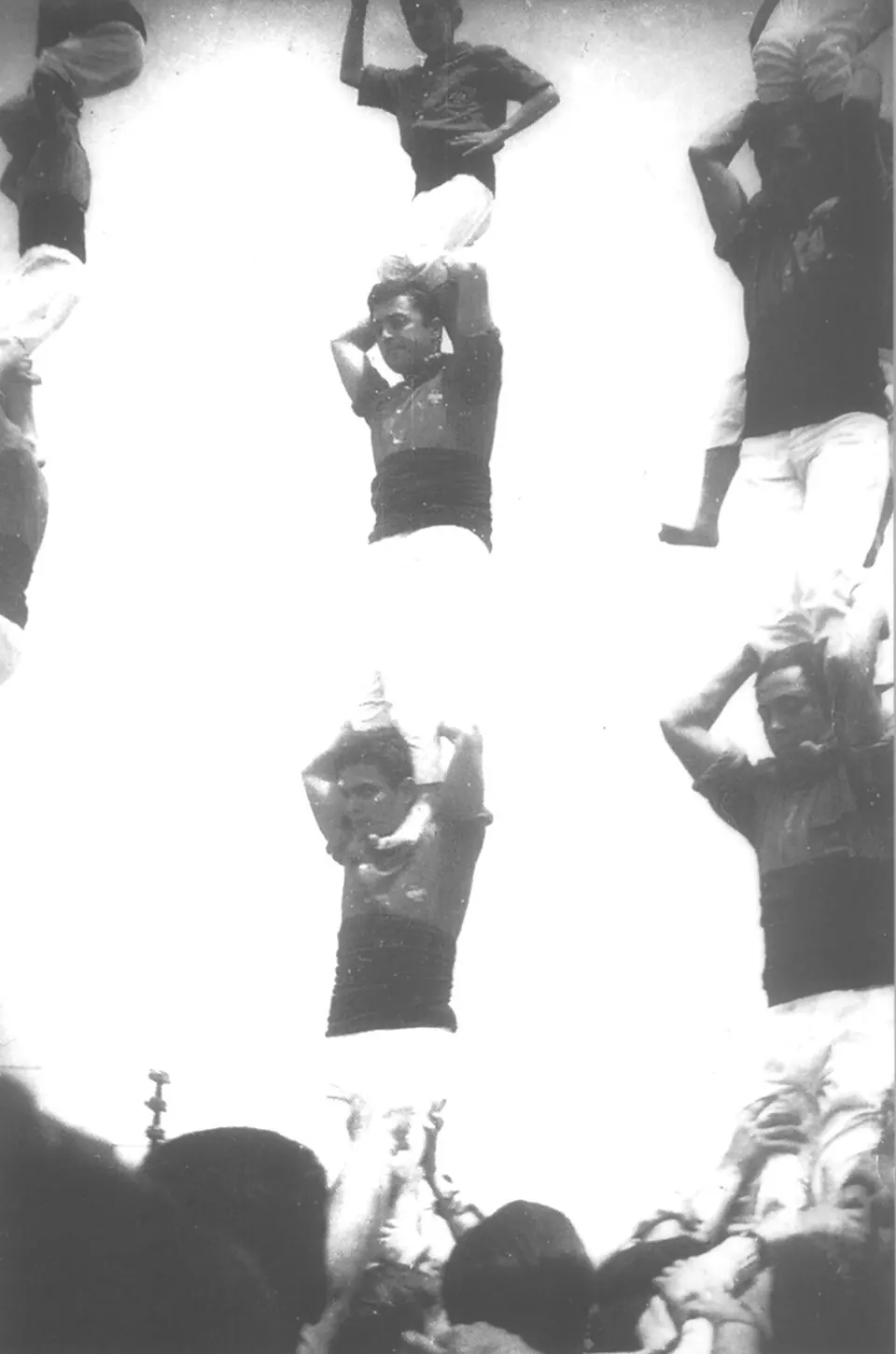
Catalan identity shapes everything: the language on street signs, the castellers building human towers in the squares, the sardana danced in circles on Sundays. The day's sacred hour is the vermut — a bitter-sweet aperitif with olives and crisps, taken around noon before lunch. Lunch is the main meal; dinner rarely starts before nine. Tapeo — moving from bar to bar for a tapa and a caña — is the evening's natural form. The markets, especially La Boqueria and Santa Caterina, are cathedrals of produce where chefs shop at dawn. Beach life at Barceloneta is democratic: office workers, old men playing petanca, teenagers with guitars. FC Barcelona is genuinely més que un club — a civic institution that carried Catalan pride through the Franco years. And in August, Gràcia's Festa Major turns whole streets into decorated rival neighbourhoods competing for the prize.
Landmarks
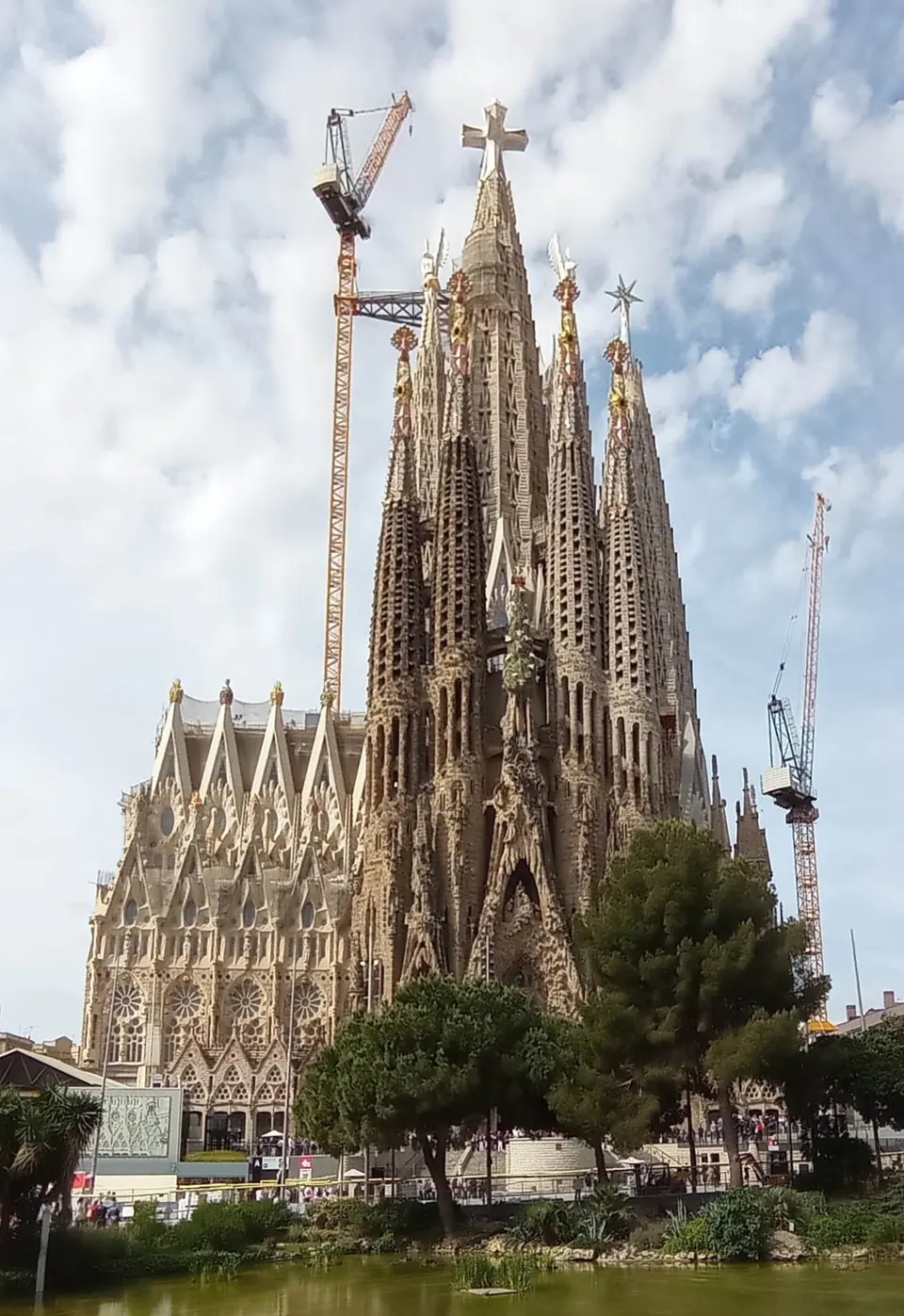
© Canaan · CC BY-SA 4.0 Sagrada Família
Gaudí took over the project in 1883 and made it his life's work — he is buried in its crypt. The forest of leaning columns and light-stained glass was still unfinished at his death in 1926, and cranes remain part of the silhouette. The Nativity façade is organic stone lace; the Passion façade, by Subirachs, is all anguished angles. Target completion: 2026, the centenary of Gaudí's death.
© essetefano · CC BY 3.0 Park Güell
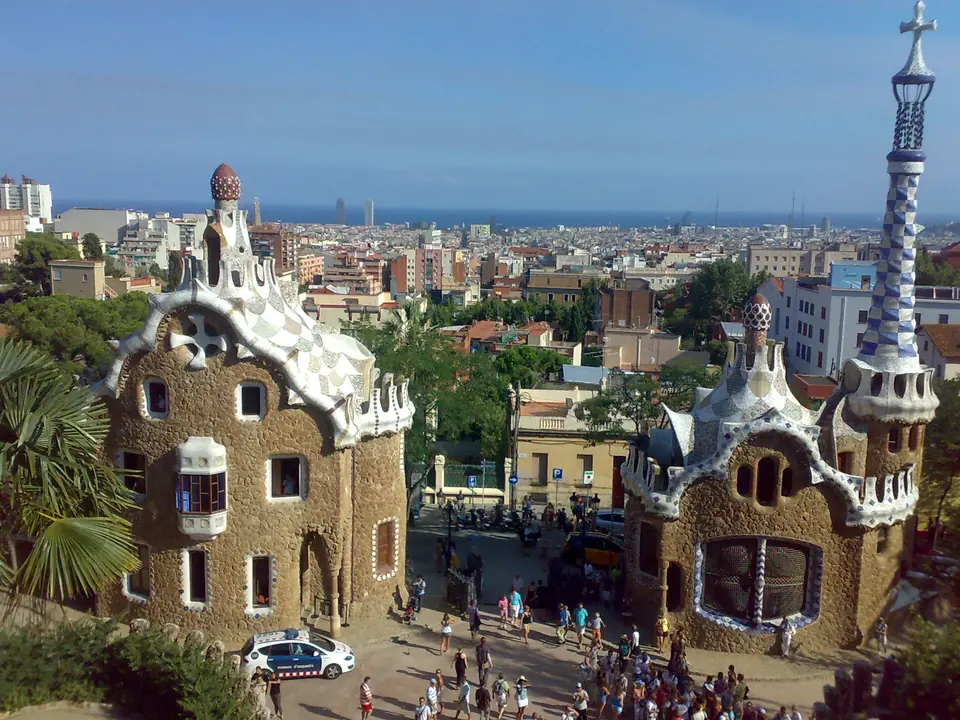
Eusebi Güell's failed garden-city development became Gaudí's mosaic playground: the dragon staircase, the wavy bench of broken tile (trencadís), columns like tree trunks. The city bought it in 1923 and made it a public park. Go at opening — by midday the terrace is a slow-moving river of selfie sticks.
© ChristianSchd · CC BY-SA 3.0 Casa Batlló
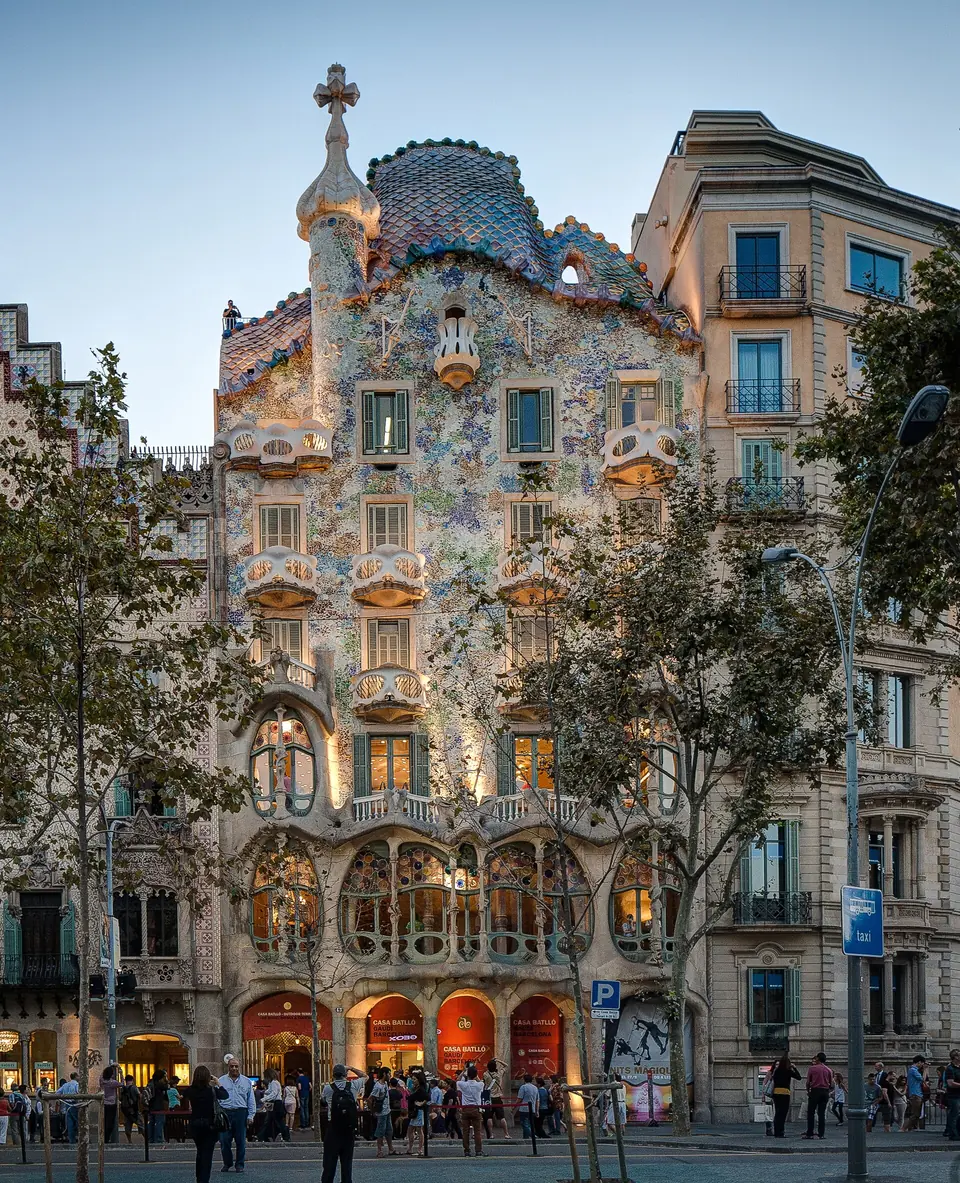
Gaudí's 1906 remodelling of an ordinary apartment block into a dragon: the scaly tile roof is its back, the balconies its skull-like masks, the stairwell a spine. Inside, there is not a single straight line — doors, windows and ceilings all curve. The rooftop at sunset, with Montjuïc behind, is the photograph everyone wants.
© Llull · CC BY-SA 2.0 Barcelona Cathedral & Gothic Quarter
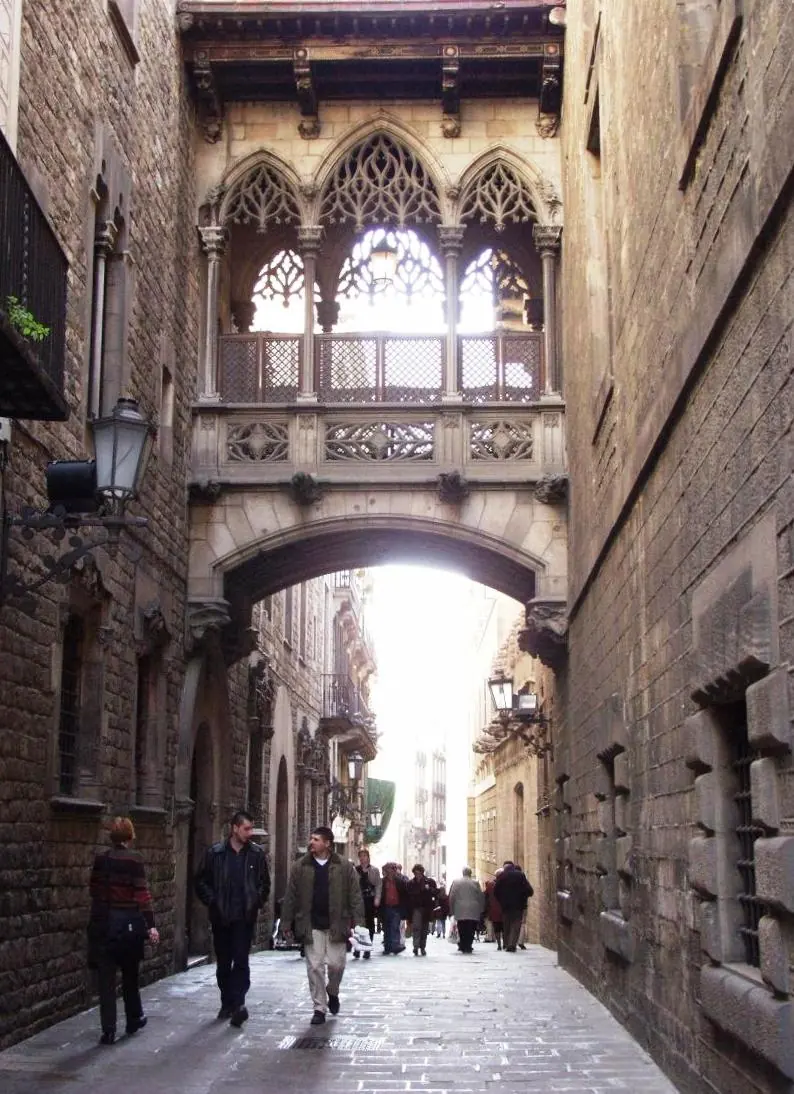
The 14th-century Cathedral of the Holy Cross sits on Roman and Visigothic foundations — look for the Roman wall in the Casa de l'Ardiaca next door. Around it, the Barri Gòtic's lanes follow the medieval street plan, though much of the 'Gothic' is 19th-century romantic restoration. The cloister's geese have honked here for 700 years.
© Alvesgaspar · CC BY-SA 4.0 Palau de la Música Catalana
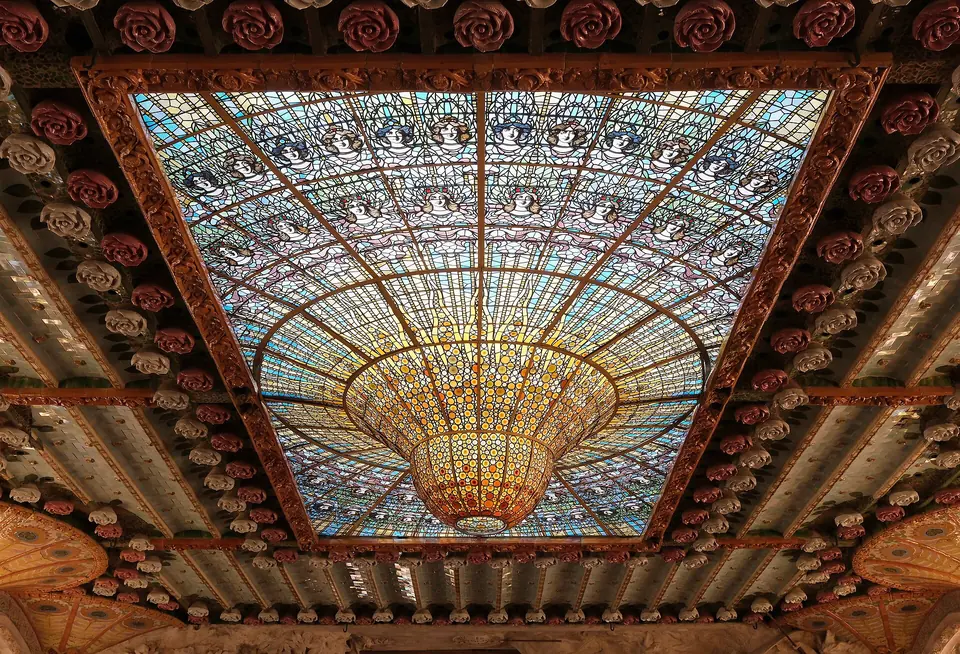
Lluís Domènech i Montaner's 1908 concert hall is Modernisme at full throttle: a stained-glass skylight like a golden drop, mosaics, sculptures and wrought iron everywhere. Built for the Orfeó Català choir, it still hosts the city's best concerts. The guided tour is worth it for the auditorium alone.
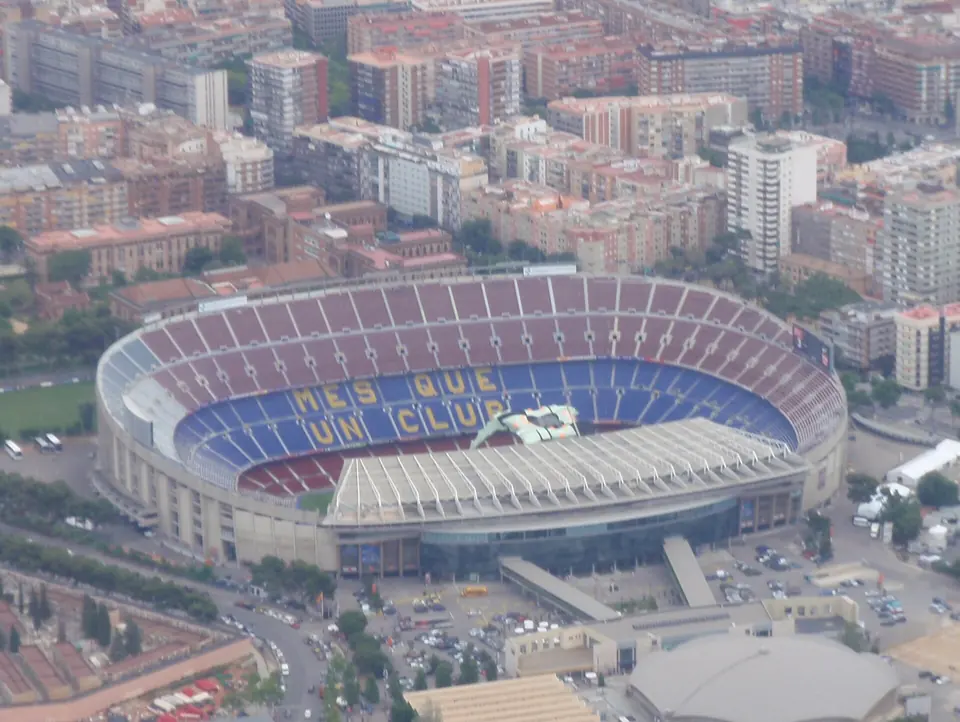
© Oh-Barcelona.com from Barcelona, Spain · CC BY 2.0 Camp Nou
Europe's largest stadium (99,000 seats) is FC Barcelona's cathedral — and the club's museum is Spain's most visited. 'Més que un club' is carved into the seats: under Franco, the stadium was the one place Catalans could shout in their own language. Currently being rebuilt as the Nou Camp Nou; check what's open before visiting.
Official visitor resources
Official tourism boards and visitor bureaus.