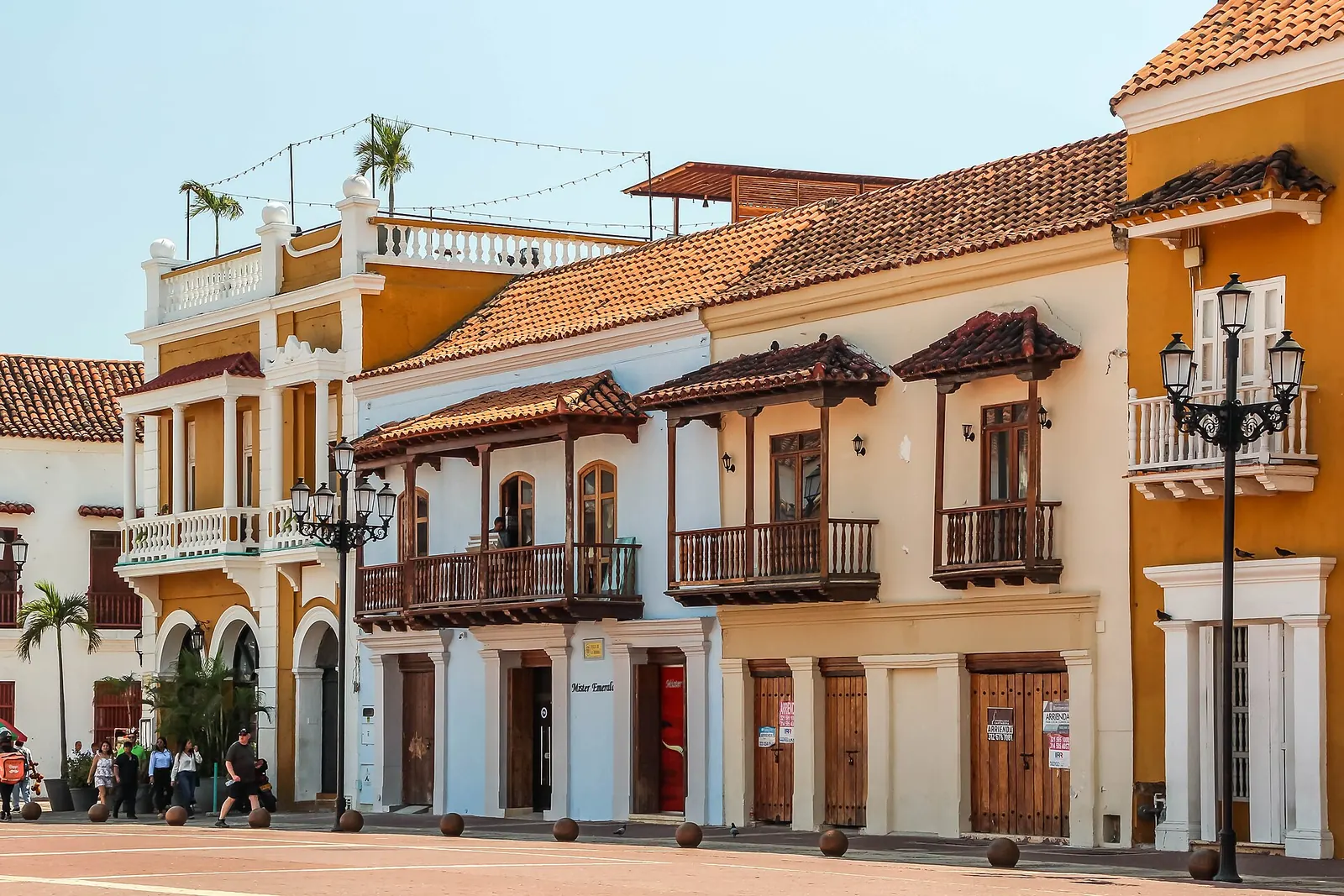
Cartagena's old town is a maze of pastel houses, bougainvillea-draped balconies and lively plazas. Walk the walls at sunset, explore the street art of Getsemaní, and take a boat to the white beaches of the Rosario Islands.
Good to know
- Best time to go
- December, January, February, March and April
- Flight from New York
- about 4h 35m nonstop
- Local time
- —
- Currency
- Colombian Peso (COP)
- Languages
- Spanish
Flight time is an estimate based on distance; actual schedules vary by airline and route.
Highlights
- Walled Old City at sunset
- Getsemaní street art and nightlife
- Rosario Islands boat trips
History
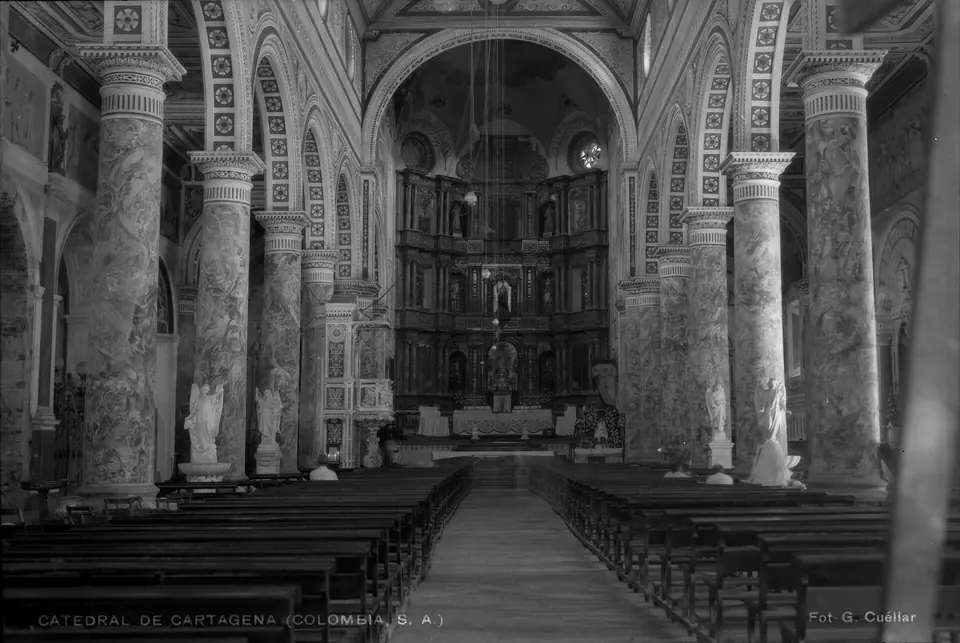
Spanish conquistador Pedro de Heredia founded Cartagena de Indias in 1533 on the Caribbean coast. Its natural harbour made it one of the most important ports of the Spanish Empire: gold and silver from South America were shipped from here to Spain, and it was one of the main ports where enslaved Africans were brought to the continent. Pirates and navies attacked it repeatedly, including Francis Drake in 1586, so the Spanish built massive walls and forts, completing the San Felipe de Barajas castle and resisting a huge British siege in 1741. Cartagena declared independence from Spain in 1811. The Jesuit Saint Peter Claver ministered to enslaved people here. The fortifications and old town are now a UNESCO World Heritage Site.
Culture
![Demonstración de baile folclórico de Colombia durante el evento “Yo Amo Colombia” en ITESM Campus Ciudad de México [1]](/photos/cartagena--culture-960.webp)
Cartagena moves to Caribbean rhythms: champeta, salsa and vallenato pour out of bars and passing cars. Palenqueras, women in bright dresses from the nearby town of San Basilio de Palenque, the first free town of formerly enslaved Africans in the Americas, sell fruit in the old town. Coastal food means fried fish with coconut rice and patacones, arepas de huevo and fresh fruit juices. Gabriel García Márquez lived here, and the city's magic realism atmosphere inspired his novels.
Landmarks
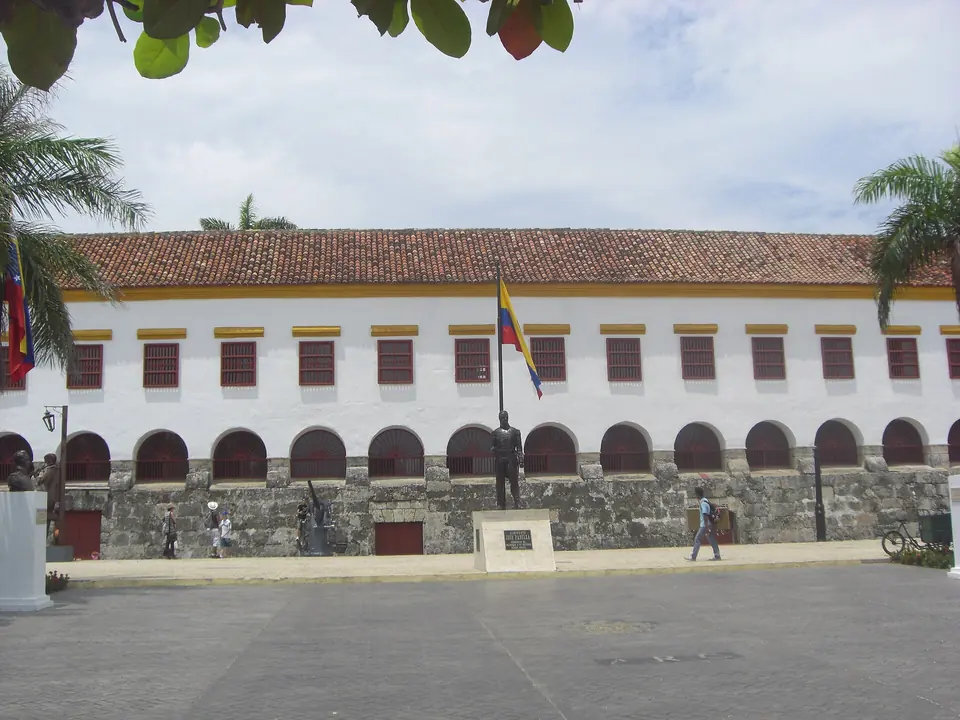
© Sgonzalezb · CC BY-SA 3.0 Walled City
About eleven kilometres of colonial walls protect the old town's churches, mansions and squares. Walk along the ramparts in the evening breeze and stop at the Café del Mar for a sunset view over the sea.
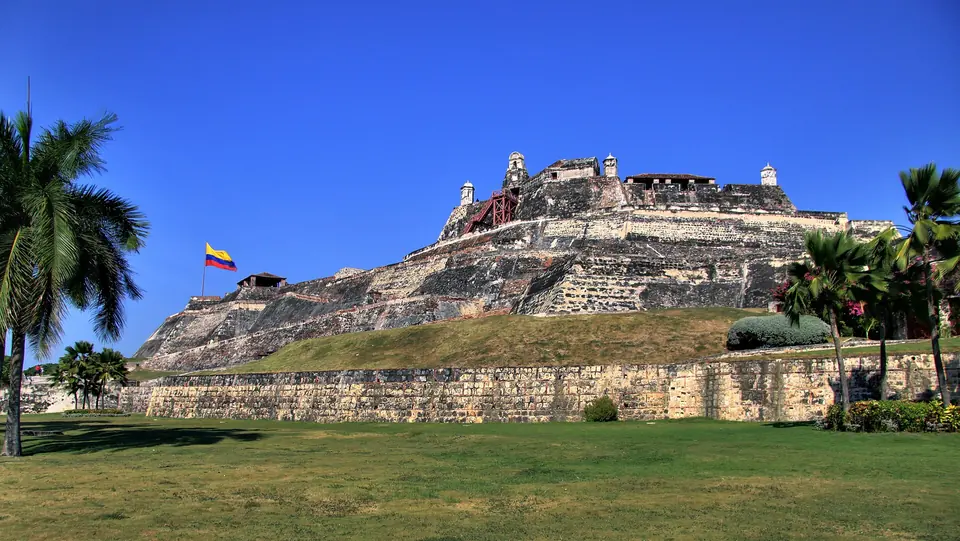
© Martin St-Amant (S23678) · CC BY-SA 3.0 Castillo San Felipe de Barajas
The largest Spanish fortress in the Americas sits on a hill above the city. Its network of tunnels was designed to carry sound so defenders could hear an approaching enemy.
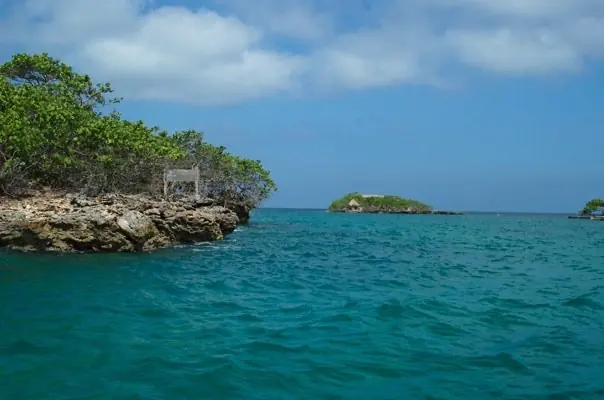
© Segab · Public domain Rosario Islands
This archipelago of coral islands, part of a national park, lies about an hour by boat from the city. Clear water and reefs make it ideal for swimming and snorkelling.