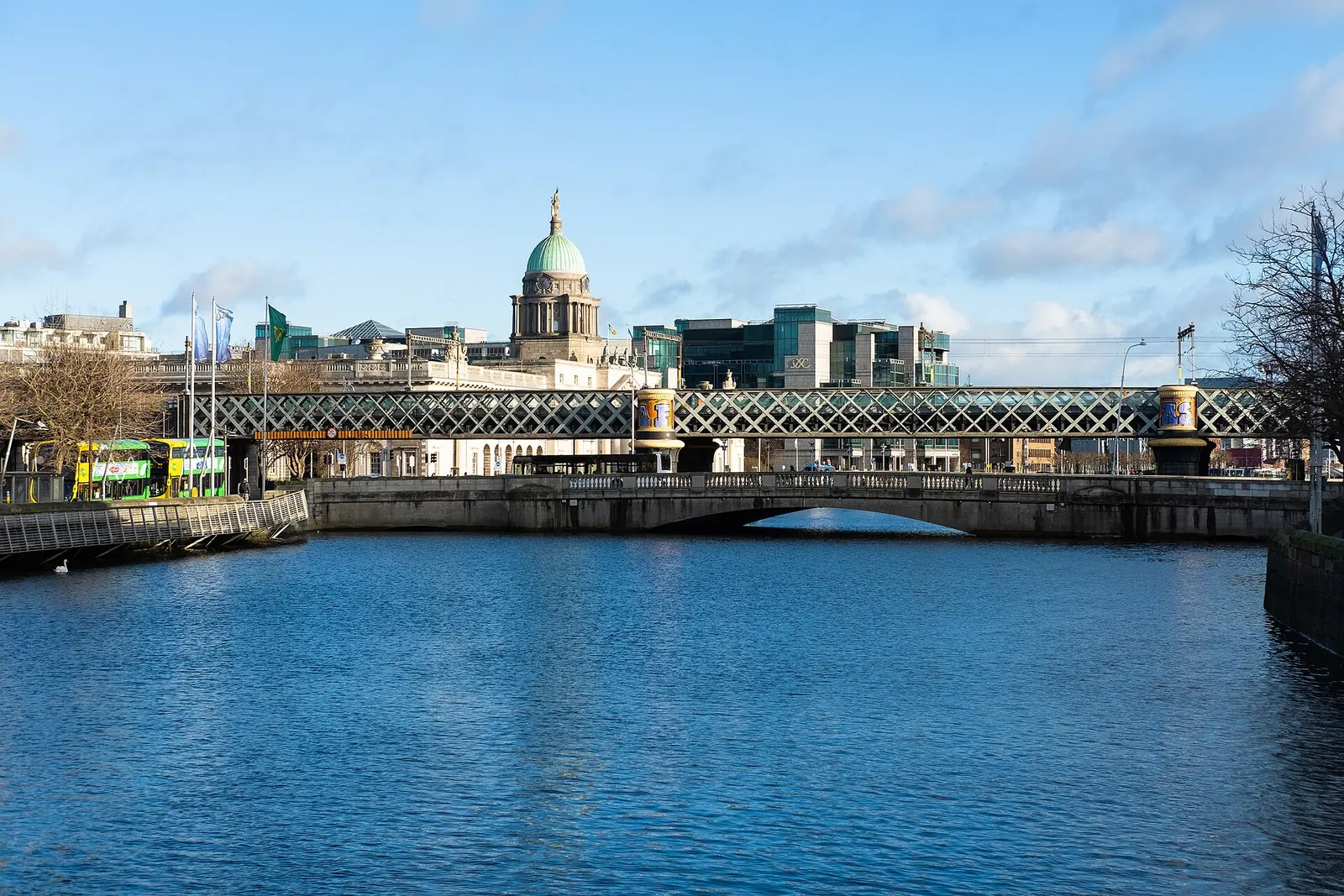
Dublin is a compact, walkable city of writers, music and conversation. See the Book of Kells, stroll through Georgian squares, hear traditional music in a pub, then catch the DART train to the cliff walks of Howth.
Good to know
- Best time to go
- May, June, July, August and September
- Flight from New York
- about 6h 40m nonstop
- Local time
- —
- Currency
- Euro (EUR)
- Languages
- English and Irish
Flight time is an estimate based on distance; actual schedules vary by airline and route.
Highlights
- Book of Kells at Trinity College
- Live trad music sessions
- Howth cliff walk
History
![The General Post Office & Henry Street from Nelson's Pillar, May 18 [1916]](/photos/dublin--history-960.webp)
Vikings founded Dublin around 841, naming it after Dubh Linn, the 'black pool' where the Poddle stream met the river Liffey. After the Anglo-Norman invasion in 1169, the city became the centre of English rule in Ireland. In the eighteenth century it was one of the largest cities in Europe, and its elegant Georgian squares date from this time. The Great Famine of the 1840s devastated Ireland and drove millions to emigrate. On Easter Monday 1916, rebels seized the General Post Office and proclaimed an Irish Republic; the Rising was crushed, but it led to the War of Independence and, in 1922, the Irish Free State. Dublin has since become a European tech hub while keeping its literary soul.
Culture
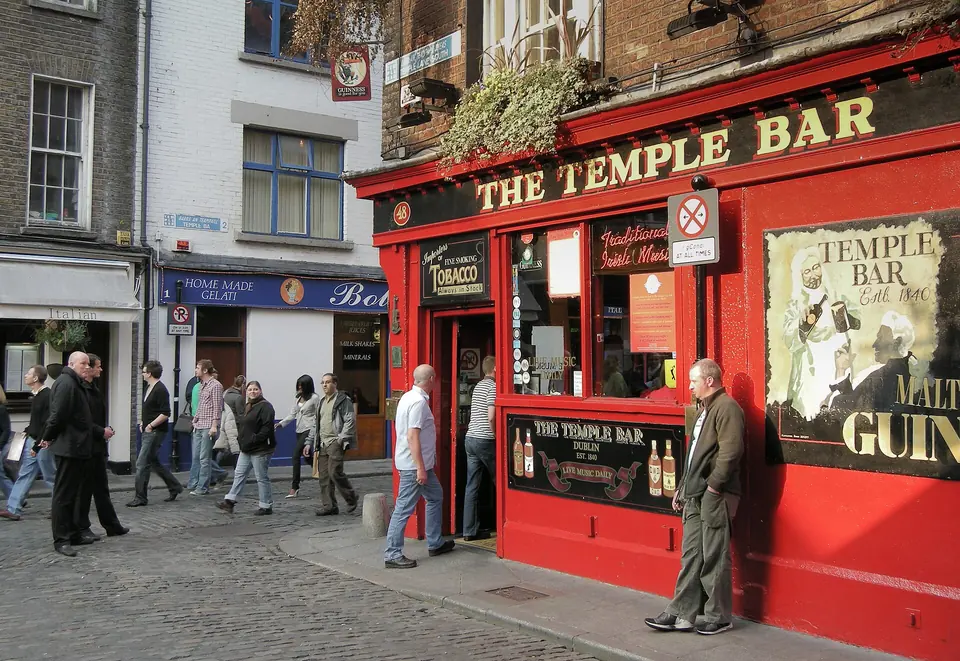
Dubliners love a good story, and conversation is the city's favourite sport. The pub is a community living room, where you can find spontaneous sessions of fiddle, tin whistle and bodhrán. The city has produced four Nobel Prize winners in literature, including Yeats, Shaw and Beckett, and celebrates James Joyce every 16 June on Bloomsday. Try a pint of Guinness, brewed here since 1759, with Irish stew or a full Irish breakfast. Gaelic football and hurling draw passionate crowds at Croke Park.
Landmarks
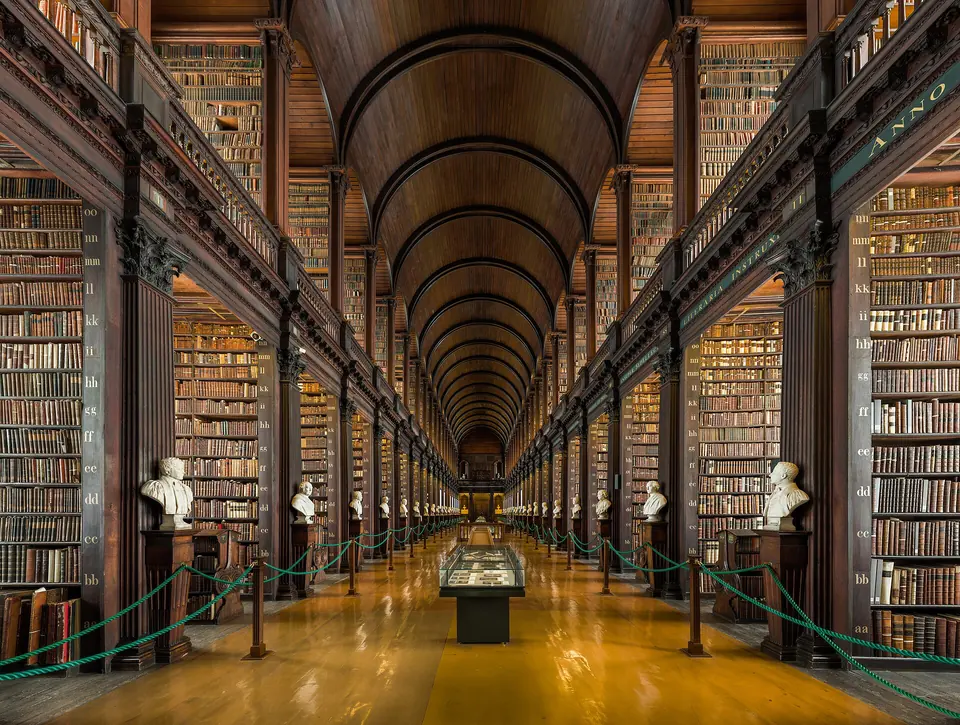
© Diliff · CC BY-SA 4.0 Trinity College and the Book of Kells
Founded in 1592, Ireland's oldest university displays the Book of Kells, a ninth-century illuminated manuscript of the Gospels. Its Long Room library, lined with oak shelves and marble busts, is one of the most beautiful rooms in Ireland.
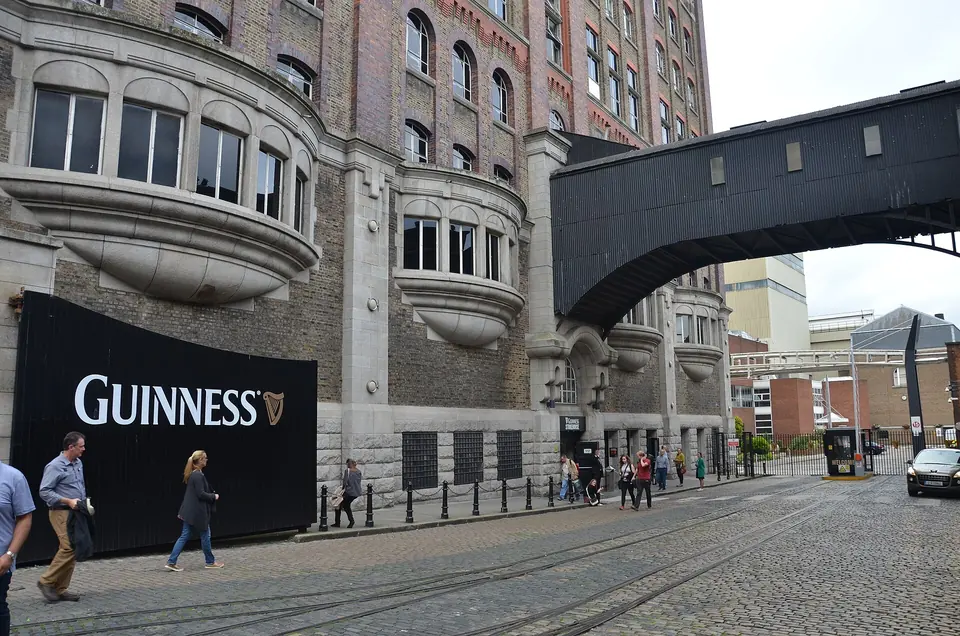
© Steven Lek · CC BY-SA 4.0 Guinness Storehouse
Set in a former fermentation building at the St James's Gate brewery, the storehouse tells the story of the famous stout. The visit ends with a pint in the rooftop Gravity Bar, with views across the city.
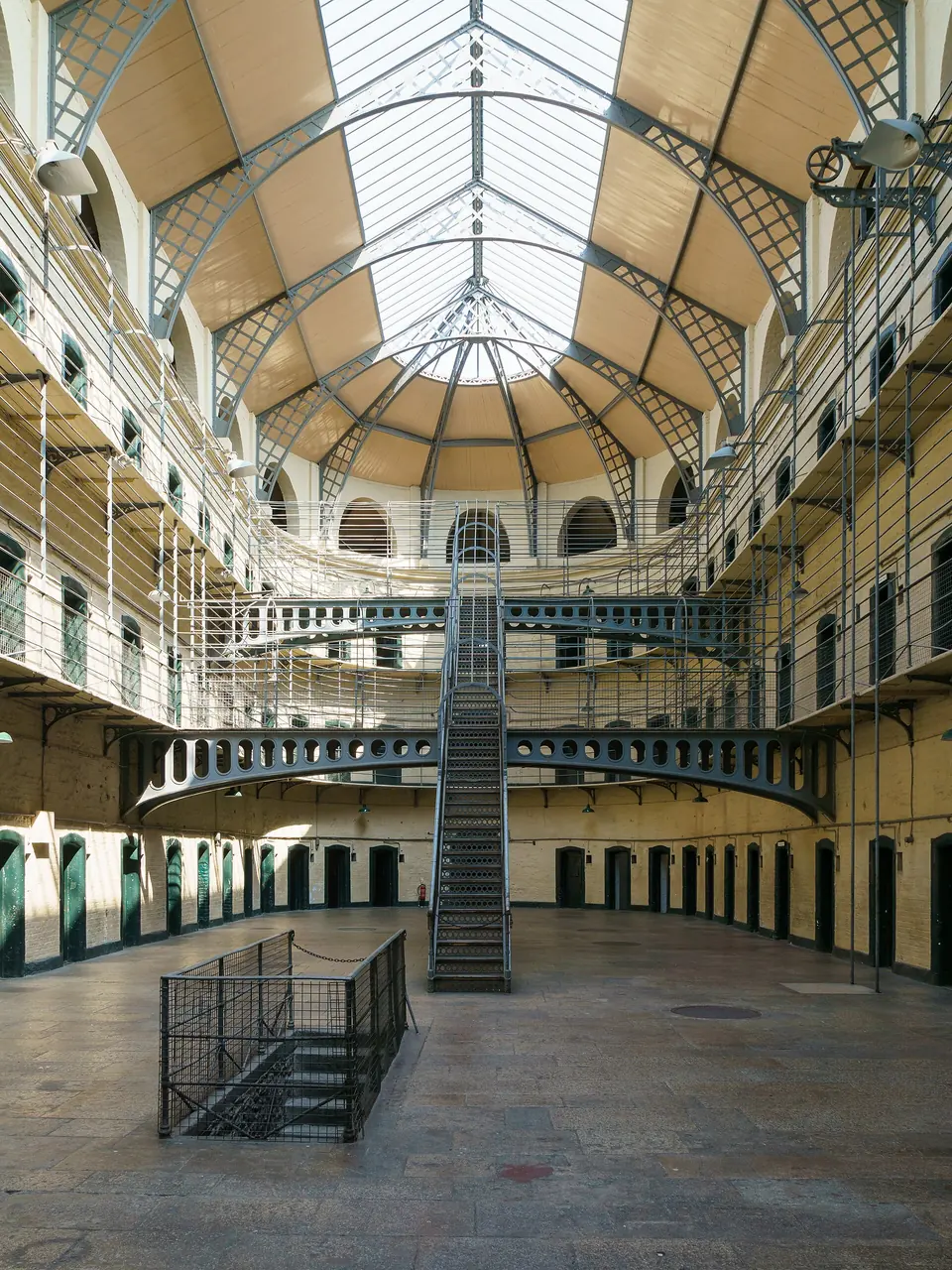
© Colin · CC BY-SA 4.0 Kilmainham Gaol
This former prison held generations of Irish rebels, and the leaders of the 1916 Rising were executed in its yard. Guided tours tell a gripping story of Ireland's struggle for independence.