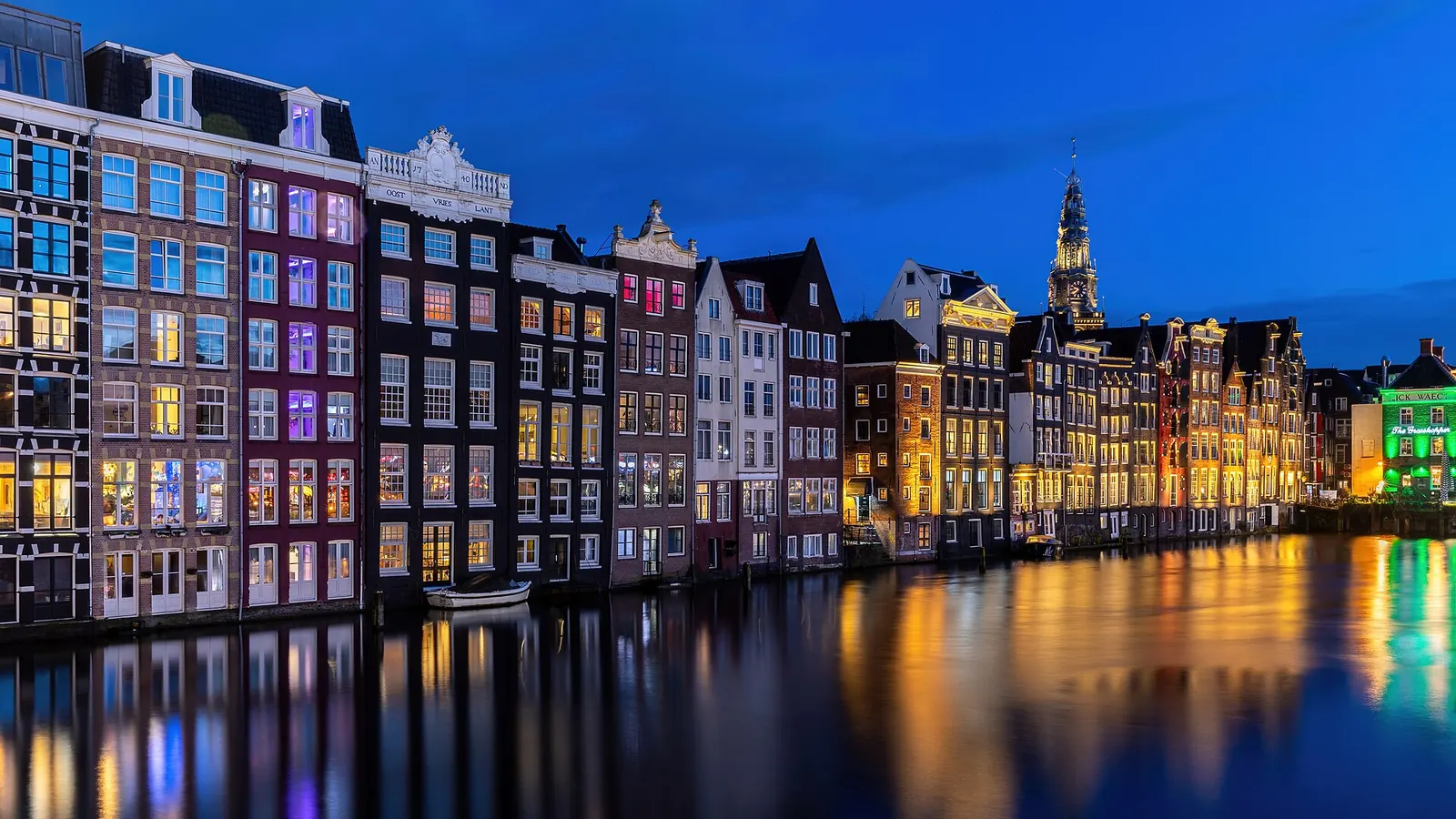
Amsterdam is best seen by bike or boat, gliding past gabled canal houses. Spend a morning with Rembrandt and Van Gogh, browse the Jordaan's independent shops, and end the day in a cosy 'brown café'.
Good to know
- Best time to go
- April, May, June and September
- Flight from New York
- about 7h 35m nonstop
- Local time
- —
- Currency
- Euro (EUR)
- Languages
- Dutch
Flight time is an estimate based on distance; actual schedules vary by airline and route.
Highlights
- Canal ring by boat or bike
- Rijksmuseum and Van Gogh Museum
- Jordaan neighbourhood
History
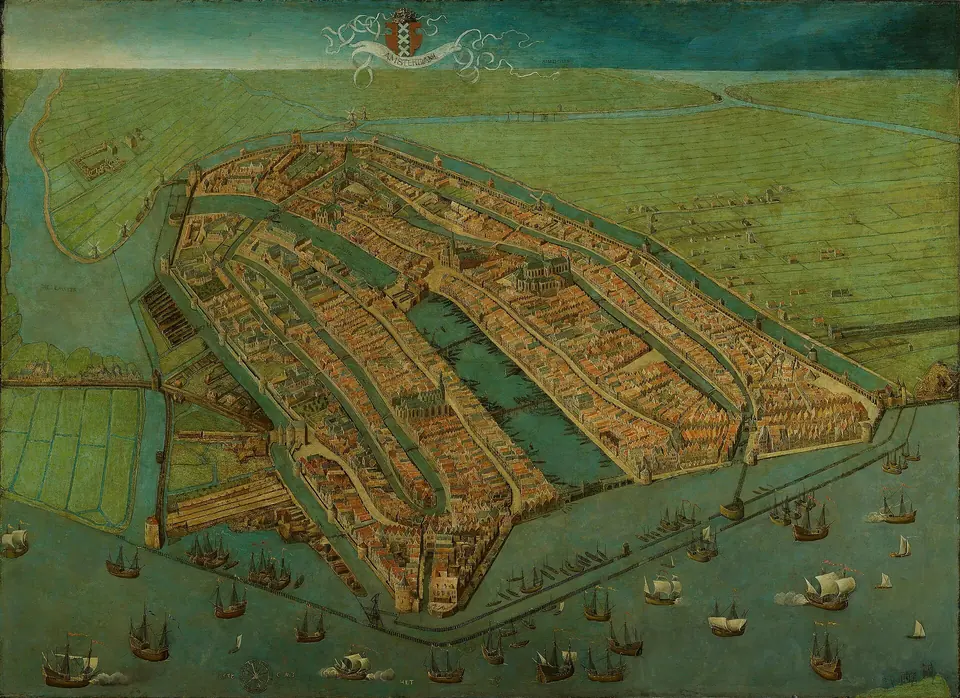
Amsterdam began in the thirteenth century as a fishing village by a dam on the Amstel river, which gave it its name. In the seventeenth century, the Dutch Golden Age, it became the richest city in the world: the Dutch East India Company, founded in 1602, traded across Asia, and the city built its famous concentric canal ring, now a UNESCO World Heritage Site. Painters like Rembrandt and Vermeer flourished, and the city welcomed refugees, from Sephardic Jews to French Huguenots, earning a reputation for tolerance. The wealth also rested on colonial exploitation and the slave trade, which the city now openly acknowledges. During the Nazi occupation, most of the city's Jewish population was deported, among them Anne Frank, whose hiding place is now a museum.
Culture
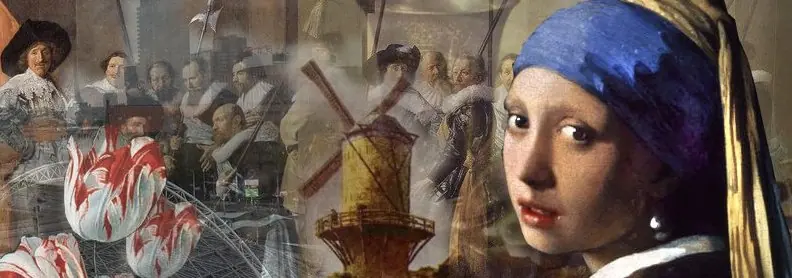
Amsterdammers are direct, practical and famously relaxed. There are more bicycles than residents, so watch out for bike lanes, which belong to cyclists. Social life revolves around gezelligheid, a cosy feeling of togetherness, best found in candlelit brown cafés over a beer and bitterballen. King's Day on 27 April turns the city orange, with street markets and parties on boats. Try fresh herring with onions, warm stroopwafels and Indonesian rijsttafel, a legacy of colonial history.
Landmarks
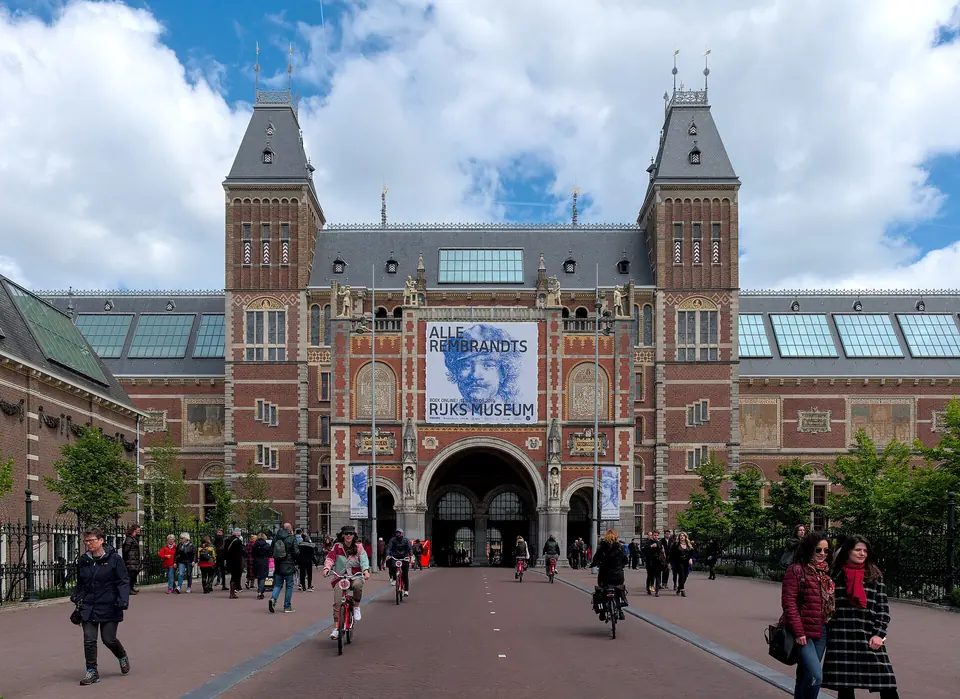
© Trougnouf (Benoit Brummer) · CC BY 4.0 Rijksmuseum
The Netherlands' national museum holds masterpieces of the Golden Age, including Rembrandt's The Night Watch and Vermeer's The Milkmaid. Its grand nineteenth-century building has a passage that cyclists ride straight through.
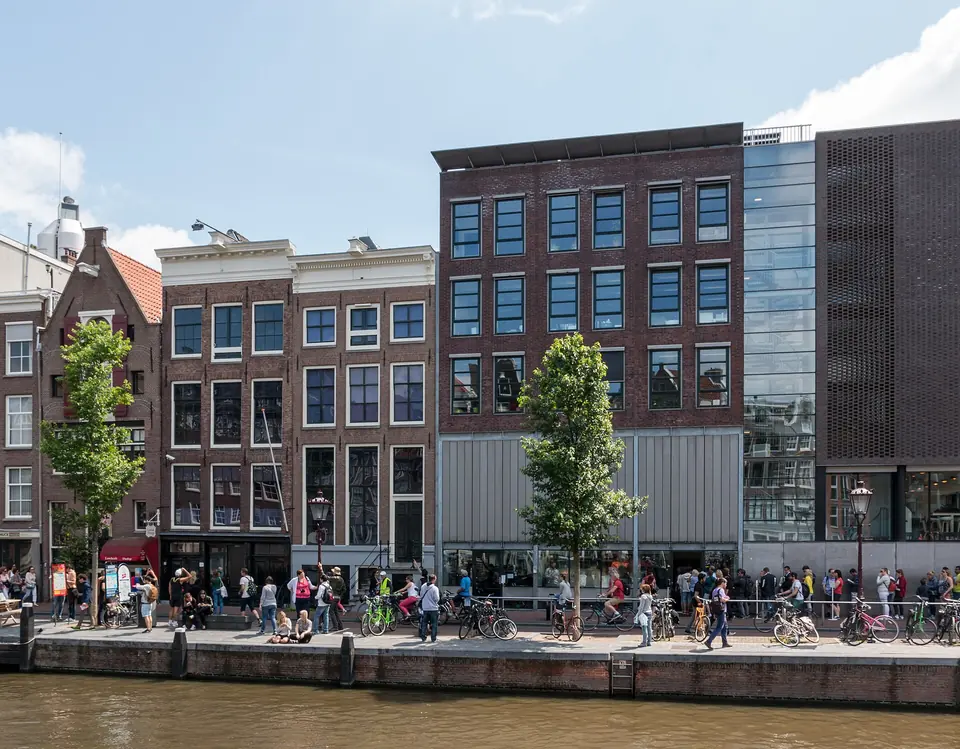
© Dietmar Rabich · CC BY-SA 4.0 Anne Frank House
The canal-side house where Anne Frank and her family hid from the Nazis for two years is now a moving museum. Tickets sell out weeks in advance and are only sold online.
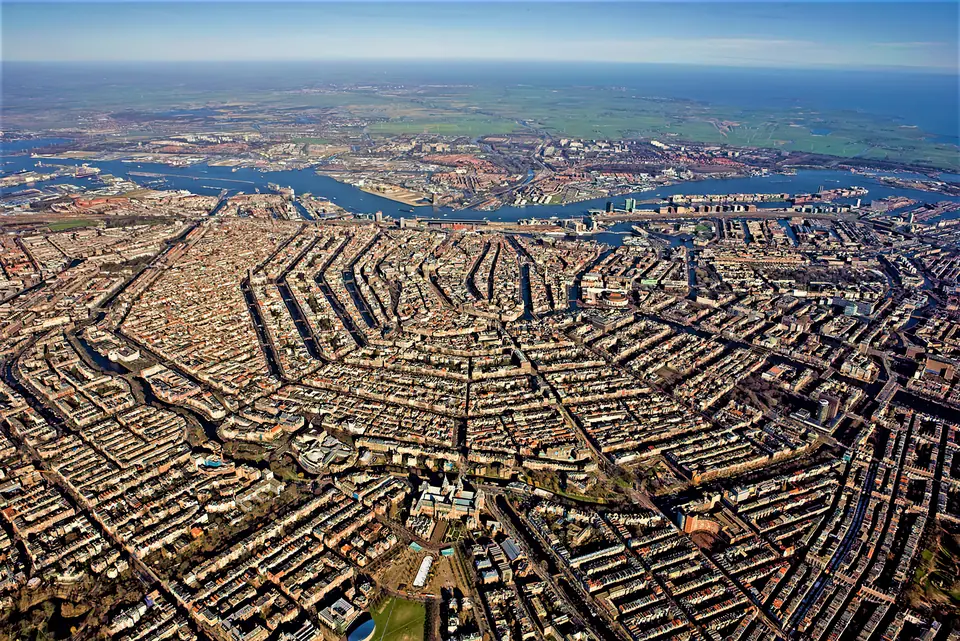
© Andrés Barrios · CC BY-SA 4.0 Canal Ring
The seventeenth-century canals of Herengracht, Keizersgracht and Prinsengracht are lined with tall, narrow merchant houses. A canal cruise or a walk at dusk, when the bridges light up, shows the city at its most beautiful.