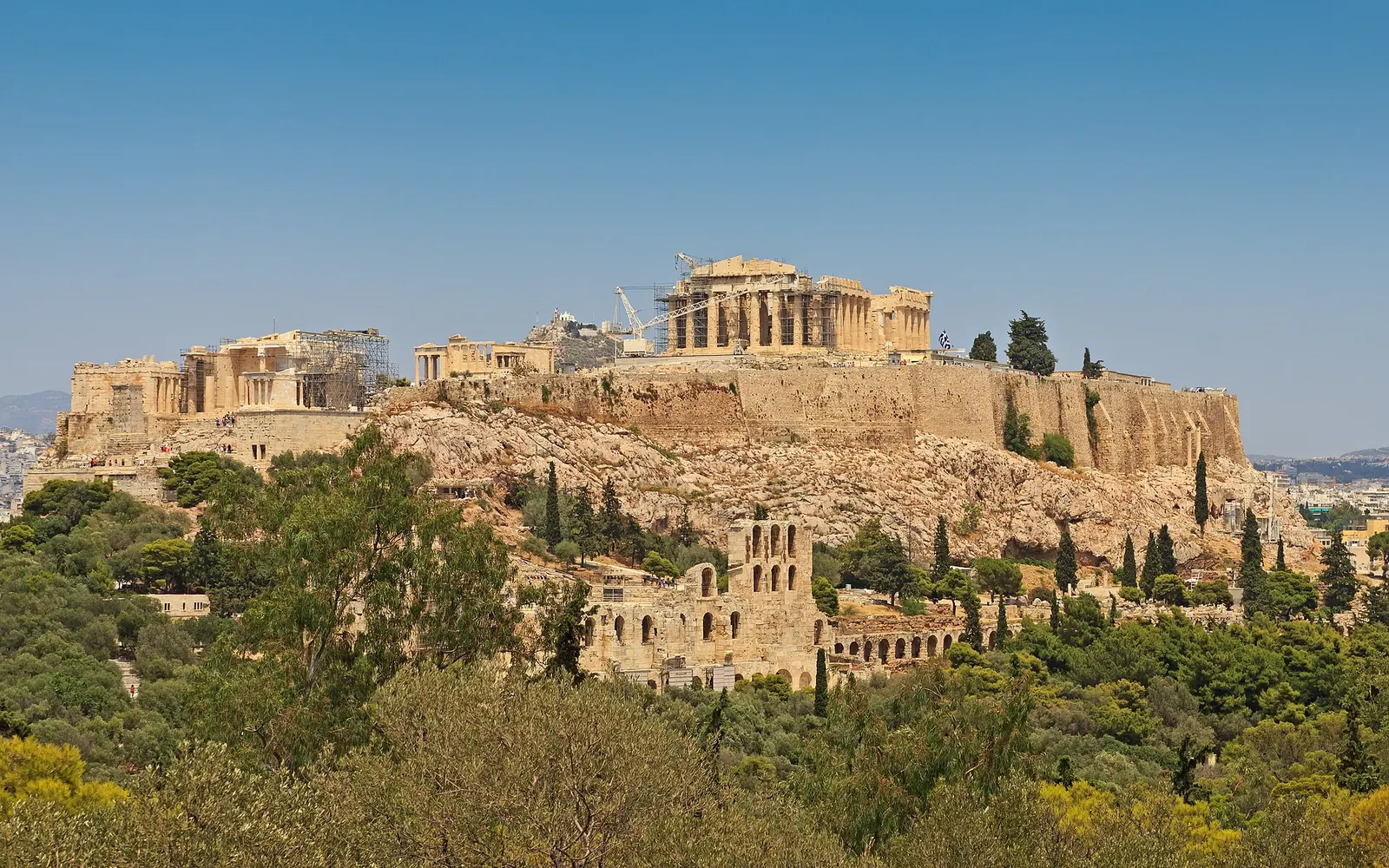
Athens is where Western democracy, theatre and philosophy began. Climb to the Parthenon early before the heat, wander the lanes of Plaka and Monastiraki, eat late at a taverna, then hop on a ferry to the islands from Piraeus.
Good to know
- Best time to go
- April, May, June, September and October
- Flight from New York
- about 10h 05m nonstop
- Local time
- —
- Currency
- Euro (EUR)
- Languages
- Greek
Flight time is an estimate based on distance; actual schedules vary by airline and route.
Highlights
- The Acropolis at opening time
- Plaka and Anafiotika lanes
- Ferries to the Greek islands
History
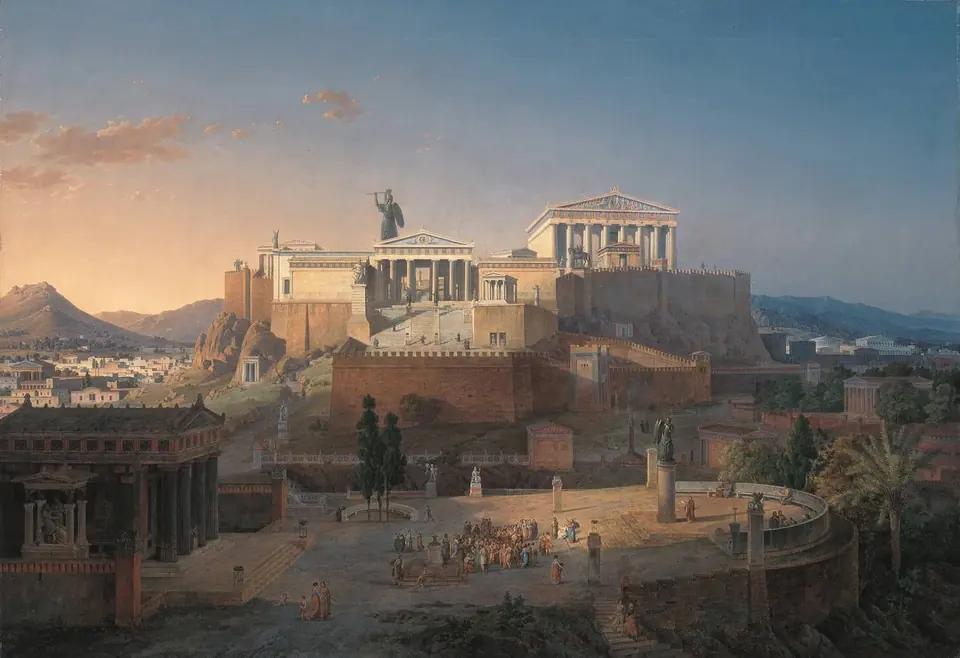
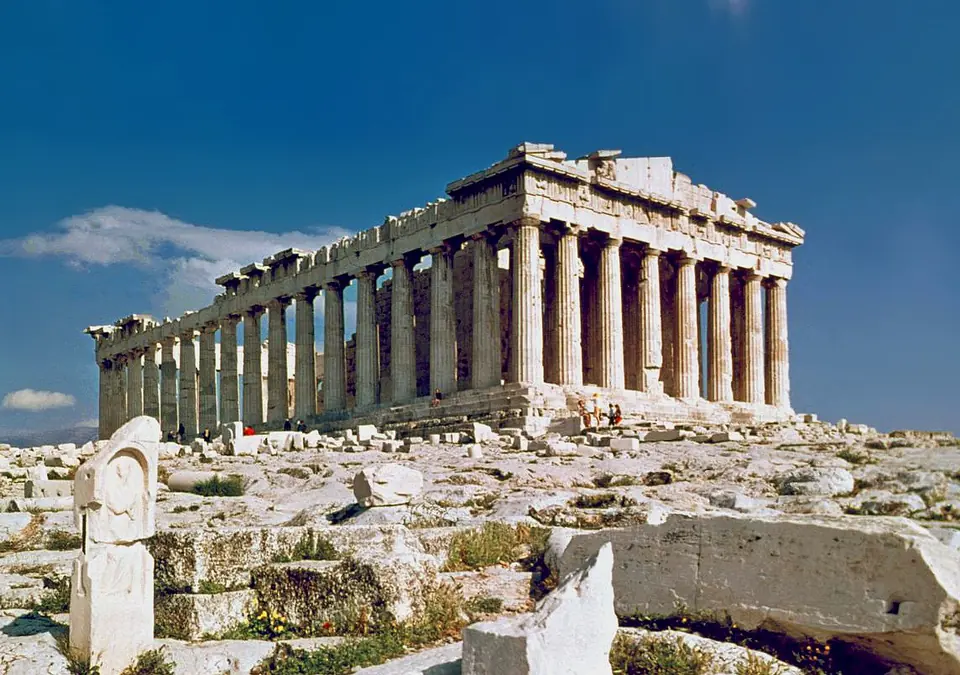
Athens has been inhabited for more than three thousand years. In the fifth century BC, after victories over the Persians, the city reached its golden age under Pericles: the Parthenon was built, Athenian citizens experimented with democracy, and Socrates, Sophocles and later Plato and Aristotle shaped Western thought. Rome absorbed Greece, and Athens remained a respected centre of learning before declining in the Byzantine era. Under Ottoman rule from 1458 it was a small provincial town; in 1687 a Venetian shell ignited gunpowder stored in the Parthenon and blew off its roof. When modern Greece won independence, Athens was chosen as capital in 1834 and rebuilt with neoclassical avenues. It hosted the first modern Olympic Games in 1896 and again in 2004.
Culture
Athenians eat late, talk loudly and linger long. Dinner rarely starts before nine, and a meal means many shared plates: grilled octopus, horiatiki salad, souvlaki, spanakopita and meze with ouzo or tsipouro. Coffee is a social institution; the iced freddo espresso is the summer standard. On summer nights, open-air cinemas screen films beneath the Acropolis. Greek Orthodox Easter is the year's biggest celebration, with candlelit processions and lamb roasting on spits.
Landmarks
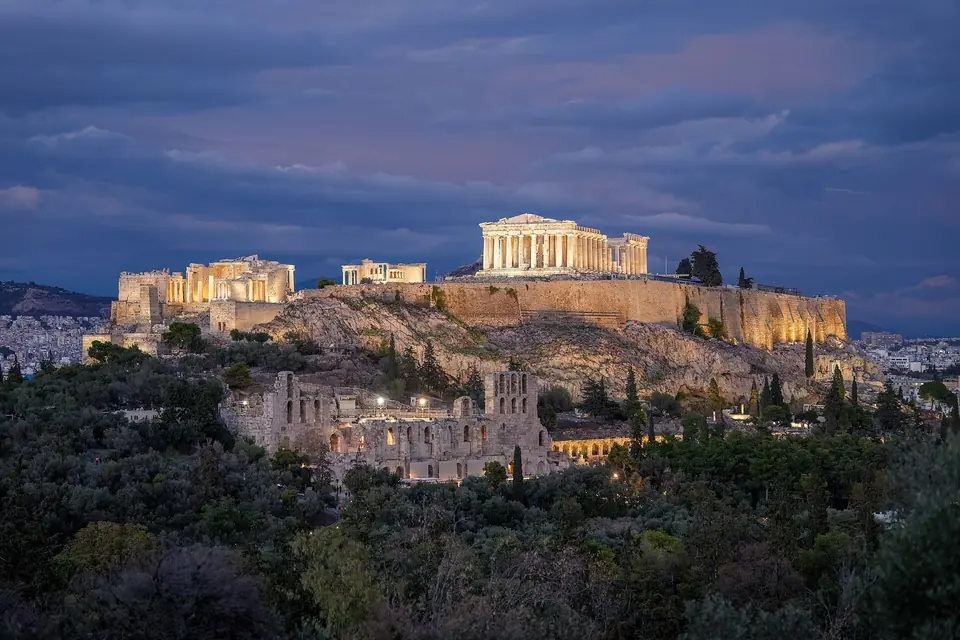
© Giles Laurent · CC BY-SA 4.0 Acropolis
The rocky hill above the city holds the Parthenon, the Erechtheion with its famous Caryatid columns, and the Temple of Athena Nike, all built in the fifth century BC. It is a UNESCO World Heritage Site; arrive at opening time to avoid crowds and heat.
© Yair-haklai · CC BY-SA 4.0 Acropolis Museum
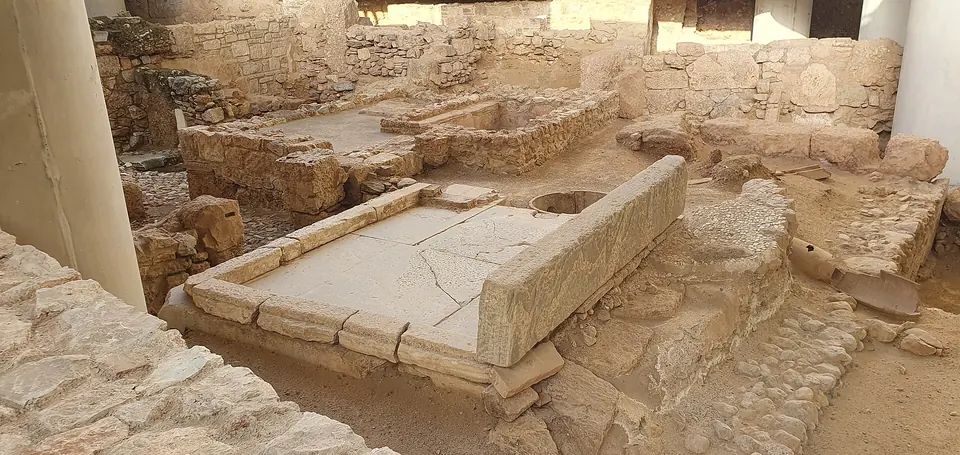
Built over an excavated ancient neighbourhood visible through glass floors, the museum displays sculptures from the Acropolis. Its top-floor gallery lines up the Parthenon frieze in its original orientation, with the temple itself in view.
© Chabe01 · CC BY-SA 4.0 Ancient Agora
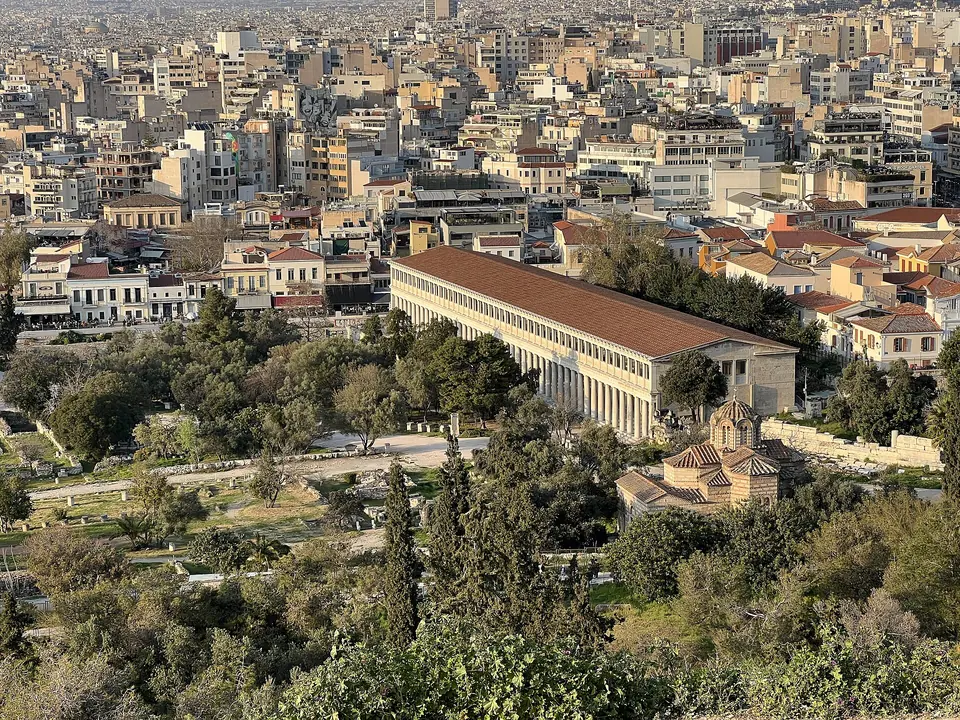
The marketplace and civic heart of ancient Athens, where Socrates debated in the open air. The beautifully preserved Temple of Hephaestus overlooks the site, and the rebuilt Stoa of Attalos houses a museum.