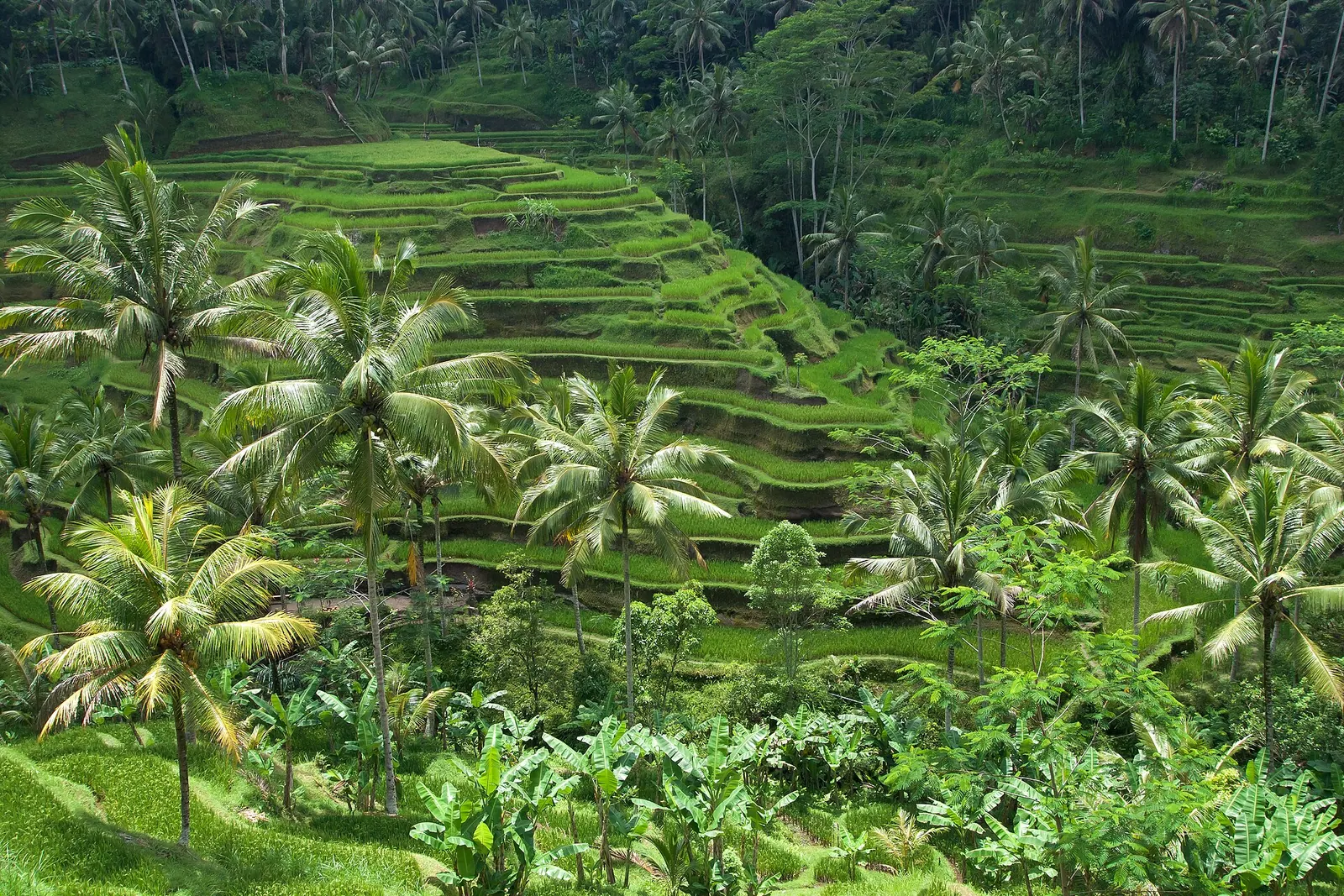
Bali is an island of green rice terraces, volcanoes and thousands of temples. Watch a Kecak dance at sunset above the sea, explore the arts and yoga scene of Ubud, surf at Uluwatu, and hike Mount Batur before dawn to watch the sunrise.
Good to know
- Best time to go
- April, May, June, July, August, September and October
- Flight from New York
- about 20h 15m nonstop
- Local time
- —
- Currency
- Indonesian Rupiah (IDR)
- Languages
- Indonesian and Balinese
Flight time is an estimate based on distance; actual schedules vary by airline and route.
Highlights
- Ubud and the Tegallalang rice terraces
- Uluwatu temple at sunset
- Sunrise hike on Mount Batur
History
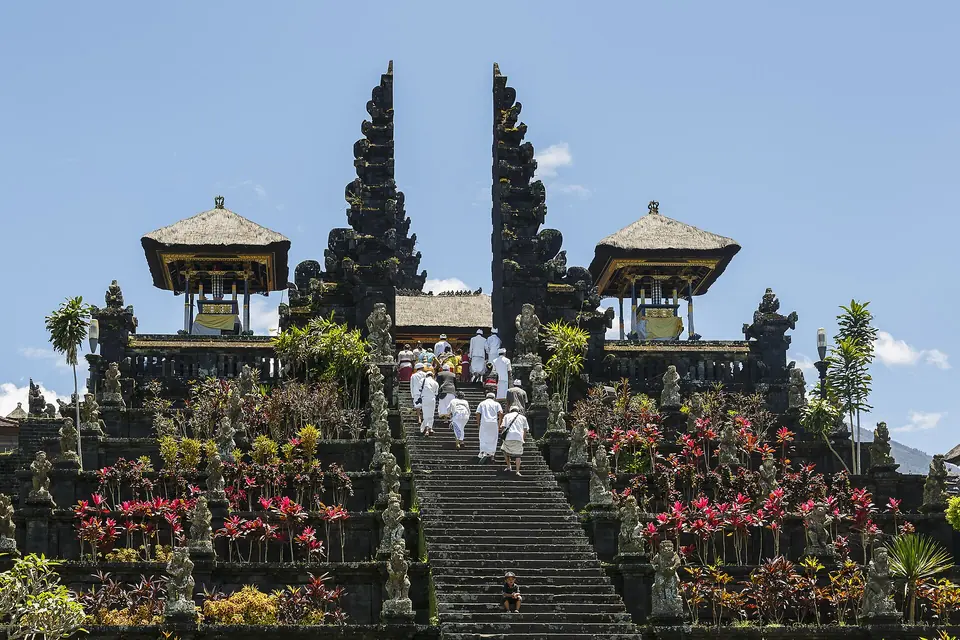
Bali has been settled for thousands of years, and from the first millennium Hindu and Buddhist influences arrived from India via Java. When the Islamic sultanates rose on Java, the Hindu Majapahit nobility, priests and artists fled to Bali in the late fifteenth and sixteenth centuries, making the island a refuge for Hindu culture that it remains today. Bali was divided into rival kingdoms until the Dutch conquered it in the late nineteenth and early twentieth centuries; in 1906 and 1908, members of the royal courts chose ritual mass suicide, the puputan, rather than surrender. Bali became part of independent Indonesia after 1949. Artists and travellers began arriving in the 1930s, and tourism has since transformed the island.
Culture
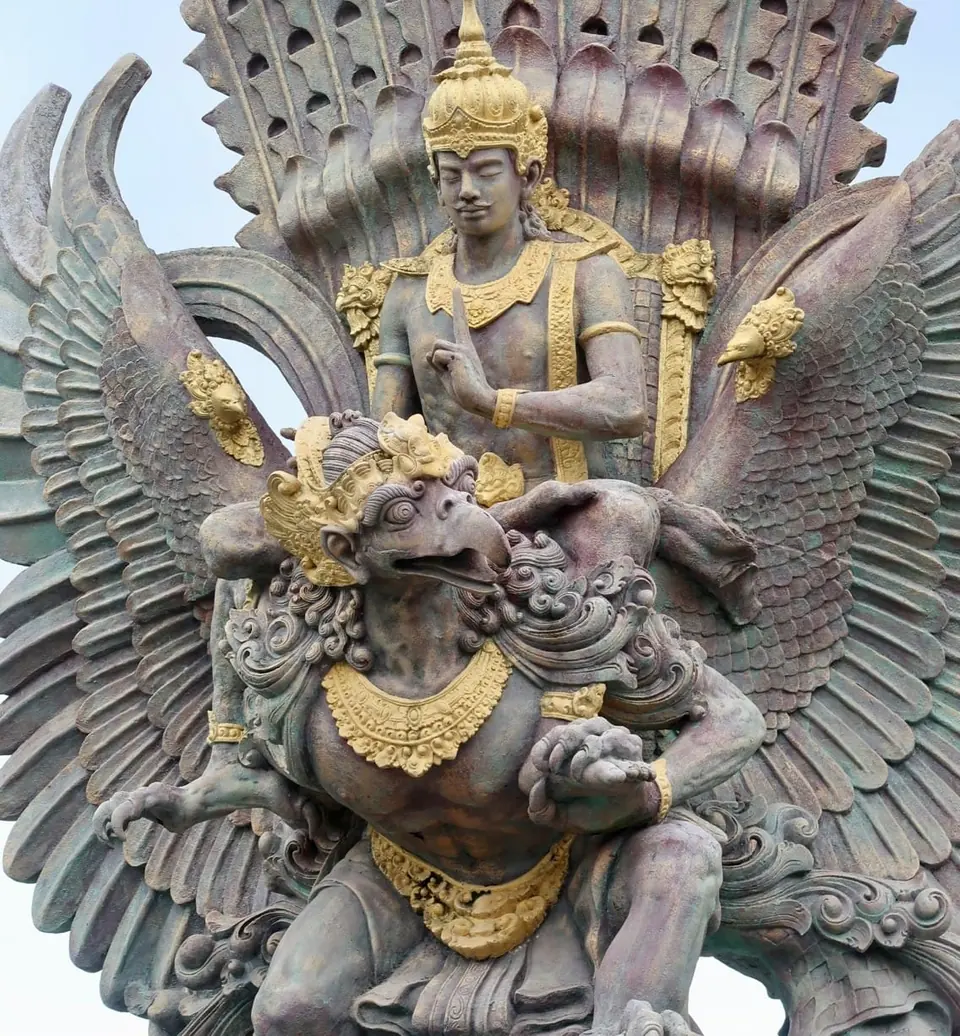
About nine in ten Balinese are Hindu, practising a form of Hinduism unique to the island. Daily life is full of ritual: every morning, small palm-leaf offerings called canang sari, filled with flowers and rice, are placed at doorways and shrines. Temple ceremonies with music and dance are frequent. Nyepi, the Balinese New Year, is a day of total silence when the whole island, airport included, shuts down. Try babi guling (roast suckling pig), bebek betutu (slow-cooked duck), nasi campur and fresh coconuts.
Landmarks
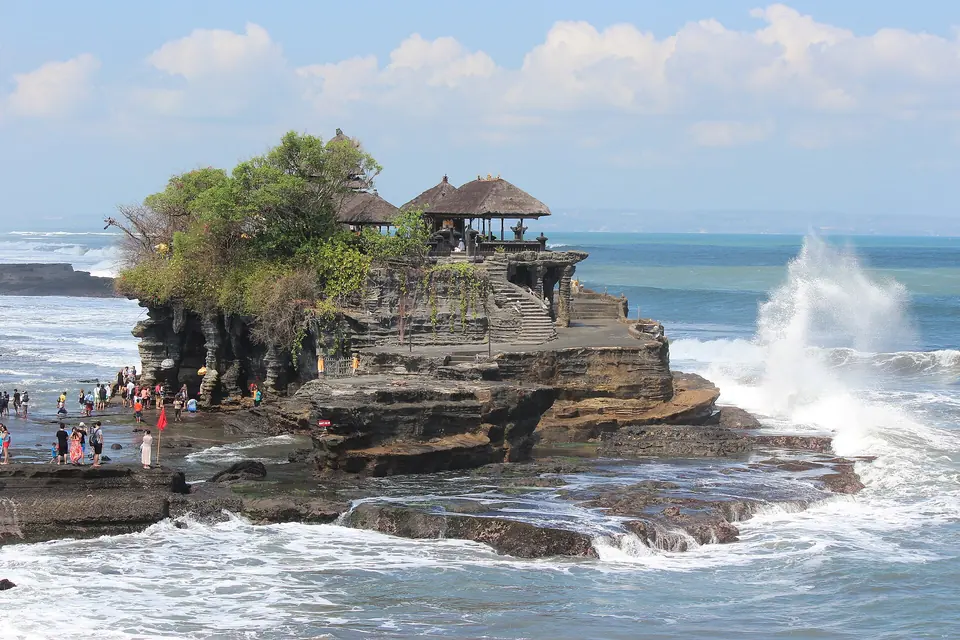
© Grayswoodsurrey · CC BY-SA 4.0 Tanah Lot
This sea temple sits on a rock formation just off the shore and is cut off from land at high tide. It is one of Bali's most important temples and one of its most photographed sights at sunset.
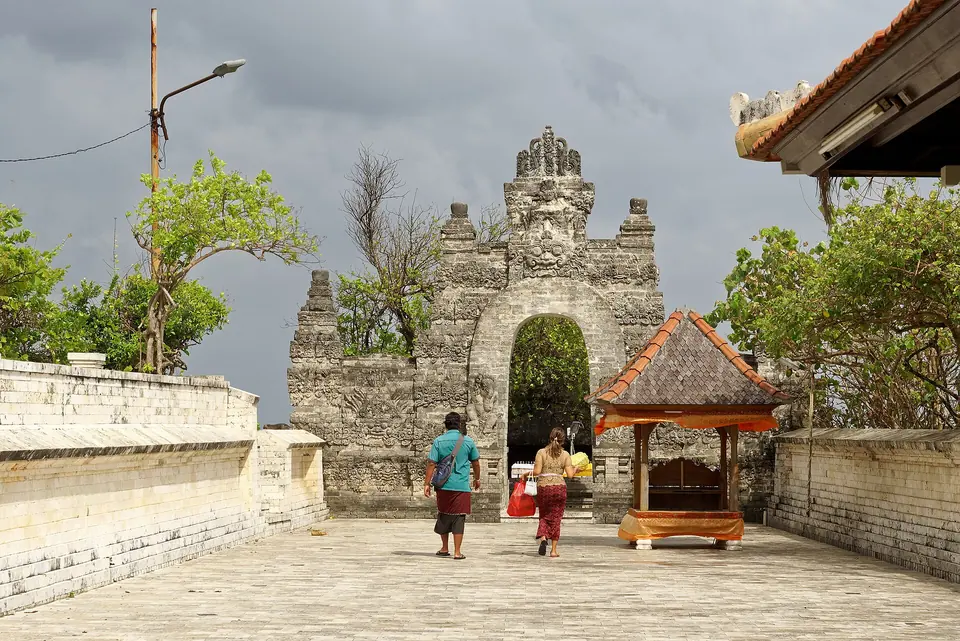
© Jakub Hałun · CC BY-SA 4.0 Uluwatu Temple
Perched on a cliff about 70 metres above the Indian Ocean on the southern tip of the island, Pura Luhur Uluwatu is guarded by mischievous monkeys. The Kecak fire dance is performed here at sunset.
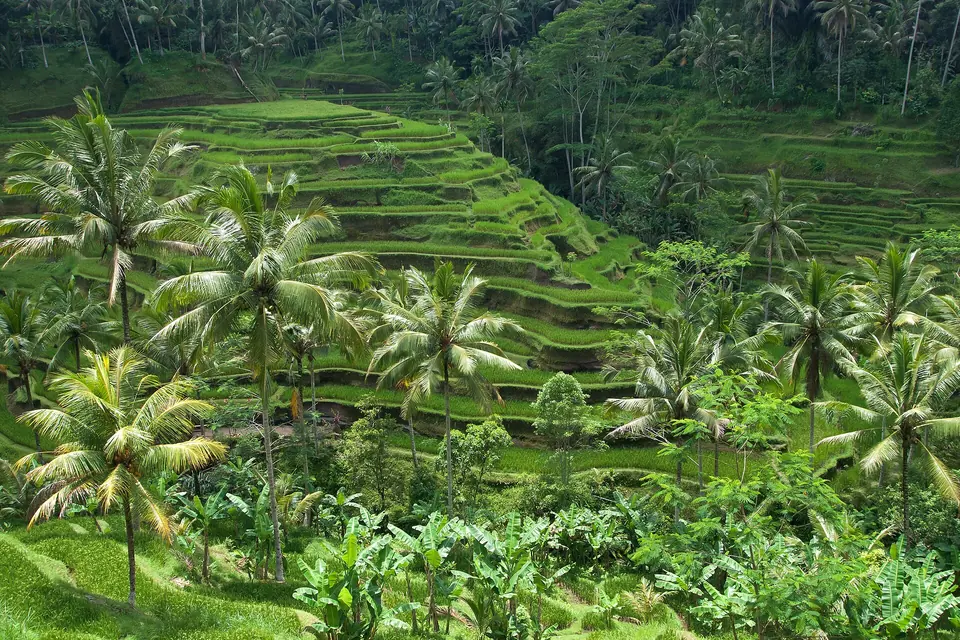
© Vyacheslav Argenberg · CC BY 4.0 Tegallalang Rice Terraces
North of Ubud, these terraces carved into a valley are irrigated by subak, a traditional cooperative water management system recognised by UNESCO as part of Bali's cultural landscape.