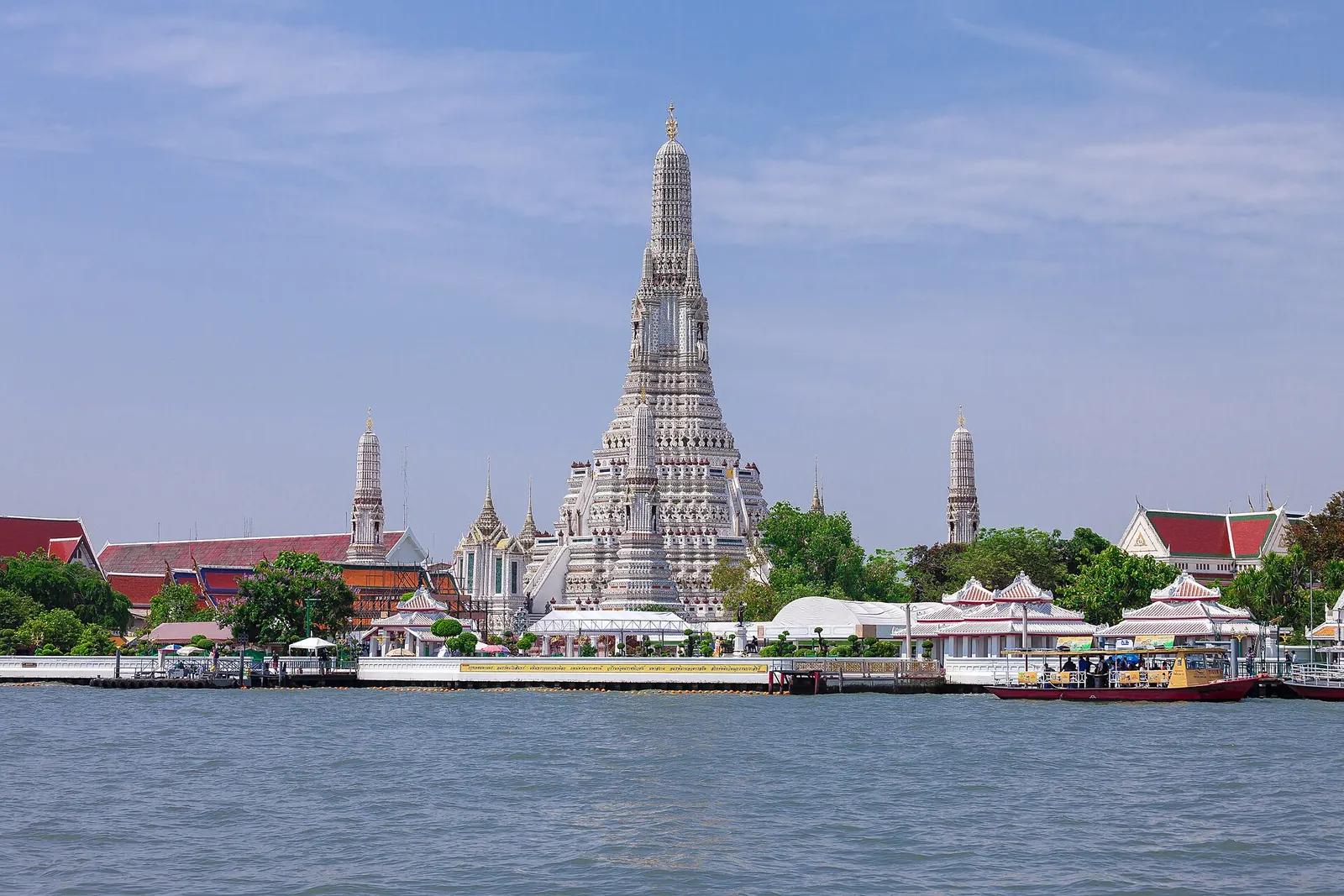
Bangkok pairs gilded temples and river ferries with night markets and some of the world's best-loved street food.
Good to know
- Best time to go
- November, December, January and February
- Flight from New York
- about 17h 20m nonstop
- Local time
- —
- Currency
- Thai Baht (THB)
- Languages
- Thai
Flight time is an estimate based on distance; actual schedules vary by airline and route.
Highlights
- Riverside temples
- River ferries
- Night markets and street food
History
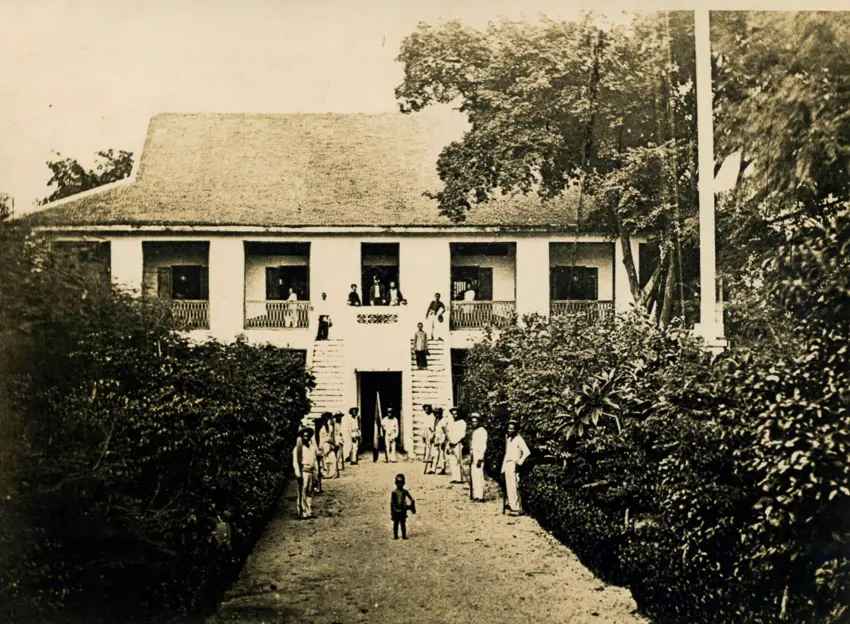
Bangkok is a young capital by Asian standards, and it knows it. When Burmese armies sacked Ayutthaya in 1767 — the Siamese capital for four centuries — the kingdom nearly ended. General Taksin regrouped at Thonburi, on the Chao Phraya's west bank; in 1782 his successor Rama I moved the court across the river, founded the Chakri dynasty, and built the Grand Palace and the Temple of the Emerald Buddha on Rattanakosin Island. The new city kept one eye on the old: Ayutthaya's layout, its ceremonies, its Buddha images rescued from the ruins. The 19th century brought deliberate modernization — Rama IV studied astronomy, Rama V abolished slavery and built railways — and Siam's canniest achievement: it was never colonized. The 20th century was turbulence — the 1932 end of absolute monarchy, Japanese occupation, coups, the 1997 financial crisis that began with the baht's collapse. Through it all the river remained the city's spine and the khlongs, the canals that earned it the name 'Venice of the East,' its memory. Modern Bangkok stacks condos over shophouses, but the old city still sets the terms.
Culture
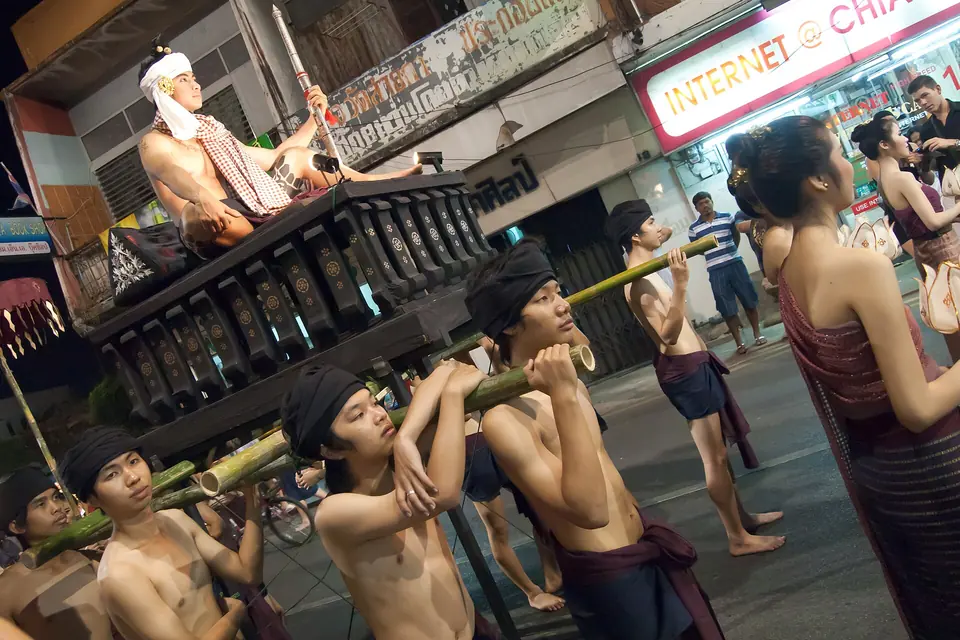
Bangkok eats out because home kitchens are optional — the street is the kitchen. Mornings start with jok, rice porridge, or patongo dough sticks dunked in soy milk from a cart that's held the same corner for thirty years. Office workers lunch on boat noodles at forty baht a bowl, eaten fast and standing if the shop is good. The city's social life happens in malls the size of towns and night markets that materialize at dusk: Chatuchak's fifteen thousand stalls on weekends, the neon food lanes of Yaowarat where the whole street smells of wok hei. Mornings also belong to the monks — saffron lines of alms-bearers moving through the sois as residents kneel with rice and curry. Thais greet with the wai, palms together, and mean it. The guiding philosophy is sanuk: life should contain fun, and work without it is a design flaw. Evenings end high — literally — on rooftop bars above the traffic, or low, on a plastic stool with a cold Leo and a plate of som tam, watching the city do what it does best: keep moving.
Landmarks
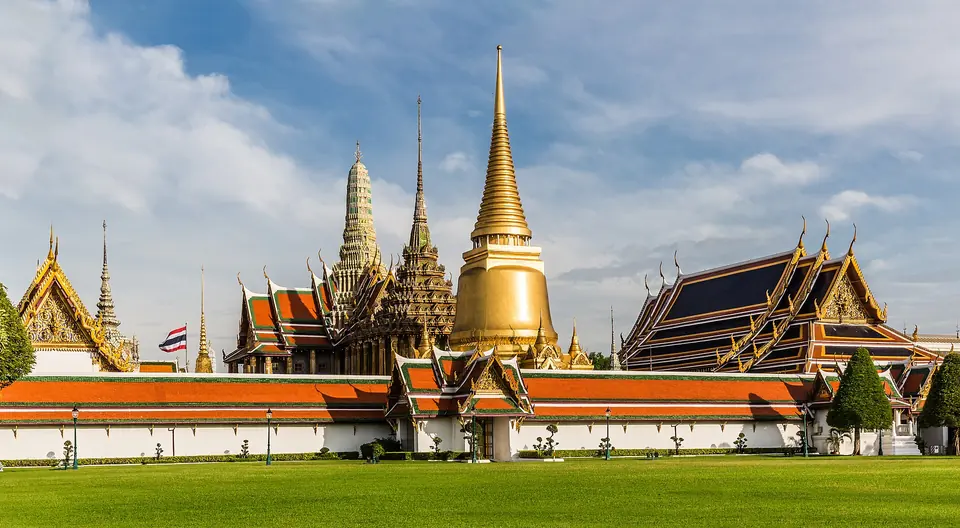
© Ninara (edited by TSP) · CC BY 4.0 Grand Palace & Wat Phra Kaew
Founded in 1782 by Rama I, the palace complex was the Chakri kings' residence for 150 years — a hundred-plus buildings of gold and mirrored tile. Inside stands Wat Phra Kaew, the Temple of the Emerald Buddha, Thailand's most sacred site; the jade statue, barely 66 centimeters tall, is dressed by the king himself with the seasons.
© Mastertongapollo · CC BY-SA 4.0 Wat Pho
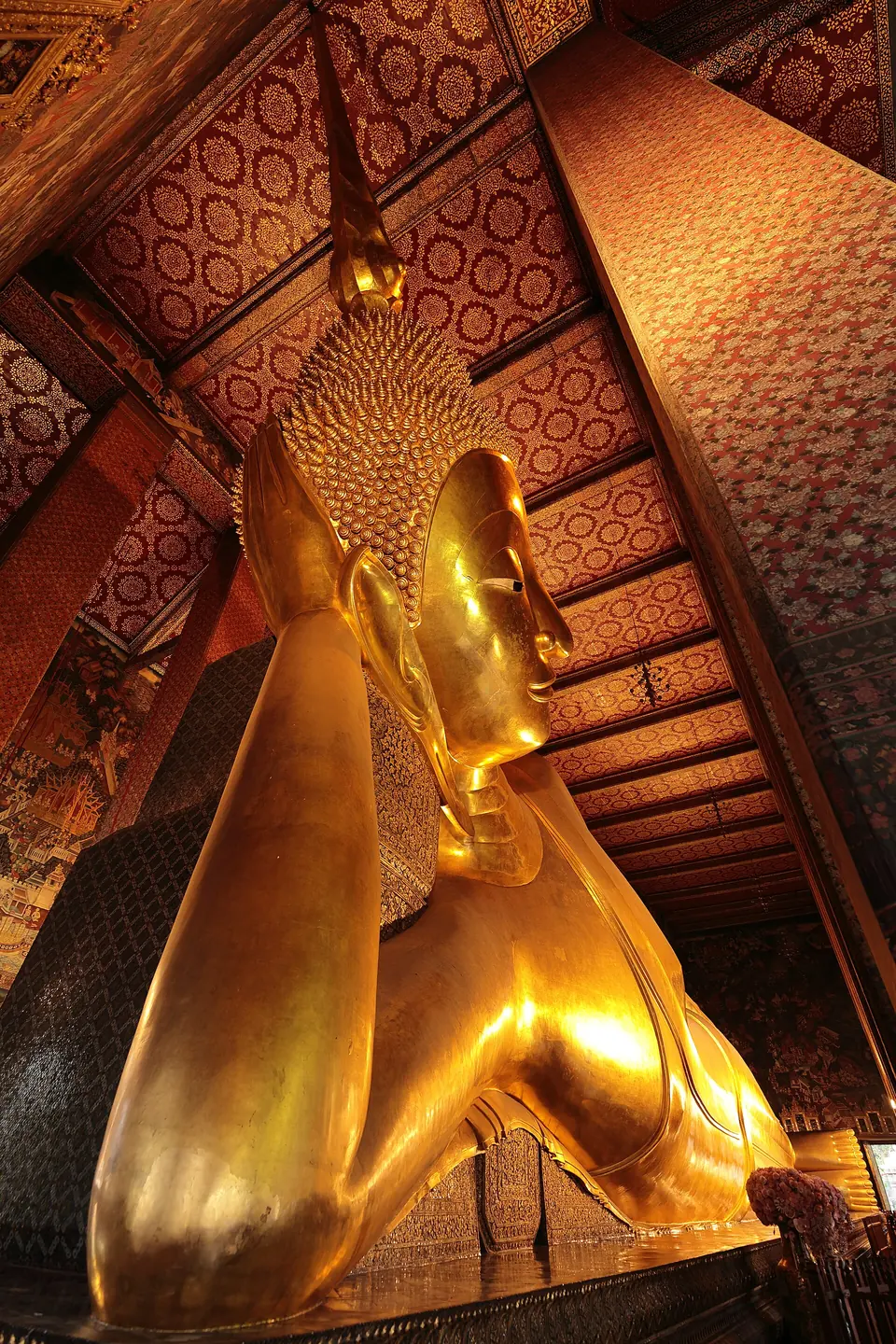
Next door to the palace, Wat Pho holds the 46-meter Reclining Buddha, its soles inlaid with 108 mother-of-pearl scenes from the Buddha's lives. Founded in the 16th century and rebuilt by Rama I, it's also Thailand's oldest center of learning and the birthplace of traditional Thai massage — the school still trains masseurs on site.
© Mastertongapollo · CC BY-SA 4.0 Wat Arun
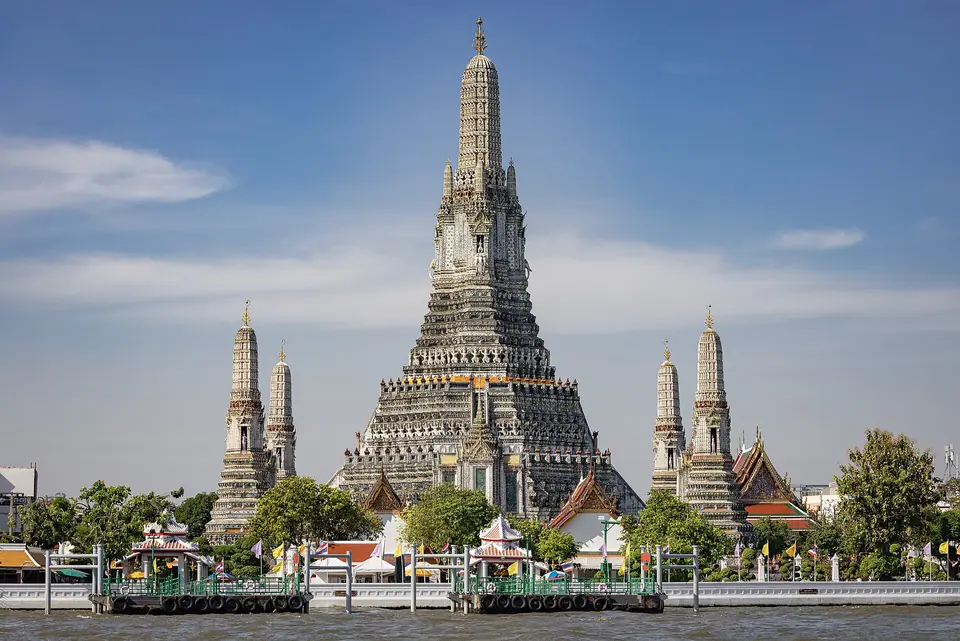
The 'Temple of Dawn' rises 82 meters over the river's west bank, its prang encrusted with millions of pieces of Chinese porcelain — ballast from 19th-century trading ships, repurposed as mosaic. Climb the steep steps at sunset, when the porcelain catches the light and the river turns to hammered gold.
© Ninara from Helsinki, Finland · CC BY 2.0 Yaowarat (Chinatown)
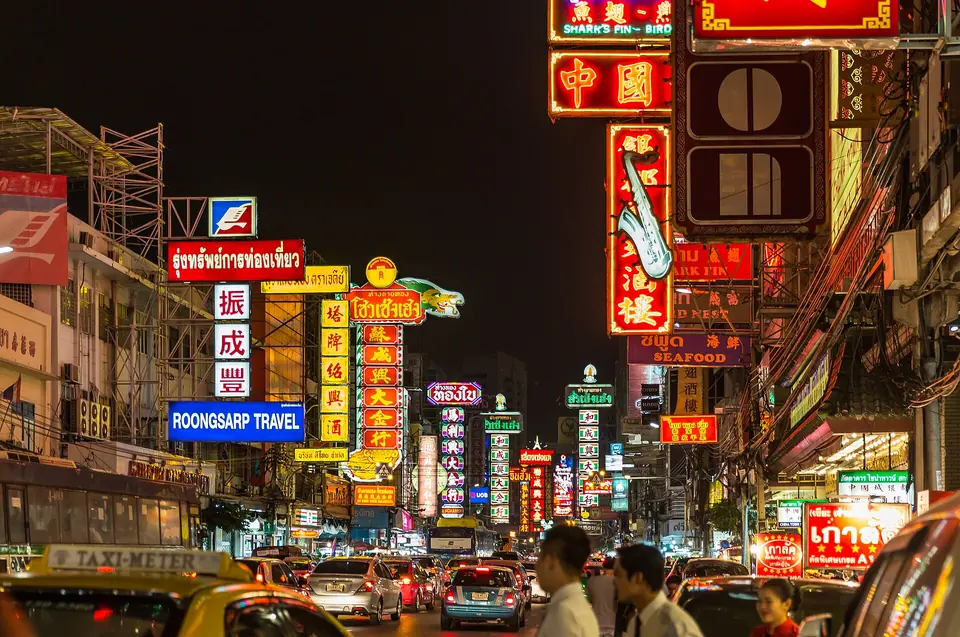
Settled by Chinese merchants in the 1780s, Yaowarat is Bangkok's great food street: by day gold shops and herbalists, by night a neon canyon of wok stalls. The bird's-nest soup and roast duck draw lines; the real move is to graze — a plate here, a plate there, a mango sticky rice to finish.
© Azreey · CC BY-SA 3.0 Chatuchak Weekend Market
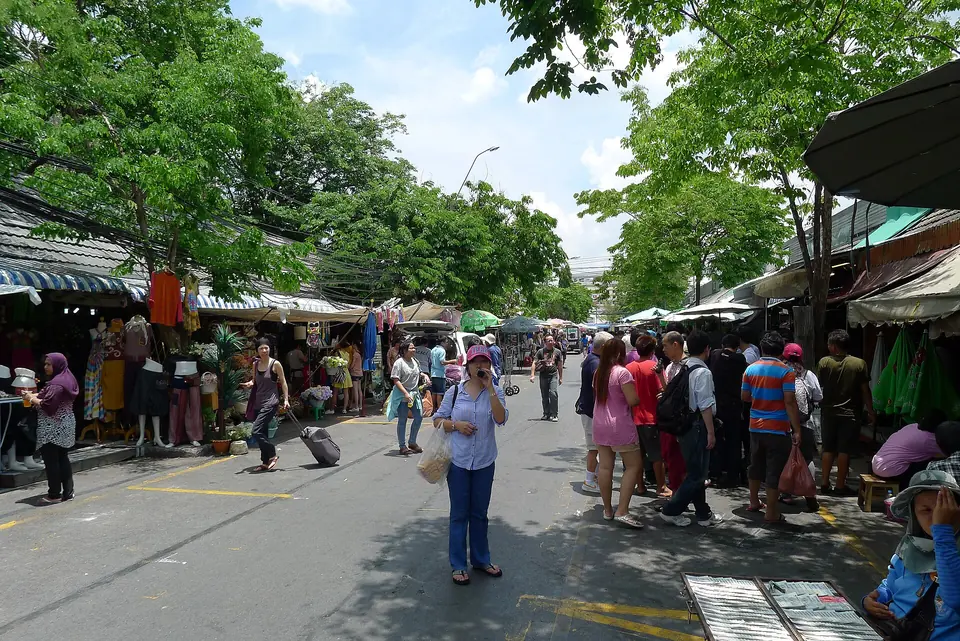
Fifteen thousand stalls across 27 acres, running since 1942 — the world's largest weekend market, and still primarily for Thais, not tourists. Ceramics, fighting fish, vintage Levi's, orchids, grilled squid: the inventory of an entire country under canvas. Go early, bring cash, get lost on purpose.
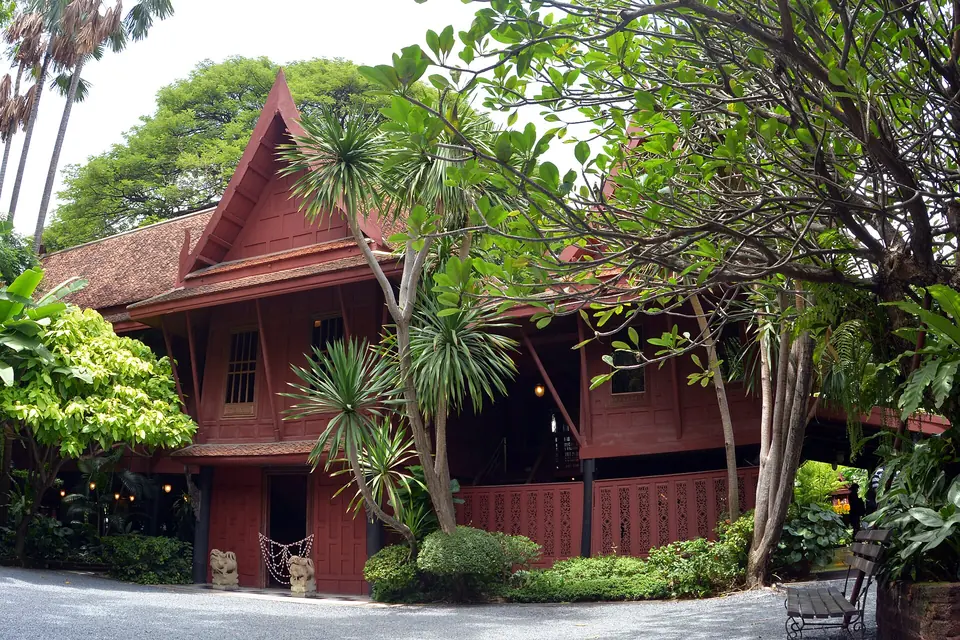
© Don Ramey Logan · CC BY-SA 3.0 Jim Thompson House
The teakwood compound of the American silk magnate who revived Thailand's silk industry in the 1950s and vanished in Malaysia in 1967, never found. Six traditional houses reassembled around a garden, filled with his Southeast Asian art collection. The guided tour is mandatory — and worth it.
Official visitor resources
Official tourism boards and visitor bureaus.