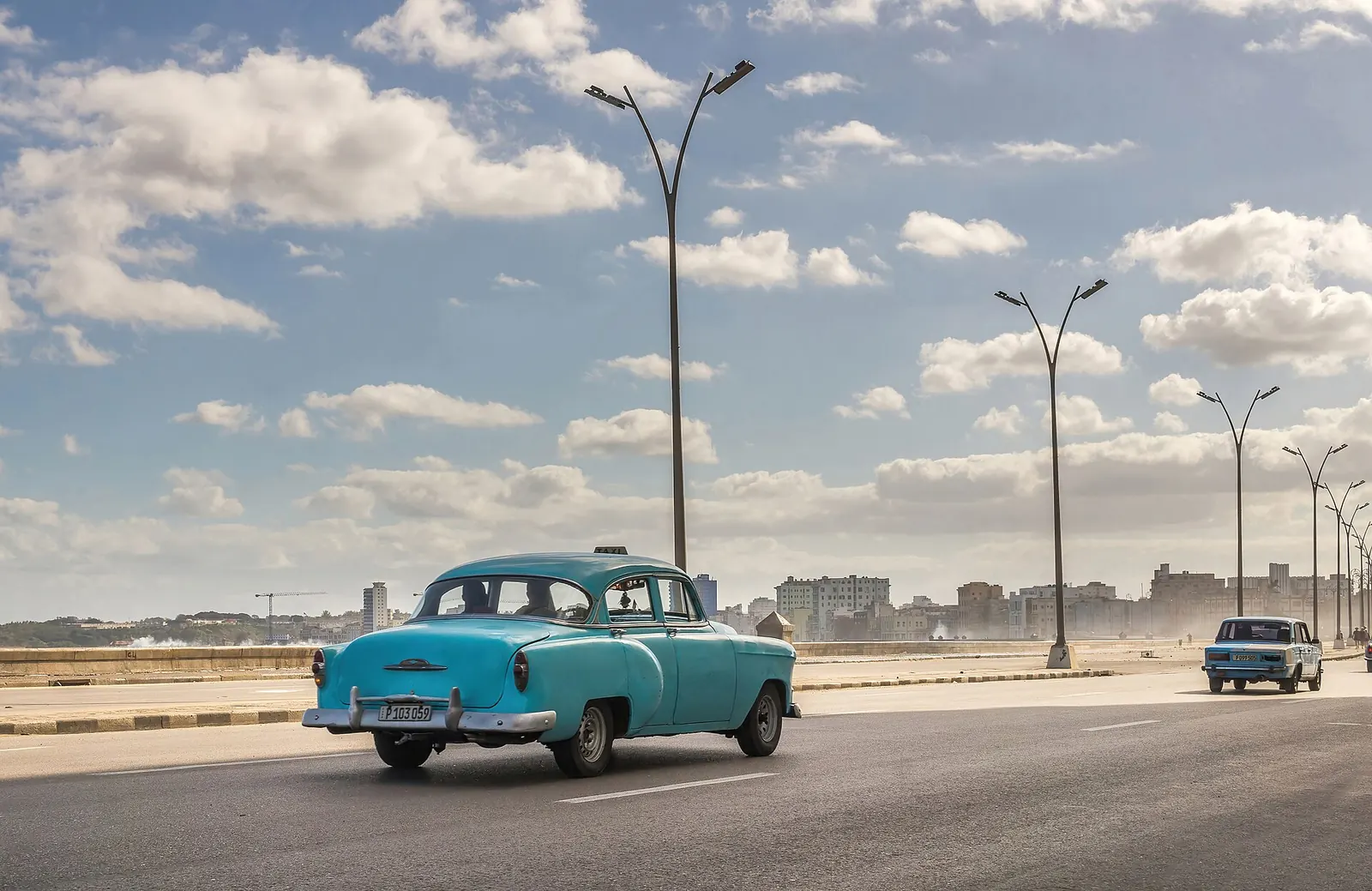
Havana feels like a city paused in time, with pastel facades, 1950s cars and son music drifting from doorways. Explore the restored squares of Old Havana, stroll the Malecón seawall at sunset and spend an evening in a jazz club or salsa hall.
Good to know
- Best time to go
- November, December, January, February, March and April
- Flight from New York
- about 3h 05m nonstop
- Local time
- —
- Currency
- Cuban Peso (CUP)
- Languages
- Spanish
Flight time is an estimate based on distance; actual schedules vary by airline and route.
Highlights
- Old Havana's plazas
- Sunset on the Malecón
- Live son, salsa and jazz
History

The Spanish founded San Cristóbal de la Habana in 1519 on a deep, sheltered bay. It became the gathering point for the treasure fleets that carried silver and gold from the Americas to Spain, and massive fortresses were built to defend it. The British captured the city in 1762 but traded it back a year later. Sugar plantations, worked by enslaved Africans, made Cuba fabulously rich in the nineteenth century. Cuba won independence from Spain in 1898 after a long struggle, though under strong United States influence. In the 1950s Havana was a glamorous playground of casinos and nightclubs. The revolution led by Fidel Castro triumphed in 1959, and the city's architecture was left largely frozen in time, now slowly being restored.
Culture

Music is everywhere in Havana: son, salsa, rumba and Afro-Cuban jazz spill from bars, plazas and living rooms. Cubans are warm and resourceful, and conversation, dominoes and baseball fill the streets. Food is simple and home-style: ropa vieja (shredded beef), black beans and rice called moros y cristianos, and fried plantains, best eaten at paladares, family-run restaurants. The mojito and daiquirí were both popularised here. Bring cash and expect slow internet; patience is part of the experience.
Landmarks

© Velvet · CC BY-SA 4.0 Old Havana
The historic centre and its fortifications are a UNESCO World Heritage Site. Its four main squares, Plaza de Armas, Plaza de la Catedral, Plaza Vieja and Plaza de San Francisco, are linked by lanes of colonial buildings.

© Lukas Mathis · CC BY-SA 2.0 Malecón
This eight-kilometre seawall and boulevard runs along the coast from Old Havana to Vedado. At sunset it becomes the city's living room, with fishermen, couples and musicians gathering as the waves crash over the wall.

© Ezarate · CC BY-SA 4.0 Castillo del Morro
Guarding the entrance to Havana Bay since the late sixteenth century, this fortress and its lighthouse offer views across to the city. Every evening at nine a cannon is fired from the nearby La Cabaña fortress in a centuries-old ceremony.