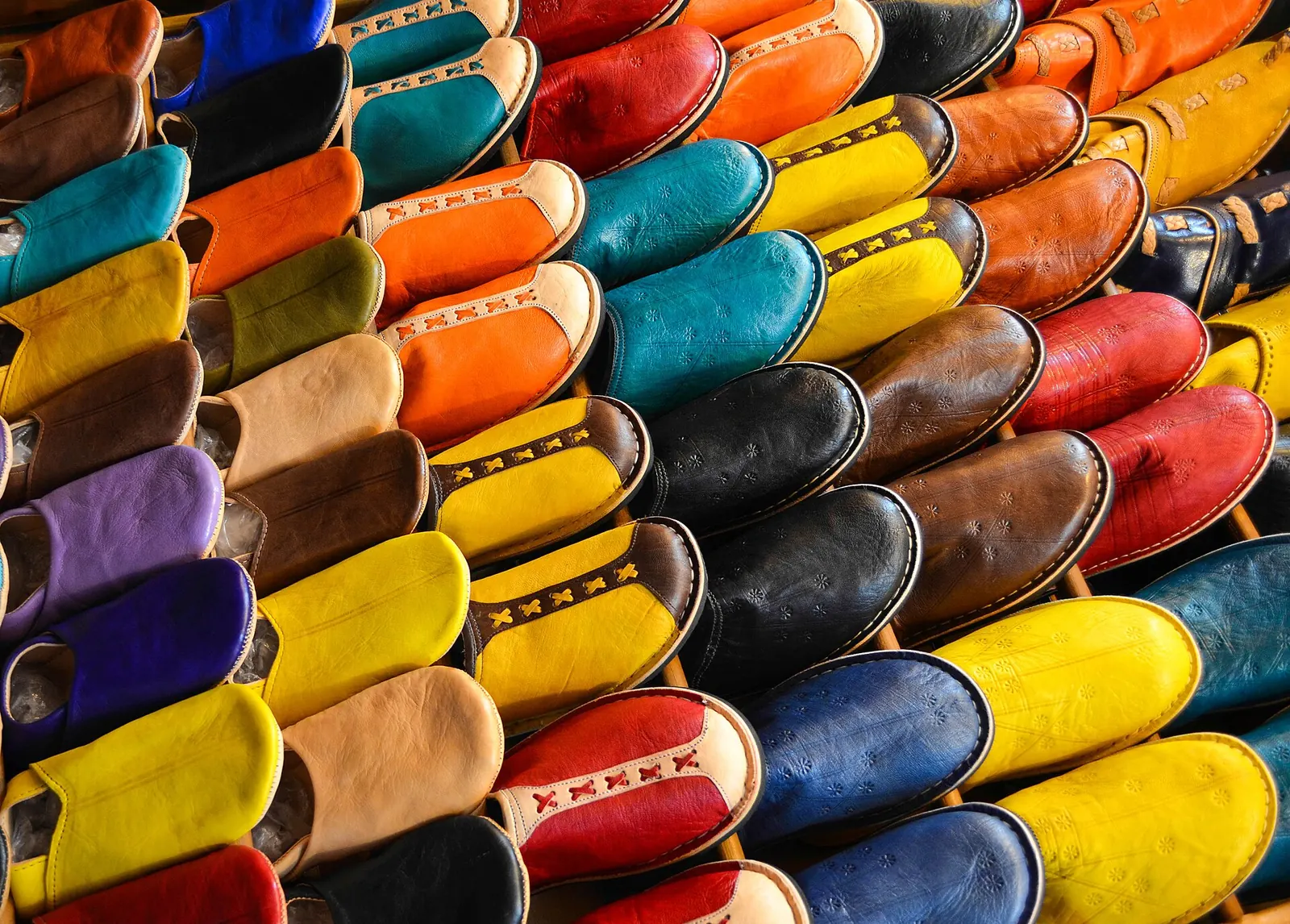
Marrakech's medina is a maze of markets and courtyards. Escape the bustle in quiet gardens, or head to the Atlas Mountains for a day of fresh air.
Good to know
- Best time to go
- March, April, May, October and November
- Flight from New York
- about 7h 35m nonstop
- Local time
- —
- Currency
- Moroccan Dirham (MAD)
- Languages
- Arabic, Standard Moroccan Tamazight and French
Flight time is an estimate based on distance; actual schedules vary by airline and route.
Highlights
- Medina markets
- Courtyard riads
- Atlas Mountains day trips
History
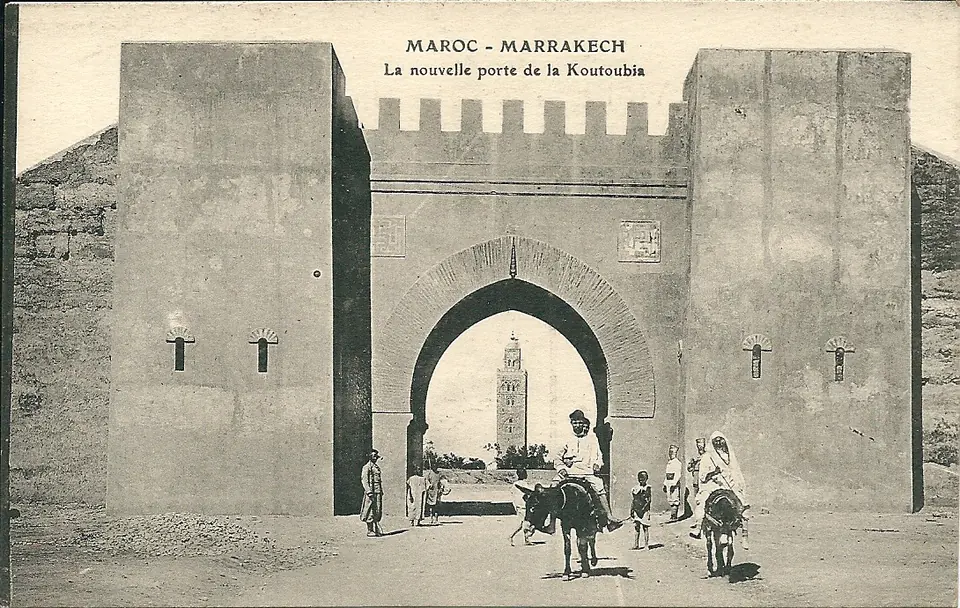
Marrakech was a deliberate act of empire. In 1070 the Almoravid leader Youssef ben Tachfine pitched his camp on the Haouz plain, at the foot of the Atlas, and founded a capital designed to command the caravan routes to Timbuktu and the gold of the Sudan. His successor Ali Ben Youssef raised the great mosque and the city's first walls. In 1147 the Almohads stormed in, tore down the Almoravid palace, and built the Koutoubia — its minaret still the city's compass. The golden age came under the Saadians in the sixteenth century: Sultan Ahmed al-Mansour, enriched by the Battle of the Three Kings in 1578, built the El Badi Palace with Italian marble and Sudanese gold, and the Ben Youssef Madrasa taught 900 students beneath carved cedar. The Alaouites let it decline; the French, arriving in 1912, built the orderly Guéliz district outside the walls while leaving the medina to its labyrinth. What the visitor feels is deep time worn smooth — every dynasty rebuilt the same red city, and the red dust gets into everything.
Culture
The day in Marrakech is measured in tea. Mint tea — gunpowder green, fresh mint, enough sugar to stand a spoon in — is poured from a height to raise the foam, and refused only at the cost of offence. Mornings belong to the souks: dyers' vats of indigo and saffron, hammered brass, the smell of cedar shavings and tanning leather. At dusk the whole city drains toward Jemaa el-Fnaa, where a hundred grills light at once and the smoke carries cumin and grilled lamb across the square; storytellers, gnawa musicians, and henna artists work the crowds between the food stalls. Friday is couscous day, steamed fluffy and heaped with seven vegetables. The hammam is a weekly ritual — black soap, the kessa glove, eucalyptus steam — as social as it is cleansing. And behind unmarked wooden doors, riads hide interior courtyards of orange trees and fountains, where the medina's roar drops to birdsong.
Landmarks
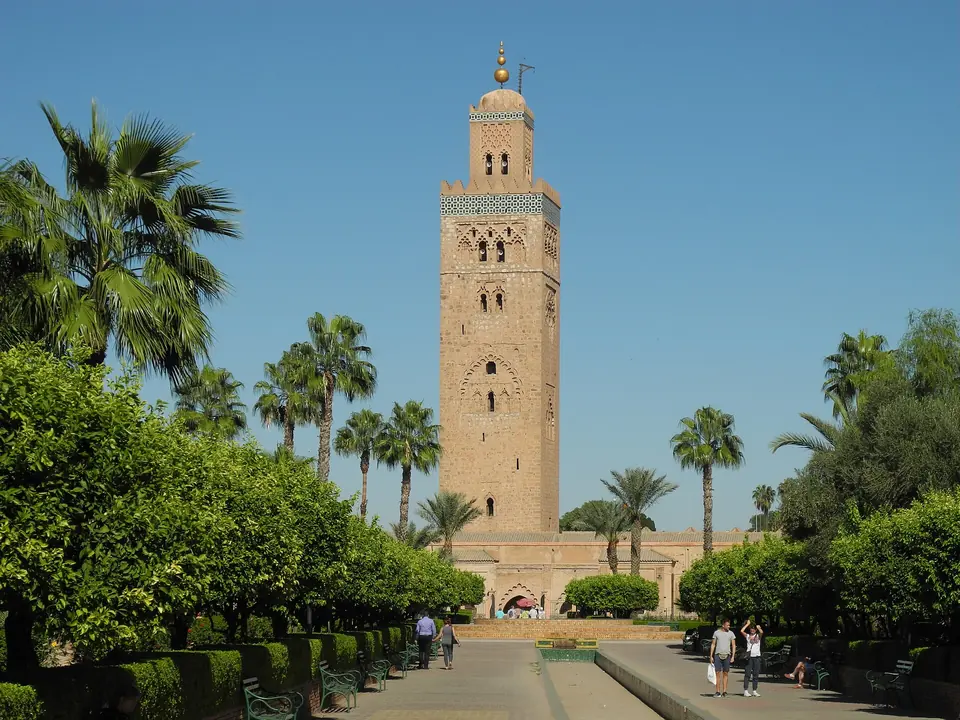
© Baca12 · CC BY-SA 4.0 Koutoubia Mosque
Completed in 1199 under the Almohad caliph Yaqub al-Mansur, the 77-metre minaret is the prototype for the Giralda in Seville and Rabat's Hassan Tower — Marrakech exported its architecture to an empire. Non-Muslims can't enter, but the gardens around it are the city's evening promenade.
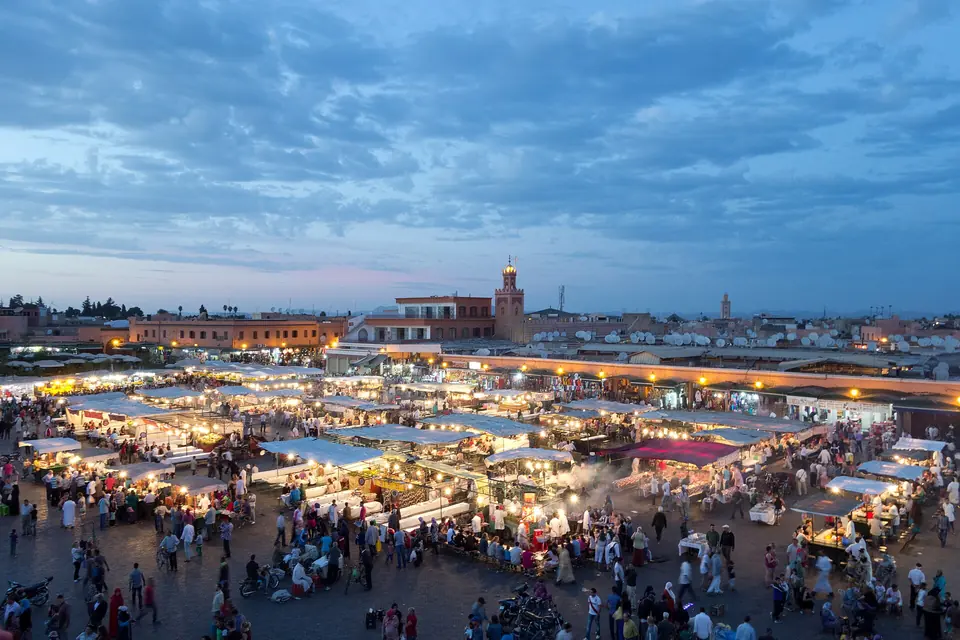
© Boris Macek · CC BY-SA 3.0 Jemaa el-Fnaa
By day a vast dusty esplanade of orange-juice carts and snake charmers; at dusk it becomes the greatest open-air restaurant in Africa. The square has been the city's stage since the Almoravids — its name may mean 'assembly of the dead,' a reminder of older, harsher centuries.
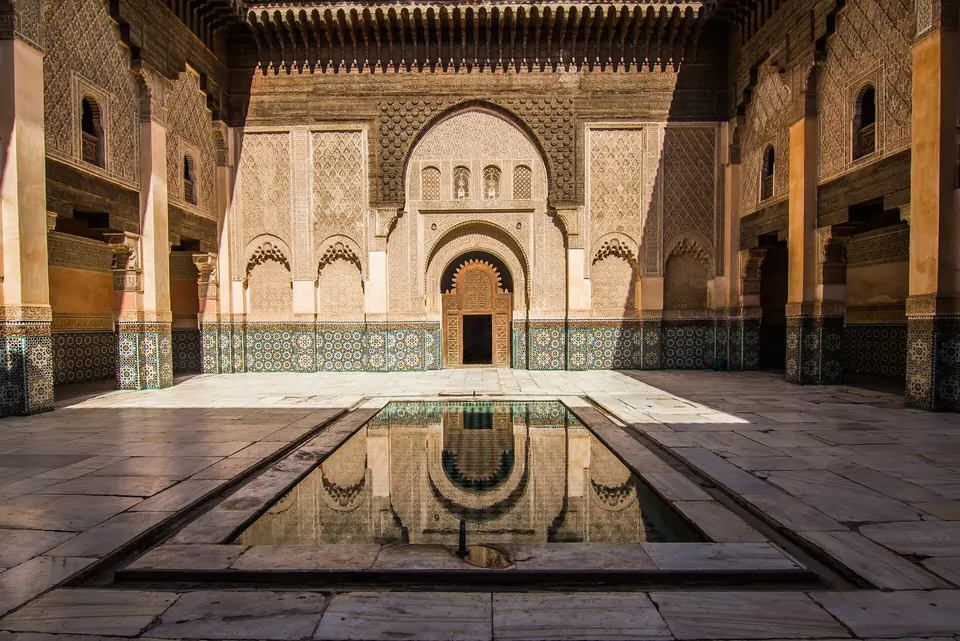
© Wolfgang B · CC BY-SA 3.0 Ben Youssef Madrasa
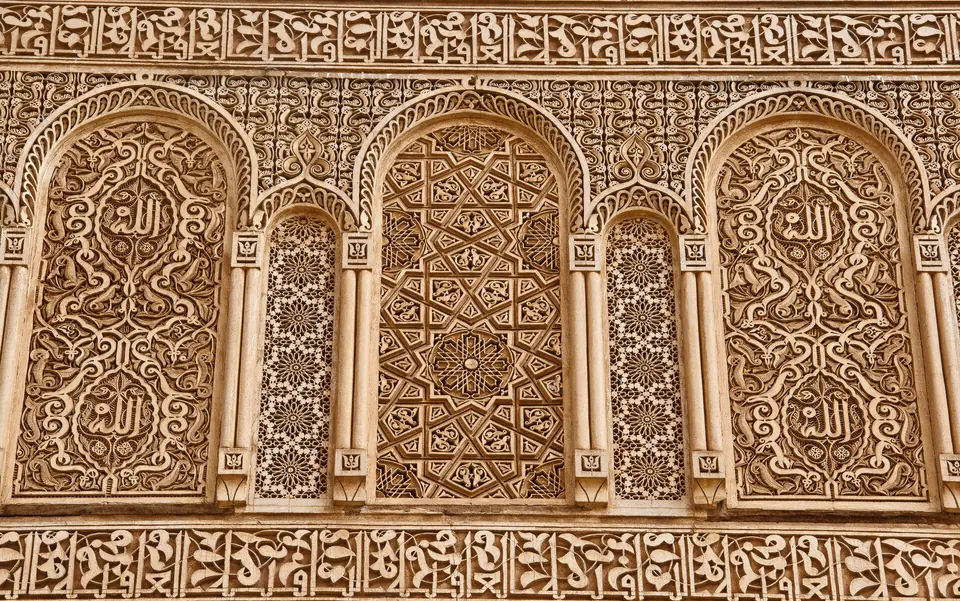
The Saadian theological college, rebuilt 1564–65, housed 900 students in cells around one of the most beautiful courtyards in the Islamic world — zellige tilework, carved cedar, marble, and stucco lace. It ran as a school until 1960; the silence now feels studious.
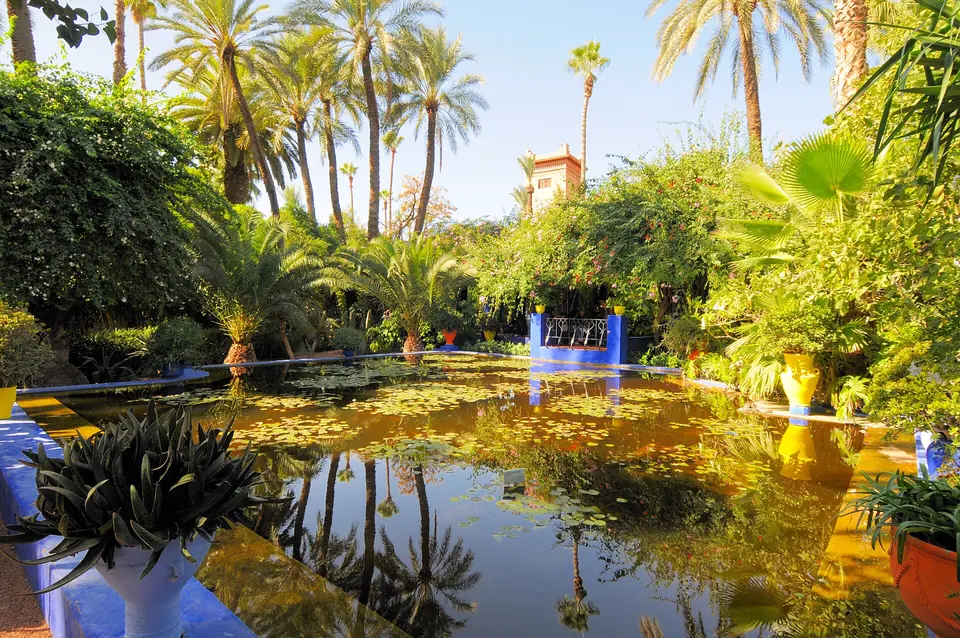
© Viault · CC BY-SA 3.0 Jardin Majorelle
French painter Jacques Majorelle created this garden in 1923 and painted its villa the famous 'Majorelle blue' — a cobalt that seems to vibrate against the bamboo and bougainvillea. Yves Saint Laurent and Pierre Bergé bought it in 1980, saving it from a hotel development; Saint Laurent's ashes were scattered here.

© Val Traveler · CC BY-SA 4.0 Bahia Palace
Built between 1866 and 1900 for the grand vizier Si Musa and his son Ba Ahmed, the palace sprawls across eight hectares of painted ceilings, stained glass, and courtyards with orange trees. The name means 'brilliance' — Ba Ahmed built it for his favourite wife, Lalla Zina.
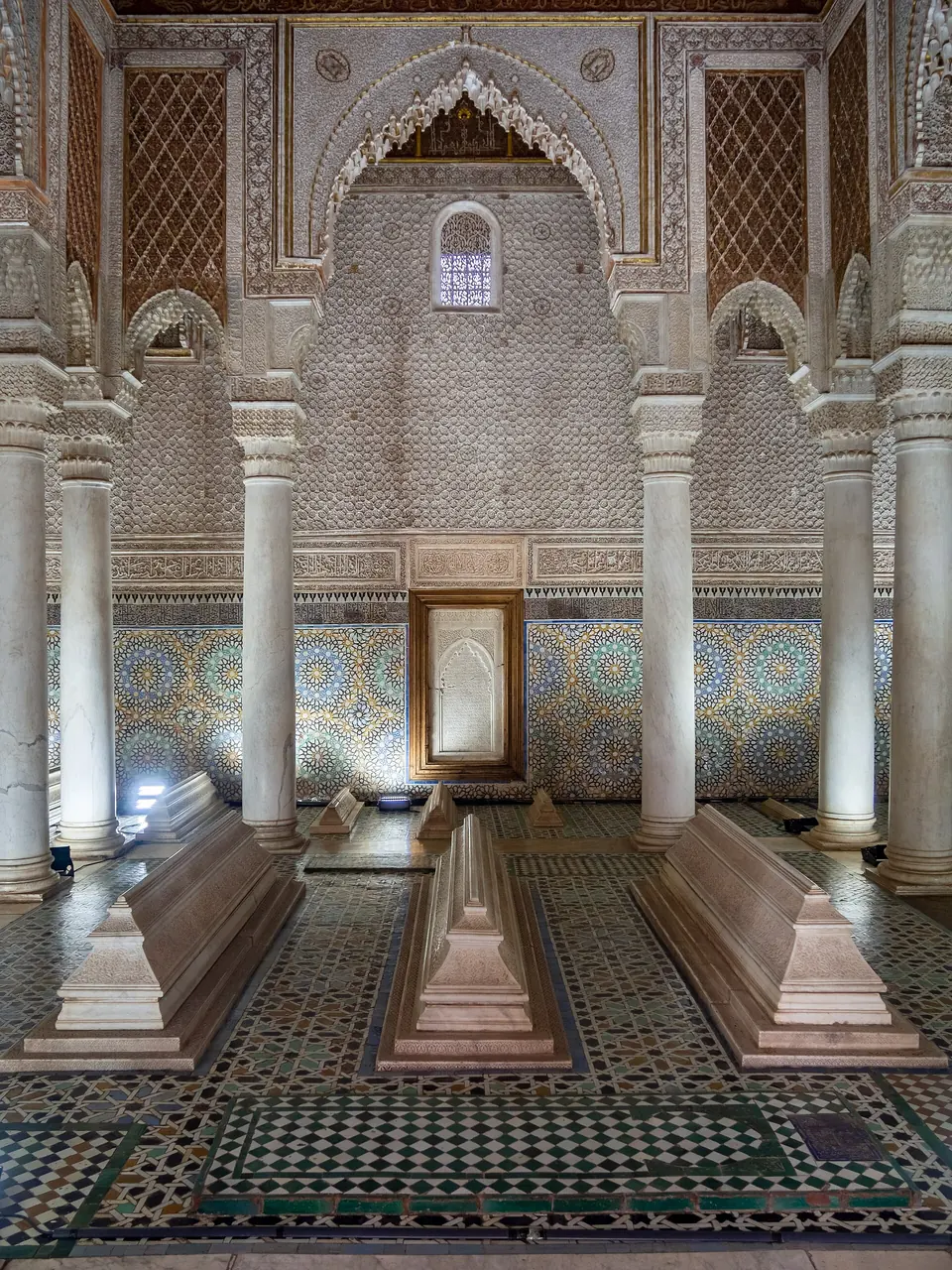
© C messier · CC BY-SA 4.0 Saadian Tombs
Sealed behind walls for two centuries after the Alaouites took power, the tombs were rediscovered by the French in 1917. The Chamber of the Twelve Columns, where Sultan Ahmed al-Mansour lies under carved cedar and Italian marble, is the finest room the Saadians left behind.
Official visitor resources
Official tourism boards and visitor bureaus.