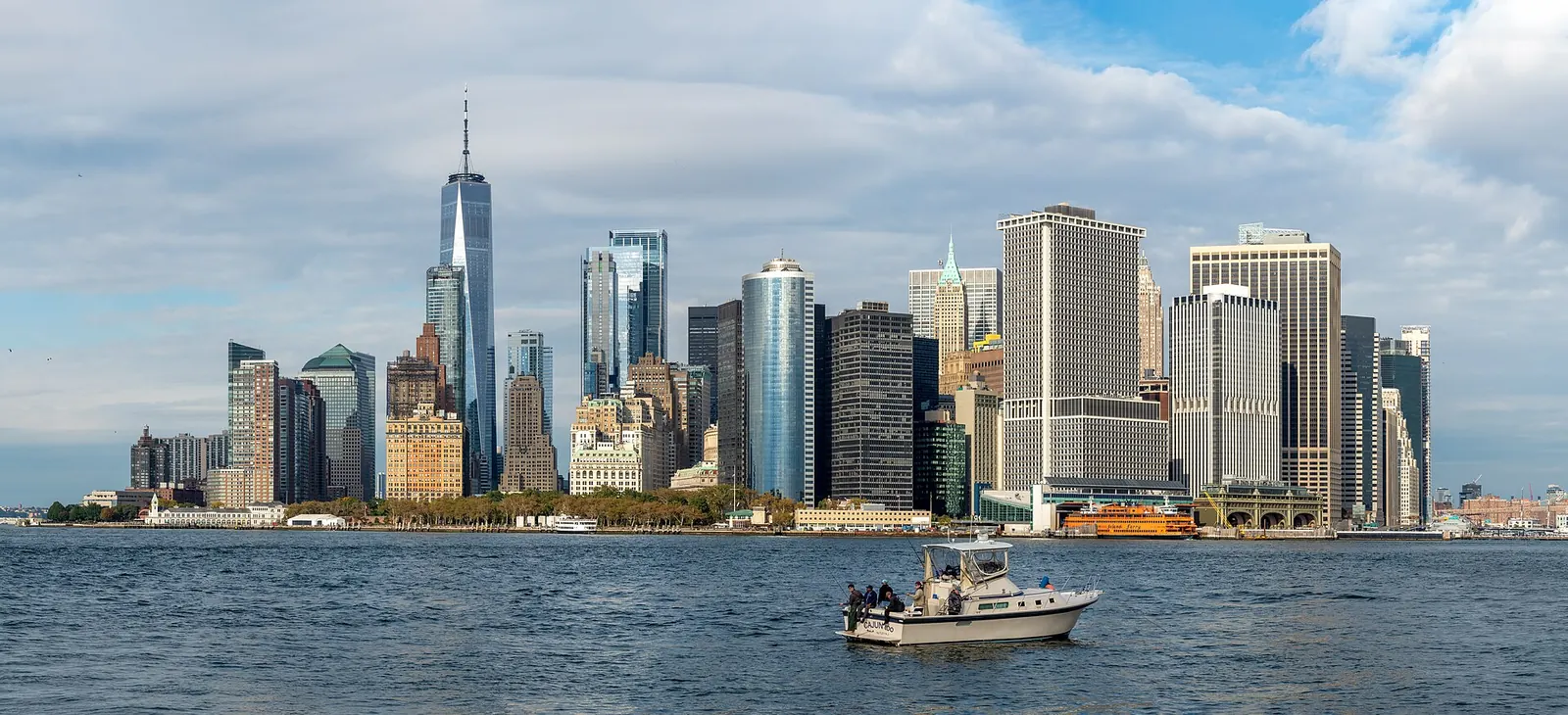
Each New York neighbourhood feels like its own city. Walk the bridges, explore the parks, and eat your way through one of the most diverse food scenes anywhere.
Good to know
- Best time to go
- April, May, June, September, October and November
- Local time
- —
- Currency
- US Dollar (USD)
- Languages
- English
Highlights
- Walking across the bridges
- Central Park in every season
- Neighbourhood food tours
History

Four centuries of reinvention are stacked in New York's streets like geological strata. The Dutch bought Manhattan in 1626 and built New Amsterdam, a rough trading post of warehouses and taverns; the English seized it in 1664 and renamed it for the Duke of York. By the 1800s the Erie Canal made it America's commercial throat, and between 1892 and 1954 some twelve million immigrants passed through Ellis Island — Irish, Italian, Jewish, and later Puerto Rican, Dominican, Chinese — each wave rewriting the city's accent. The five boroughs were welded into one metropolis in 1898. The 1920s gave Harlem its Renaissance — Langston Hughes, Duke Ellington at the Cotton Club — while the Depression raised the Empire State Building in thirteen months. The city nearly went bankrupt in 1975, then reinvented itself again through art, finance, and sheer nerve. September 11, 2001 scarred Lower Manhattan; the memorial's twin voids now sit where the towers stood. What a visitor feels is that nothing here is ever finished — the past isn't preserved so much as built over, argued with, and put back to work.
Culture

New York runs on rituals performed at speed. The day starts at the bodega — coffee, light and sweet, and a baconeggandcheese ordered as one word. Commuters read on the subway with the practiced indifference of people who have seen everything; tourists are forgiven, gawking is not. Lunch might be a two-dollar pizza slice folded lengthwise, eaten walking, or hand-pulled noodles in Flushing, or a pastrami sandwich at Katz's the size of a brick. Evenings belong to stoops in summer, to gallery openings in Chelsea on Thursday nights, to the roar of Yankee Stadium or a basement jazz club in the Village. Sundays, Central Park fills with runners, saxophonists, and chess hustlers at the stone tables. What locals care about is the block — the Dominican bakery on 181st, the Ukrainian diner in the East Village, the argument over which borough has the real Chinatown. The city is expensive, loud, and occasionally rude; it is also the only place where a Senegalese taxi driver will give you restaurant advice worth crossing town for.
Landmarks

© AskALotl · CC0 Statue of Liberty
A gift from France dedicated in 1886, Bartholdi's copper colossus was the first thing twelve million immigrants saw after weeks at sea. Her torch was once a working lighthouse. Climb to the crown — 354 steps — and the harbour spreads out exactly as it did for every arrival since.

© Sam Valadi · Public domain Empire State Building
Raised in thirteen months during the Depression and opened in 1931, it was a bet that the future would come to Fifth Avenue. It won. The Art Deco lobby is a temple to optimism; the 86th-floor observatory still gives the best lesson in the city's geography — five boroughs laid out like a map.

© Christian David · CC BY-SA 4.0 Brooklyn Bridge
When it opened in 1883 it was the longest suspension bridge on earth, and twenty-one elephants were marched across it to prove it wouldn't fall. Walk it at sunset from Brooklyn: the cables frame the skyline, and the wooden promenade creaks under twenty thousand feet a day.

© Anthony Quintano from Hillsborough, NJ, United States · CC BY 2.0 Central Park
Frederick Law Olmsted and Calvert Vaux won the 1858 design competition with a radical idea: a democratic landscape where a banker and a bricklayer share the same meadow. Eight hundred and forty-three acres later it remains exactly that — the city's shared backyard, from the Ramble's birdwatchers to the Great Lawn's picnics.

© Hugo Schneider · CC BY-SA 2.0 The Metropolitan Museum of Art
Founded in 1870 by civic boosters who thought New York deserved a Louvre, the Met now holds five thousand years of art across two million square feet. Don't try to see it all. Do the Temple of Dendur at closing light, then climb to the roof garden for the skyline.

© Paul Sableman · CC BY 2.0 9/11 Memorial
Two acre-sized voids drop thirty feet into the footprints of the Twin Towers, water falling into darkness you can't see the bottom of. The names of 2,983 victims are cut into bronze parapets. Survivors' trees and the museum's slurry wall make grief architectural — and somehow bearable.
Official visitor resources
Official tourism boards and visitor bureaus.