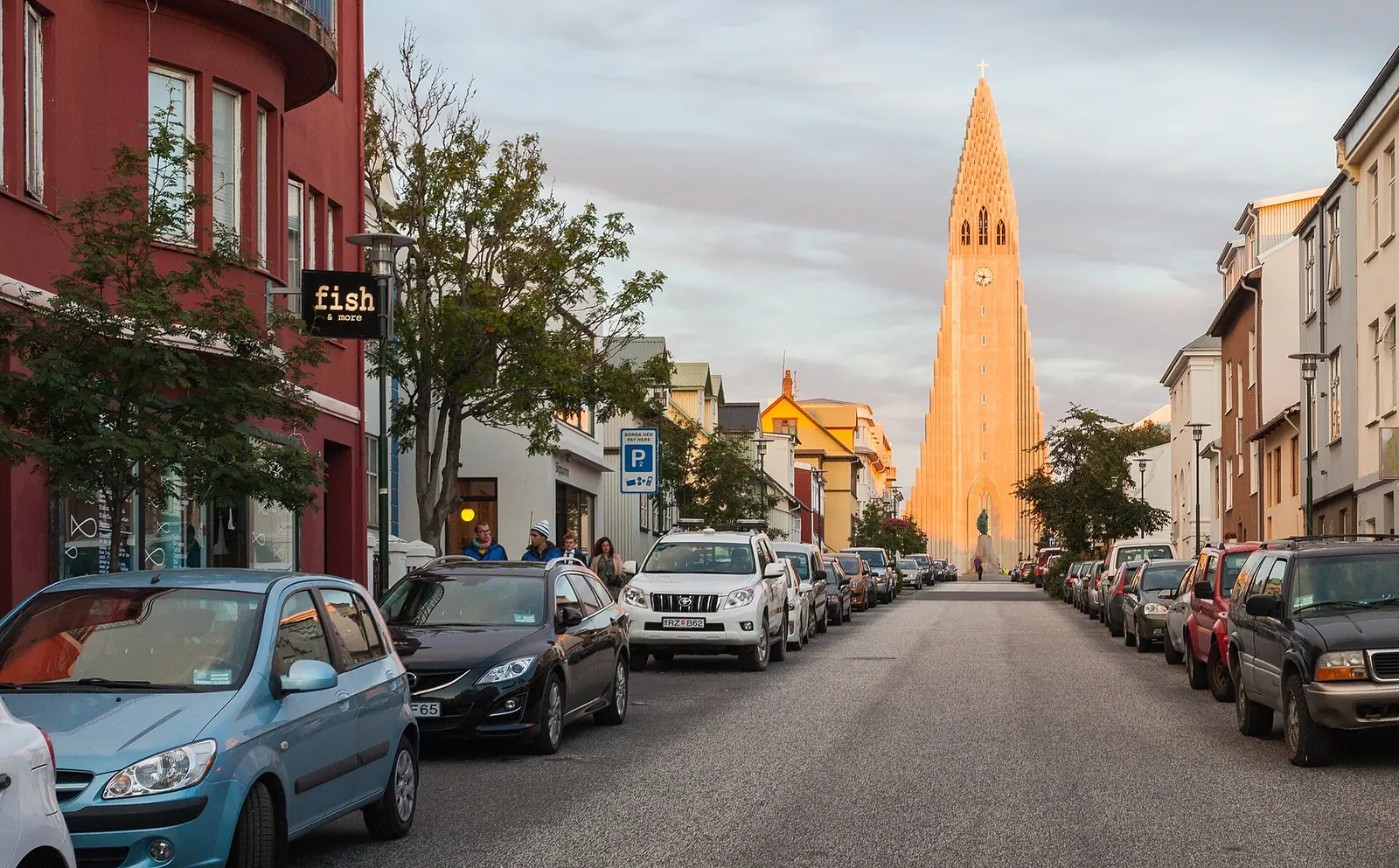
Reykjavík is a compact base for exploring Iceland's volcanic landscapes. Winter brings the chance of northern lights; summer brings near-endless daylight.
Good to know
- Best time to go
- June, July, August and September
- Flight from New York
- about 5h 30m nonstop
- Local time
- —
- Currency
- Icelandic Króna (ISK)
- Languages
- Icelandic
Flight time is an estimate based on distance; actual schedules vary by airline and route.
Highlights
- Geothermal pools
- Waterfall day trips
- Northern lights in winter
History
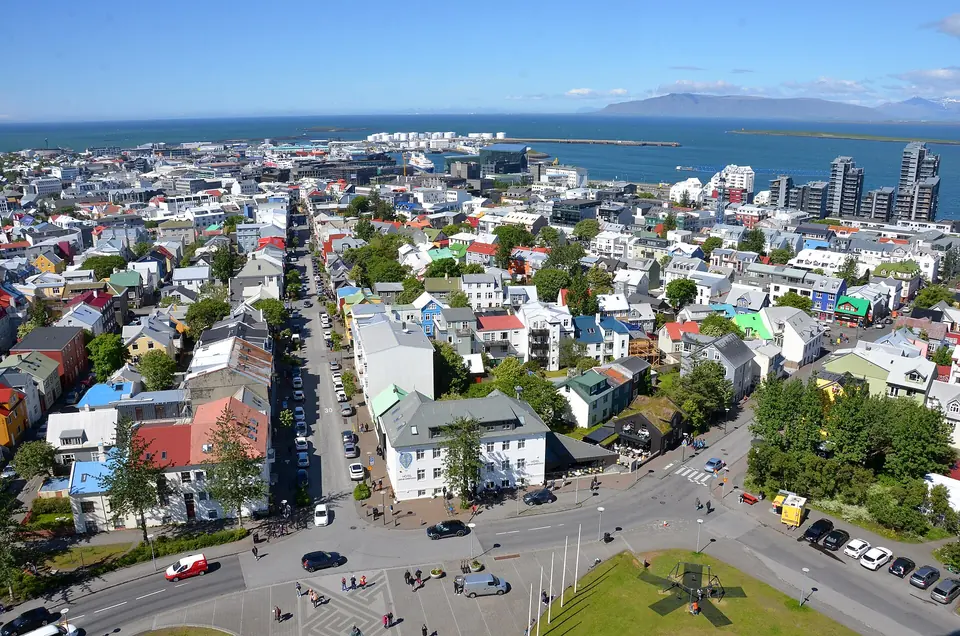
Reykjavík began with smoke. When the Norse chieftain Ingólfr Arnarson landed around 874 — the first permanent settler of Iceland — he named the bay Reykjavík, 'smoky bay,' for the steam rising from geothermal vents. For nine centuries it stayed a cluster of farms under Danish rule, a trading post the Danish crown mostly ignored; when it received a town charter in 1786 it had 167 residents. The nineteenth century brought Jón Sigurðsson's independence movement and a slow national awakening. Iceland became a republic on 17 June 1944 while Denmark was under Nazi occupation. British and then American troops occupied the island in the Second World War — Keflavík's base stayed until 2006 — and the Cod Wars of the 1950s–70s saw tiny Iceland face down Britain over fishing rights and win. The 2008 banking collapse, the kreppa, wiped out fortunes and pride in a week. What rose from it is the Reykjavík you meet today: smaller, surer, and done apologizing for being itself.
Culture
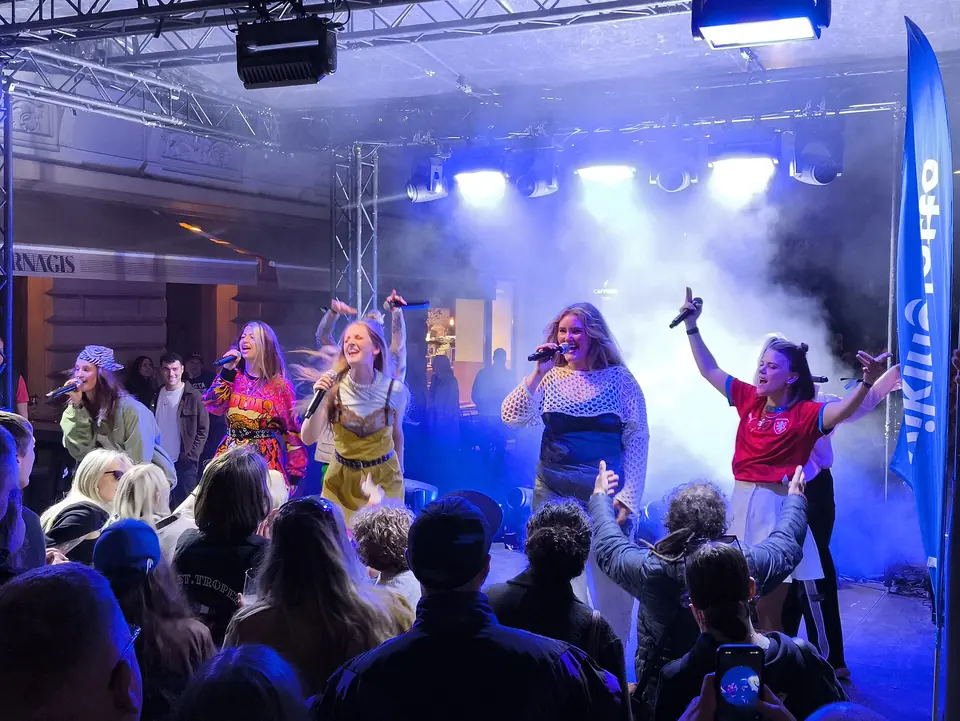
The city's real social club is the swimming pool. Every neighbourhood has its sundlaug — a geothermally heated outdoor pool where Icelanders conduct friendships, business, and gossip in 40-degree hot pots, winter and summer, in any weather. Afterwards: rye bread baked in geothermal sand, or a pylsa from Bæjarins Beztu Pylsur, the harbour hot-dog stand Bill Clinton made famous. Midwinter brings Þorrablót, when Icelanders toast the dark with fermented shark and Brennivín schnapps, daring each other to eat the worst of it. December belongs to the Jólabókaflóð, the 'Christmas book flood' — publishers release nearly every book of the year in November, and families give each other books on Christmas Eve and spend the night reading. Music runs deep: from the Airwaves festival to choirs in Hallgrímskirkja. And the nightlife has its own verb-worthy ritual, the rúnturinn — the weekend pub crawl around a downtown you can cross on foot in ten minutes.
Landmarks
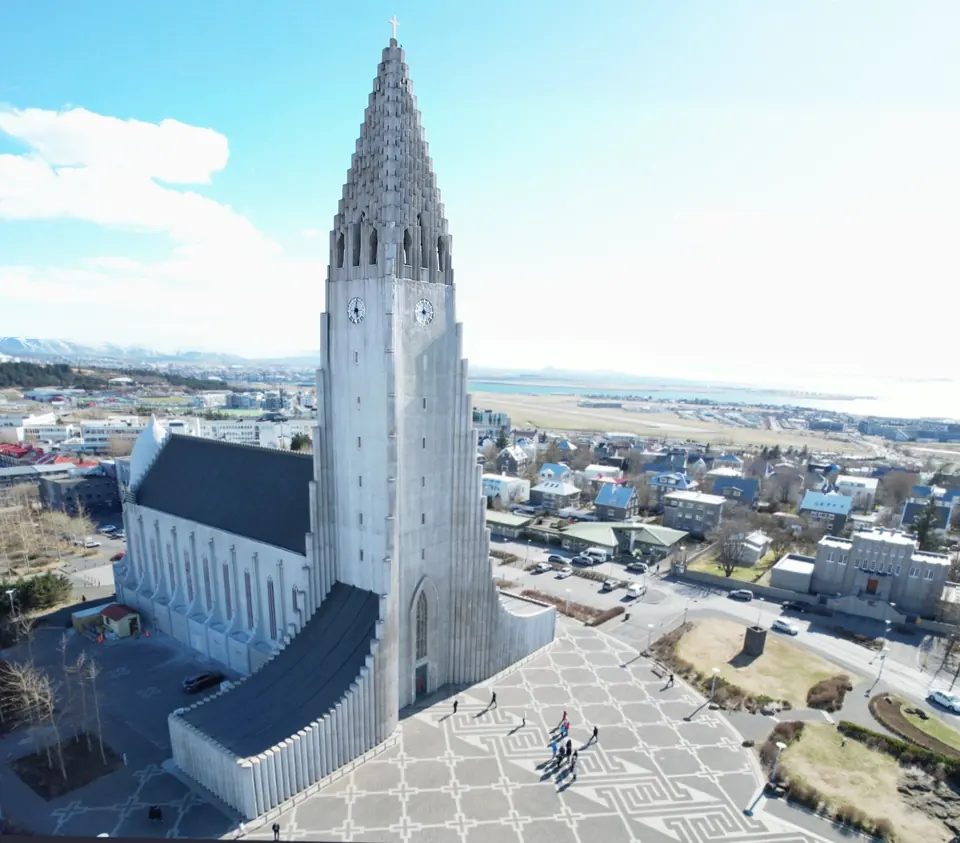
© Steinninn · CC BY 4.0 Hallgrímskirkja
Guðjón Samúelsson's concrete church took 41 years to build (1945–1986), its stepped facade modelled on Iceland's basalt columns. At 73 metres it's the country's tallest church. Take the lift to the tower: the whole city, the harbour, and the mountains across the bay arrange themselves below.
© Holger Uwe Schmitt · CC BY-SA 4.0 Harpa
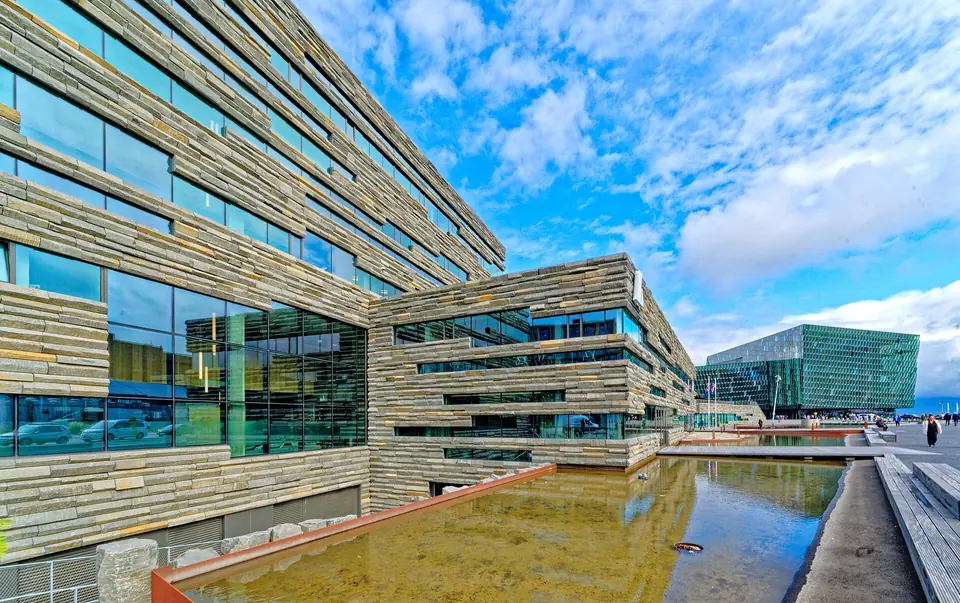
Opened in 2011 in the middle of the financial wreckage, the concert hall was Iceland's defiant answer to the kreppa. Henning Larsen's honeycomb glass facade — designed with artist Olafur Eliasson — catches the harbour light and throws it back in colour. Inside, the acoustics are worth a concert on their own.
© john.purvis · CC BY 2.0 Sun Voyager
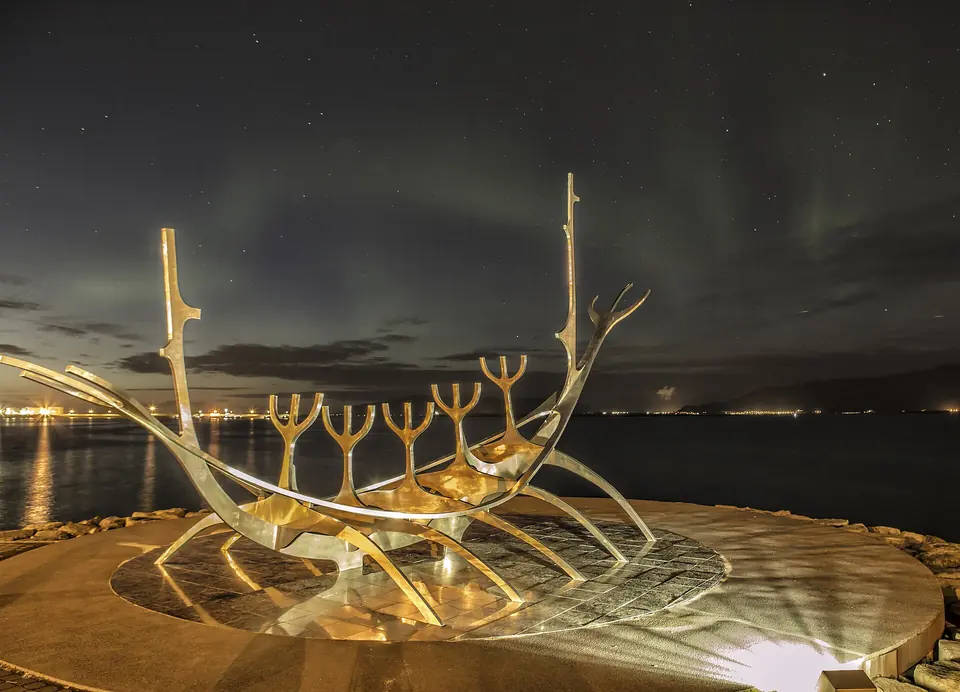
Jón Gunnar Árnason's 1990 steel sculpture is often mistaken for a Viking ship; it's actually an ode to the sun, a dream-boat of light. Set on the waterfront promenade, it frames Mount Esja across the water — the most photographed silhouette in the city, best at midnight sun or winter dawn.
© Ray Swi-hymn from Sijhih-Taipei, Taiwan · CC BY-SA 2.0 Perlan
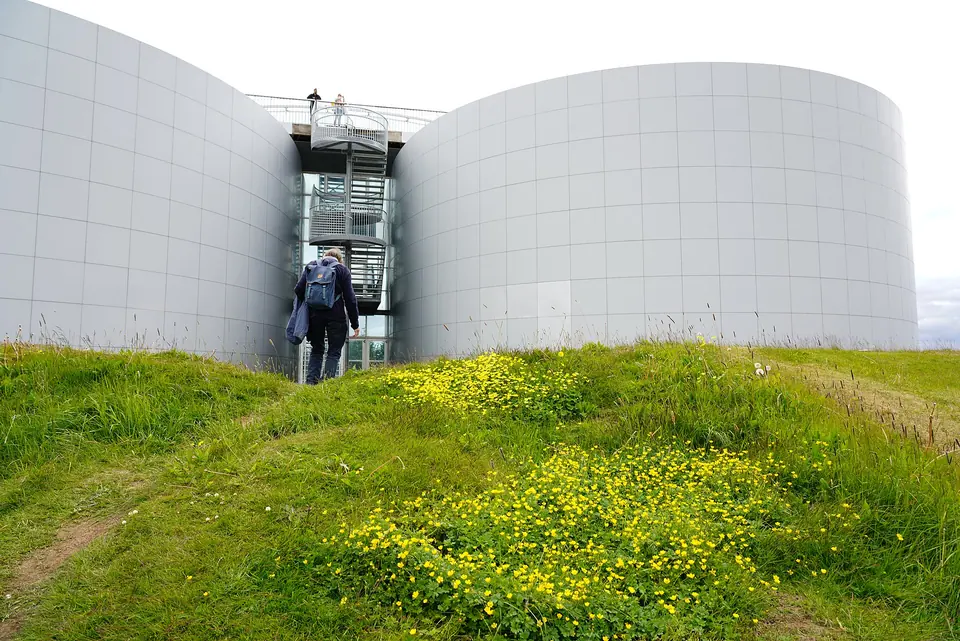
Five giant hot-water tanks built in 1988, crowned with a glass dome — Reykjavík's most unlikely landmark. Inside: a real ice cave, a planetarium, and the 'Wonders of Iceland' exhibition. The observation deck gives a 360-degree read of a city with nowhere to hide.
© Ivan Sabljak · CC BY-SA 3.0 Þingvellir National Park
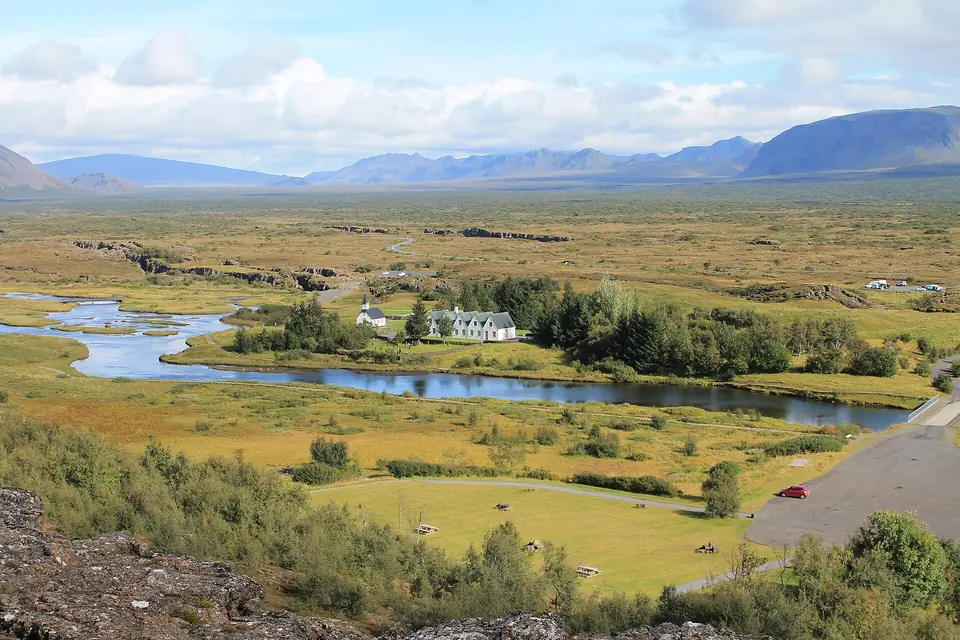
Forty minutes from the city, this rift valley is where the Alþingi — the world's oldest surviving parliament — met outdoors from 930 AD. You can walk between the North American and Eurasian tectonic plates, which drift two centimetres further apart every year.
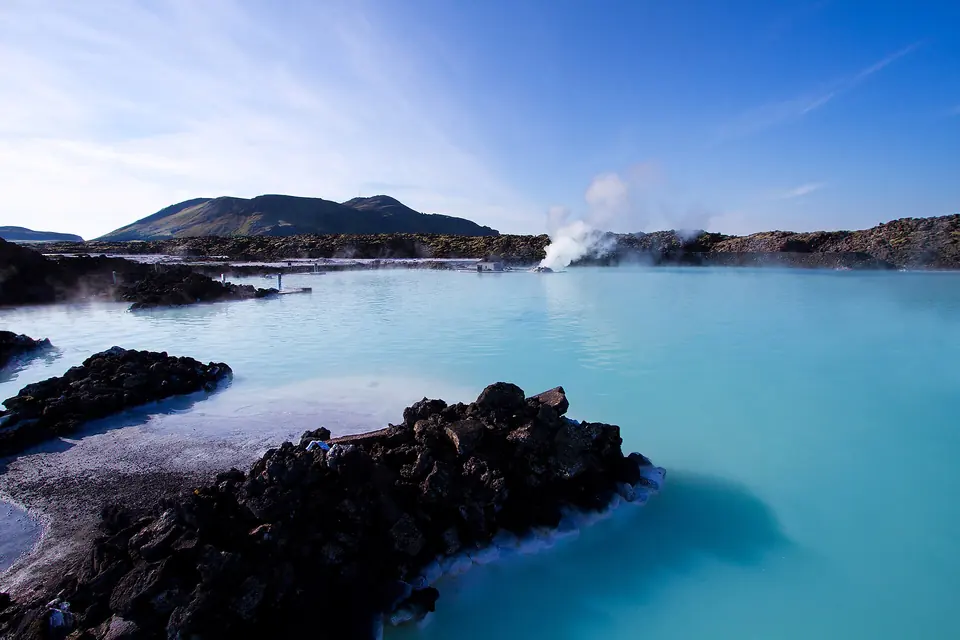
© Frank Denney frnkdnny · CC0 Blue Lagoon
The milky-blue lagoon at Grindavík, forty minutes southwest, began as runoff from the Svartsengi power plant in 1976 — workers noticed the silica-rich water healed their psoriasis. Now it's Iceland's most-visited spa: 39-degree water, silica face masks, and steam rising off black lava fields.
Official visitor resources
Official tourism boards and visitor bureaus.