
Rio squeezes mountains, rainforest and ocean into one spectacular city. Ride up Sugarloaf Mountain, see Christ the Redeemer above the clouds, spend lazy afternoons on Ipanema and Copacabana and dance to samba in Lapa.
Good to know
- Best time to go
- April, May, June, August, September and October
- Flight from New York
- about 9h 50m nonstop
- Local time
- —
- Currency
- Brazilian Real (BRL)
- Languages
- Portuguese
Flight time is an estimate based on distance; actual schedules vary by airline and route.
Highlights
- Christ the Redeemer and Sugarloaf
- Ipanema and Copacabana beaches
- Samba nights in Lapa
History
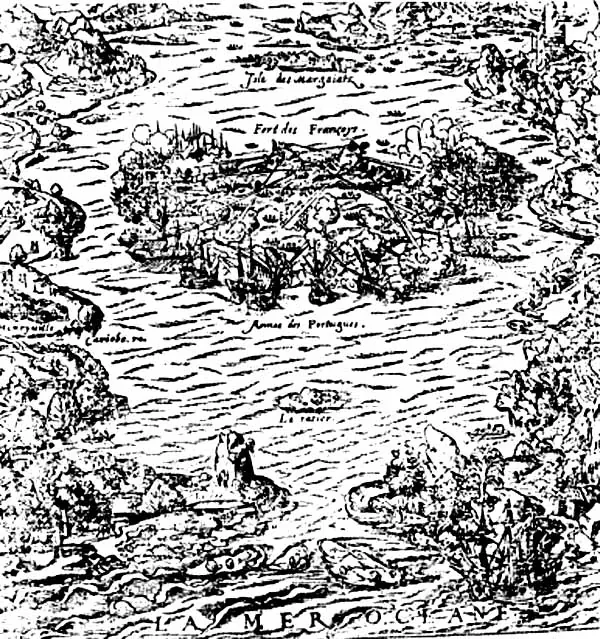
Portuguese navigators sailed into Guanabara Bay in January 1502 and, mistaking it for a river mouth, named it 'River of January'. The city was founded in 1565 after the Portuguese drove out a French colony. Gold and diamonds from the interior flowed through its port in the eighteenth century, as did hundreds of thousands of enslaved Africans; the Valongo Wharf, a UNESCO site, was one of the largest slave ports in the Americas. In 1808 the Portuguese royal family fled Napoleon and moved its court to Rio, making it the only European capital ever located in the Americas. Rio remained Brazil's capital until Brasília replaced it in 1960, and hosted the Olympic Games in 2016.
Culture
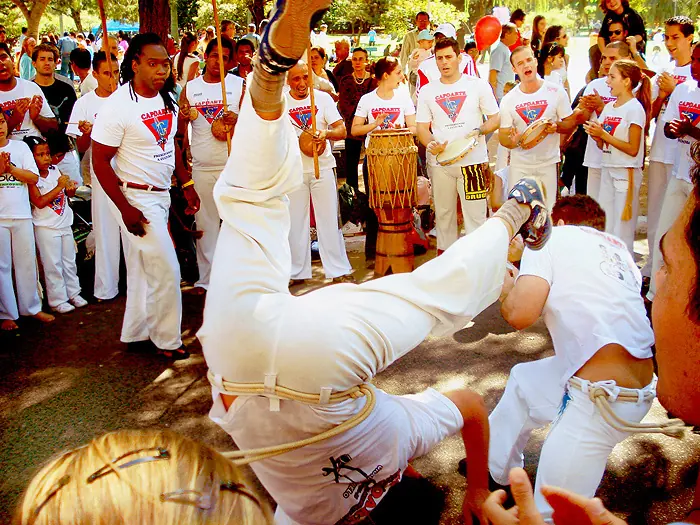
Cariocas, as Rio's people are known, live in flip-flops and plan their days around the beach, which is everyone's backyard. Football on the sand, volleyball played with the feet (futevôlei) and a coconut to drink are daily rituals. Samba, bossa nova (born in Ipanema) and funk carioca are the city's soundtrack. Carnival, in the days before Lent, brings parades in the Sambadrome and hundreds of free street parties called blocos. Feijoada, a black bean and pork stew, is the traditional Saturday lunch.
Landmarks
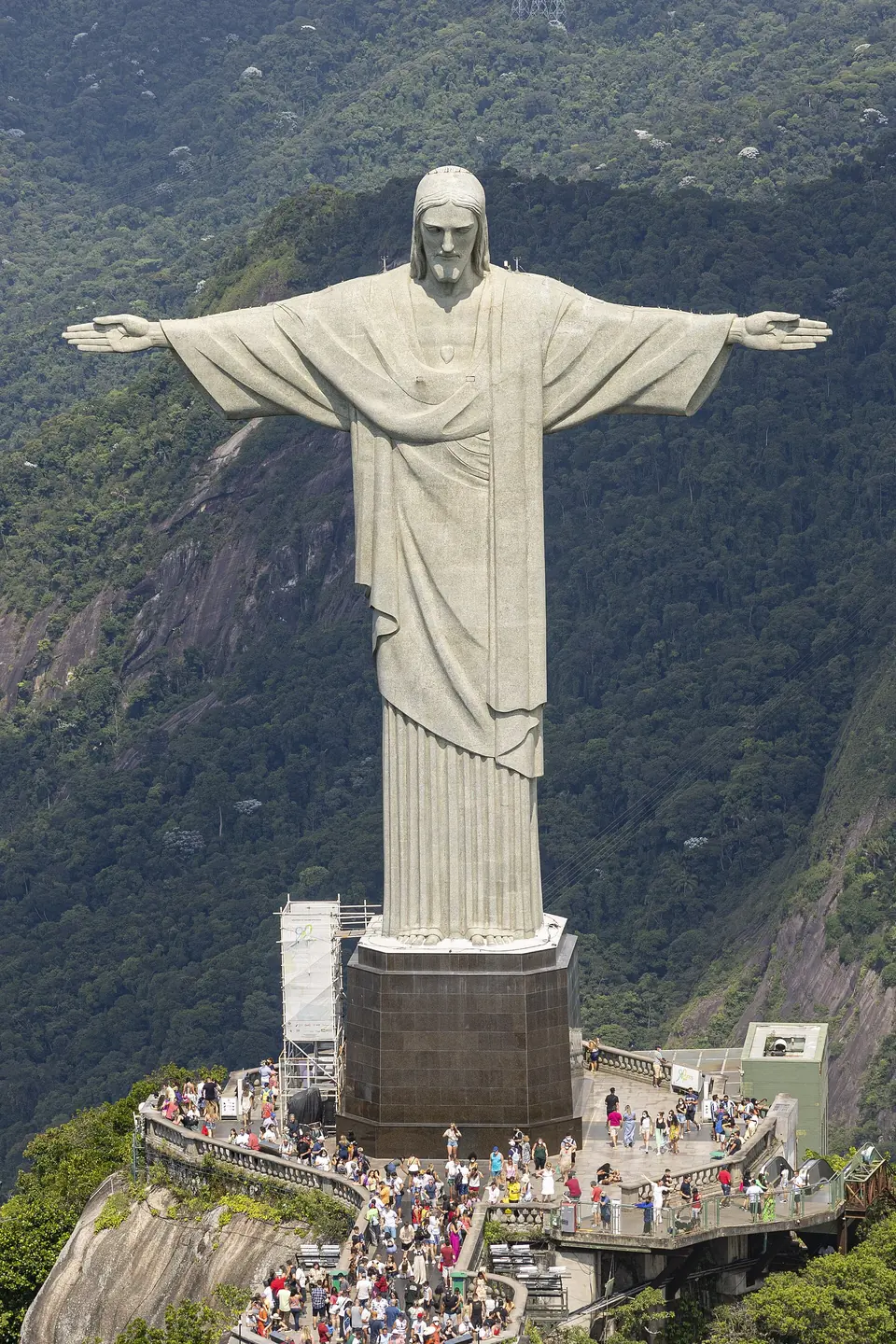
© Arne Müseler · CC BY-SA 3.0 de Christ the Redeemer
Completed in 1931 on the summit of Corcovado mountain, the 30-metre Art Deco statue looks over the city with open arms. Reach it by cog train through Tijuca Forest, one of the largest urban forests in the world.

© Arne Müseler · CC BY-SA 3.0 de Sugarloaf Mountain
Two cable cars climb to the top of this granite peak at the mouth of Guanabara Bay. Go in late afternoon to watch the sun set over the city, its beaches and Christ the Redeemer.
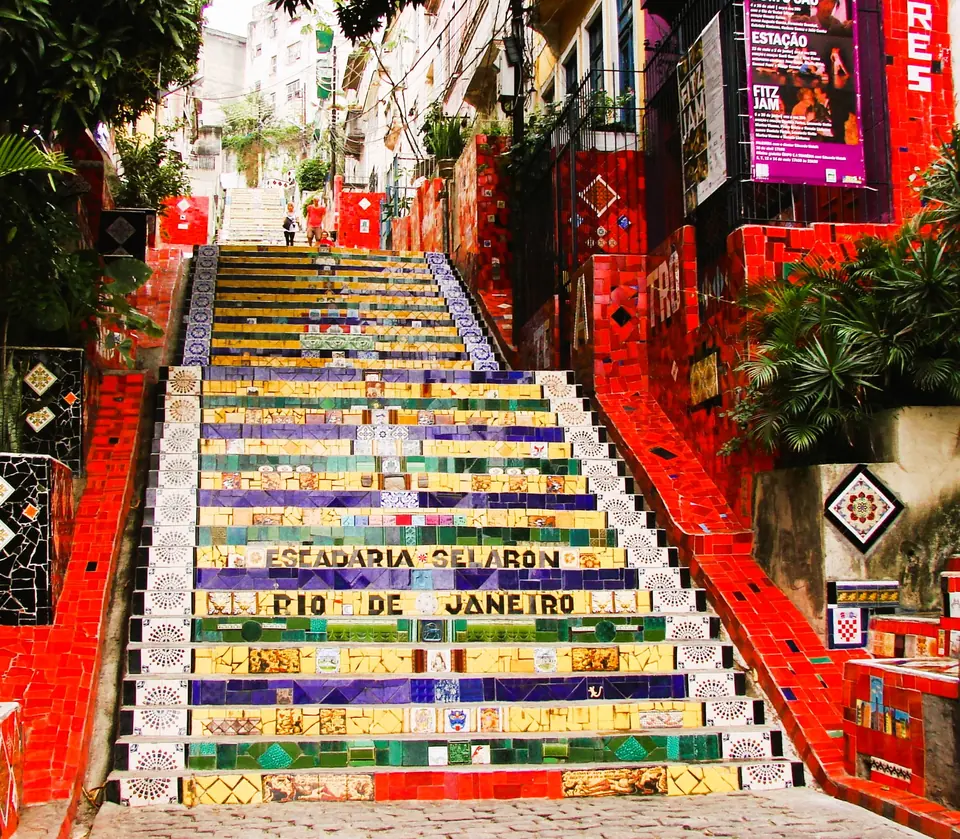
© Marshallhenrie · CC BY-SA 4.0 Selarón Steps
Chilean-born artist Jorge Selarón covered these 215 steps between Lapa and Santa Teresa with more than two thousand colourful tiles collected from around the world, a project he worked on for over twenty years.