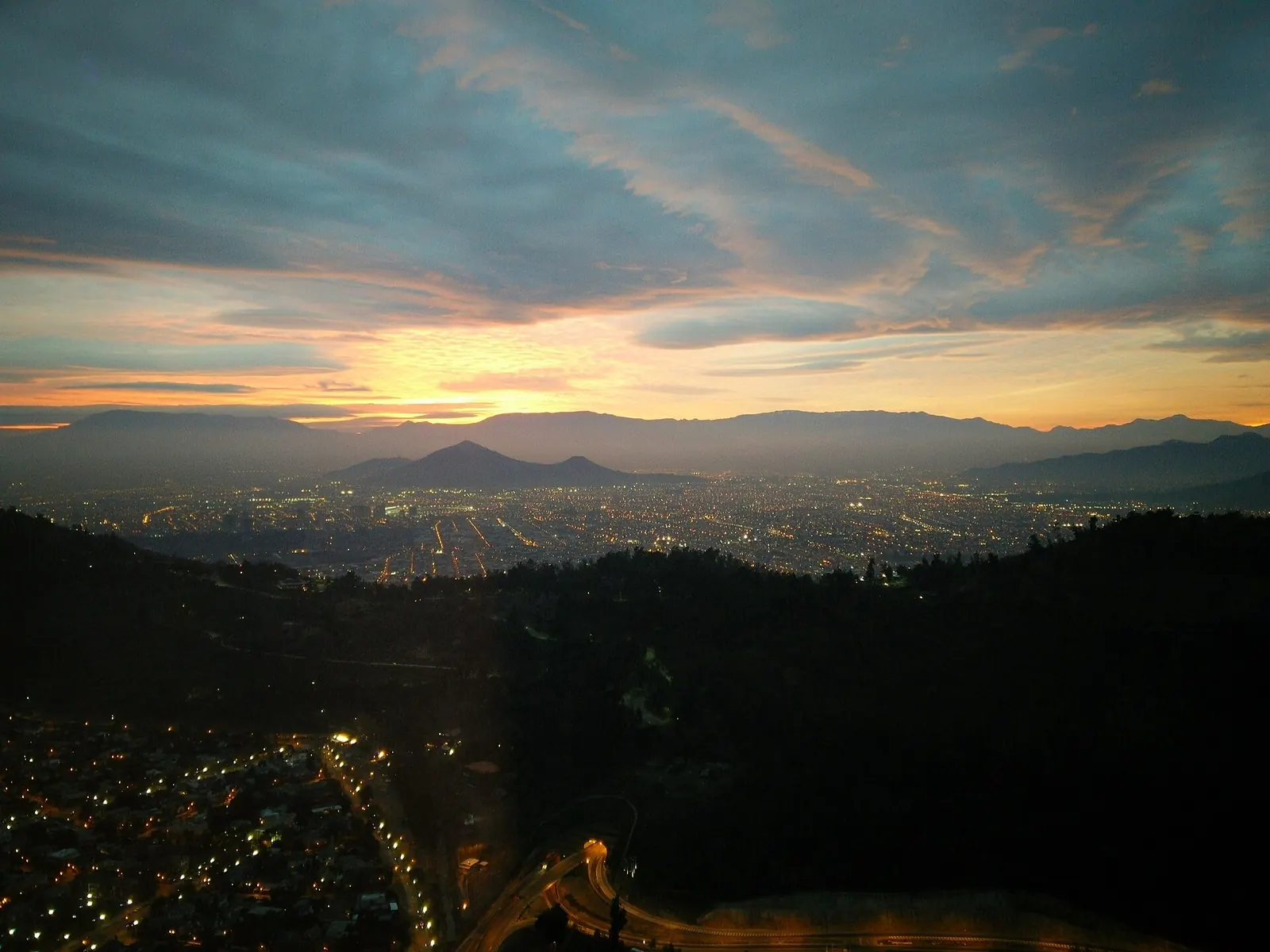
Santiago sits in a valley with the Andes rising right behind it. Ride the funicular up San Cristóbal Hill, explore the museums and markets of the centre, taste wine in the Maipo and Casablanca valleys, and ski or hike in the mountains an hour away.
Good to know
- Best time to go
- October, November, December, January, February, March and April
- Flight from New York
- about 10h 25m nonstop
- Local time
- —
- Currency
- Chilean Peso (CLP)
- Languages
- Spanish
Flight time is an estimate based on distance; actual schedules vary by airline and route.
Highlights
- Andes views from San Cristóbal Hill
- Wine valley day trips
- Day trips to colourful Valparaíso
History

The Spanish conquistador Pedro de Valdivia founded Santiago in 1541 in the valley of the Mapocho river, land then part of the Inca sphere and home to Mapuche and other peoples who fiercely resisted Spanish rule. The city grew slowly, often rebuilt after earthquakes. Chile declared independence in 1818 after the Battle of Maipú, led by Bernardo O'Higgins and José de San Martín. Mining wealth, especially copper and nitrates, fuelled growth in the nineteenth and twentieth centuries. In 1973 a military coup led by Augusto Pinochet overthrew the elected president Salvador Allende, beginning a seventeen-year dictatorship; the Museum of Memory and Human Rights now tells this story. Democracy returned in 1990, and Santiago has grown into one of Latin America's most modern cities.
Culture

Santiaguinos work hard and socialise over long lunches and late dinners. Onces, an early-evening snack of bread, avocado, cheese and tea, is a cherished habit. Chilean wine, especially Carménère, is world-famous and affordable. Try empanadas de pino (beef, onion, egg and olive), pastel de choclo (a corn pie) and seafood at the Mercado Central. The cueca, Chile's national dance, is performed with handkerchiefs during the Fiestas Patrias in September.
Landmarks

© Carlos yo · CC BY-SA 4.0 San Cristóbal Hill
A funicular and cable car climb this hill in Santiago's Metropolitan Park, topped by a large statue of the Virgin Mary. On a clear day you can see the whole city with the Andes behind it.

© Apincheira · CC BY-SA 3.0 Plaza de Armas
The city's historic main square, laid out by Valdivia in 1541, is surrounded by the Metropolitan Cathedral, the Central Post Office and the National History Museum. Chess players and street performers gather here daily.

© Carlos Figueroa Rojas · CC BY-SA 4.0 Valparaíso
About ninety minutes from Santiago, this port city is famous for its colourful hillside houses, old funicular elevators and street art. Its historic quarter is a UNESCO World Heritage Site, and Pablo Neruda's house is open to visitors.