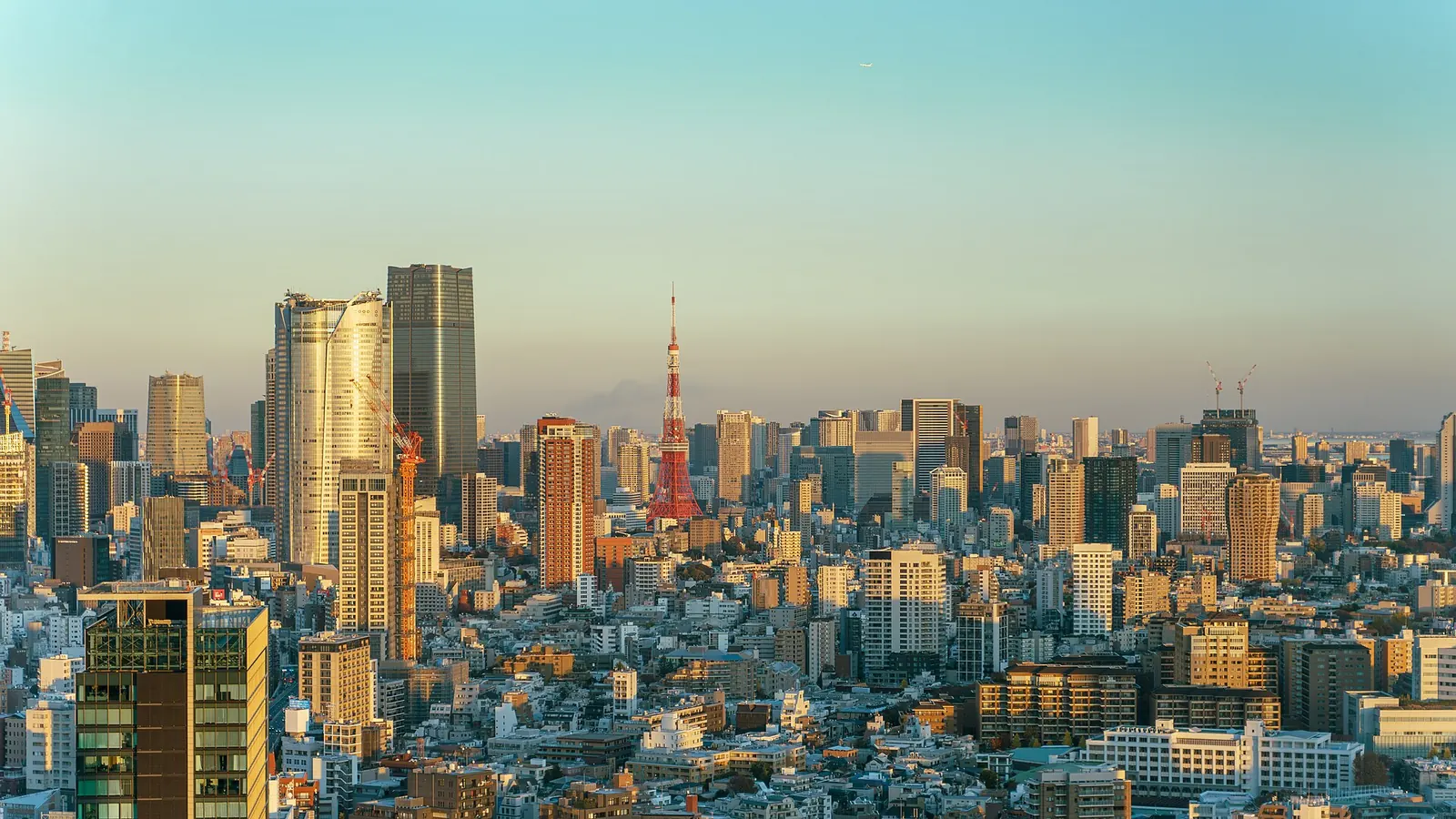
Tokyo moves between calm and electric in a few steps: shrine gardens beside busy crossings, tiny counters serving exceptional meals, and efficient trains linking it all.
Good to know
- Best time to go
- March, April, May, October and November
- Flight from New York
- about 13h 35m nonstop
- Local time
- —
- Currency
- Japanese Yen (JPY)
- Languages
- Japanese
Flight time is an estimate based on distance; actual schedules vary by airline and route.
Highlights
- Shrine and temple gardens
- Food halls and small counters
- Day trips by rail
History
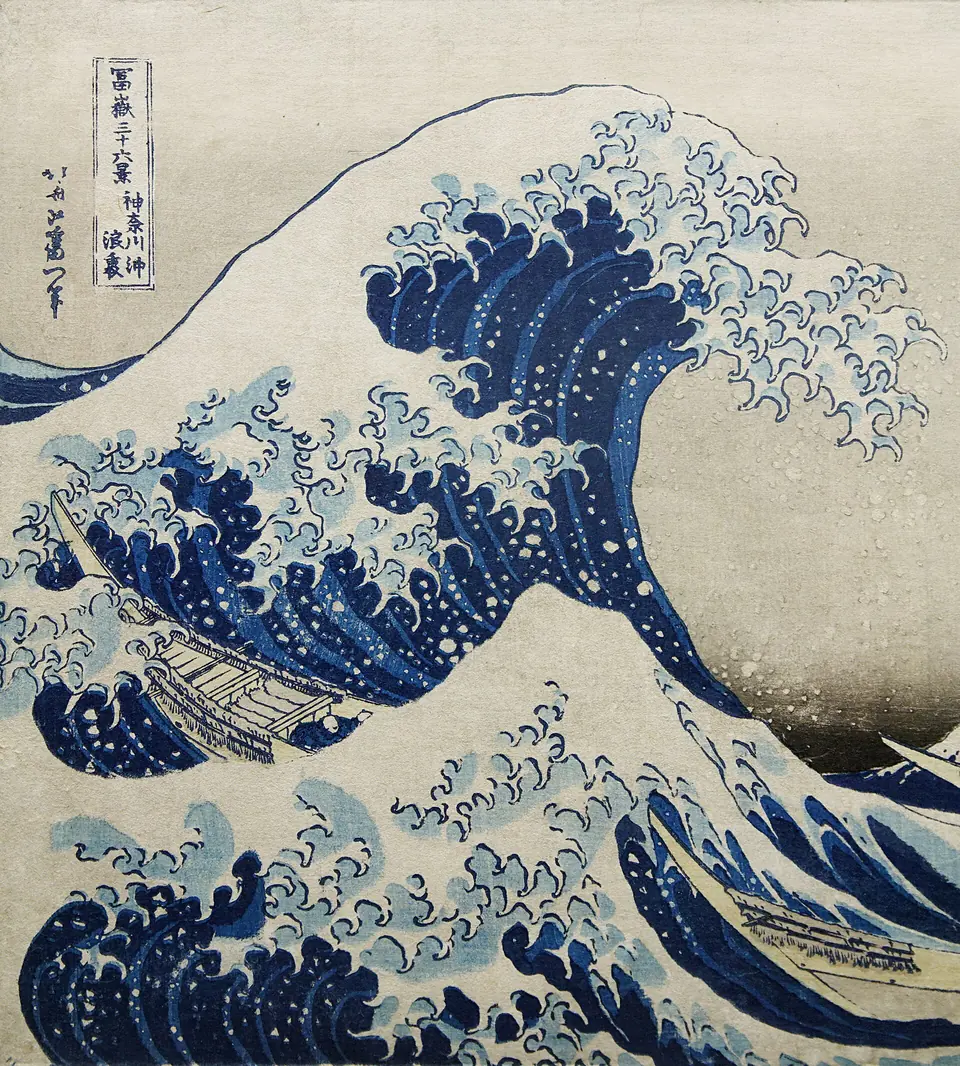
In 1457, the warlord Ōta Dōkan built a modest castle on a bluff above Edo Bay — a fishing village of little consequence. Everything changed in 1603, when Tokugawa Ieyasu made Edo the seat of his shogunate. His successors compelled regional lords to keep residences in the city, and Edo swelled: by the early 1700s it held roughly a million people, likely the largest city on earth. Woodblock prints, kabuki, and a pleasure-quarter culture flourished behind its moats. The Meiji Restoration of 1868 toppled the shogunate; the young emperor moved into the castle and Edo was renamed Tokyo — 'eastern capital.' What followed was a deliberate sprint into modernity: railways, brick ministries, gaslight. The 1923 Great Kantō earthquake flattened most of the city; American firebombing in March 1945 did it again. Each time Tokyo rebuilt itself denser and stranger. The 1964 Olympics announced its return, the Shinkansen its velocity. Walk it today and the layers press against each other — a 17th-century shrine wedged between towers, a shitamachi alley of wooden houses two streets from a glass canyon.
Culture
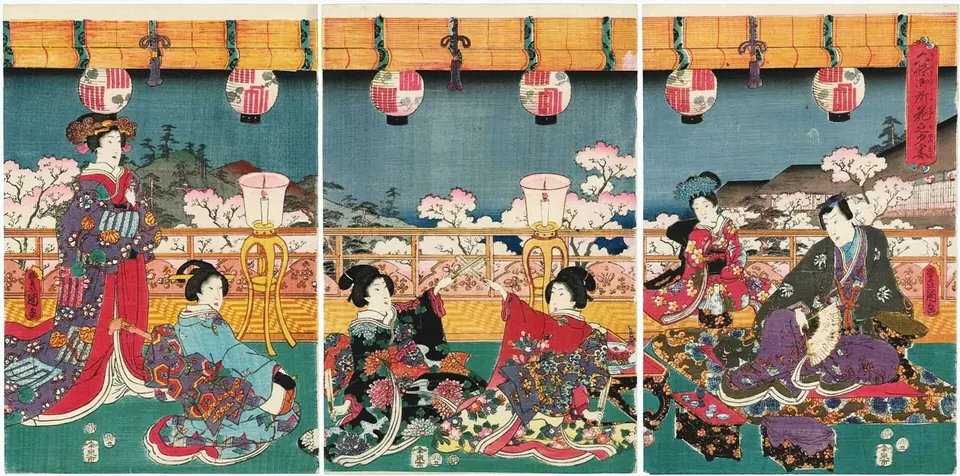
Tokyo runs on small rituals performed at scale. Mornings begin at the kissaten — old coffee houses where toast sets arrive thick-cut and the master has poured the same way for forty years — or standing at a tachigui soba counter, eaten in six minutes flat. Lunch is a science: office workers queue twenty deep for a twelve-seat ramen shop, because the queue is the review. Evenings belong to the izakaya, where beer arrives with a small dish you didn't order and the day loosens its tie. Food is everywhere and taken seriously at every price: basement depachika food halls gleam like jewelry counters; convenience-store onigiri are engineered to a standard most restaurants would envy. Neighborhoods keep their own weather — Shimokitazawa's theater kids and vintage racks, Kōenji's punk bars, Yanaka's old-town quiet where cats outnumber cars. The city marks time by seasons: cherry blossoms in Ueno, summer matsuri drums, autumn maples at Rikugien, the first snow on shrine roofs. What locals prize, above all, is the doing-well of small things.
Landmarks
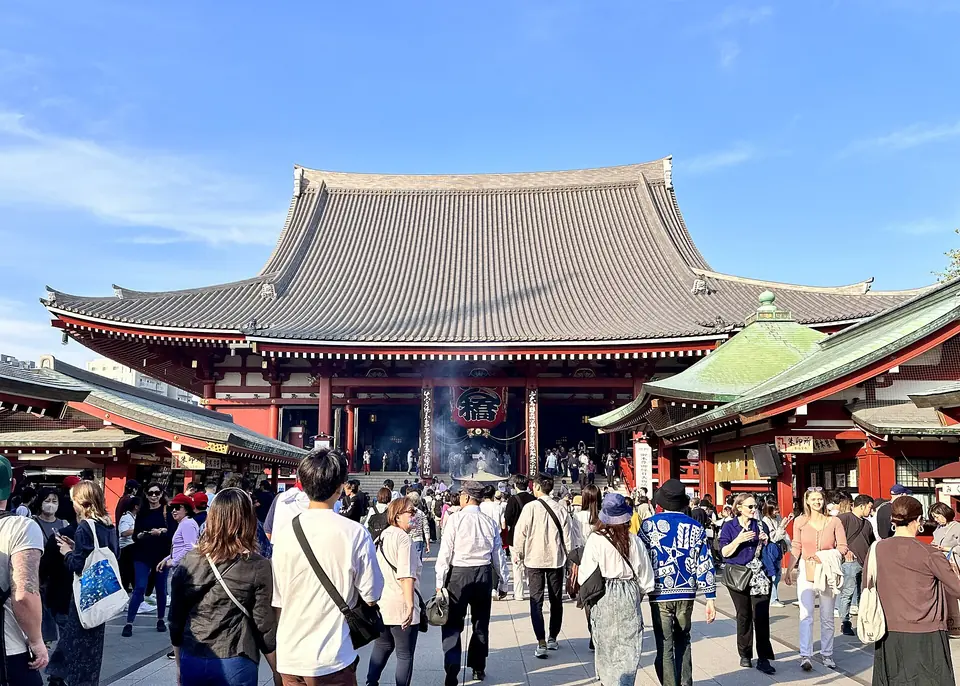
© Akonnchiroll · CC0 Sensō-ji, Asakusa
Tokyo's oldest temple, founded in 628 when two fishermen pulled a statue of Kannon from the Sumida River. The great Kaminarimon lantern — four meters of paper and bamboo — marks the entrance to Nakamise-dōri, a shopping street serving pilgrims for centuries. Burned in the 1945 air raids and rebuilt in the 1950s, it is Tokyo's living room as much as its shrine.
© Akonnchiroll · CC BY-SA 4.0 Meiji Jingū
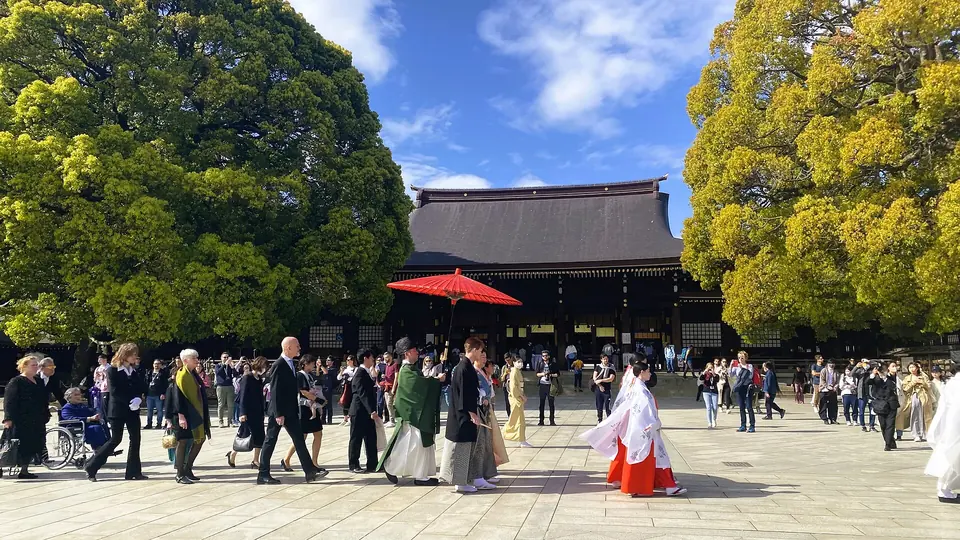
Completed in 1920 for Emperor Meiji and Empress Shōken, this Shinto shrine sits inside a forest of 100,000 trees planted by volunteers from across Japan. Step through the towering torii off Harajuku's noise and the city simply stops. On New Year's Day three million visitors pass through — Japan's most-visited hatsumōde.
© Kakidai · CC BY-SA 3.0 Tokyo Skytree
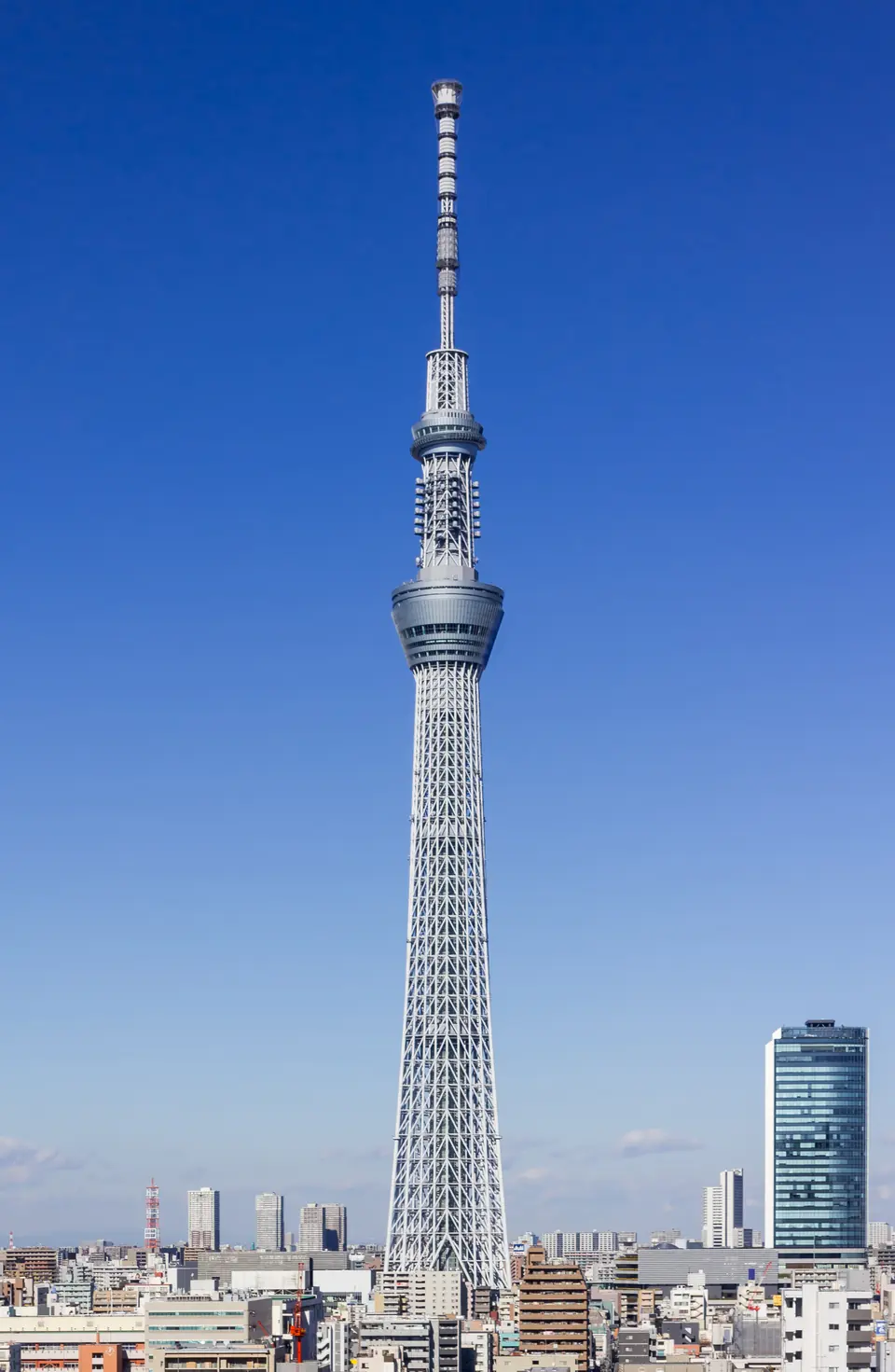
At 634 meters, the world's tallest tower, completed in 2012 as the city's digital broadcast mast. Its earthquake resistance borrows from five-story pagodas: a central concrete shinbashira column that sways independently of the outer steel. The number 634 can be read as 'Mu-sa-shi,' the old province name.
© Kakidai · CC BY-SA 3.0 Imperial Palace East Gardens
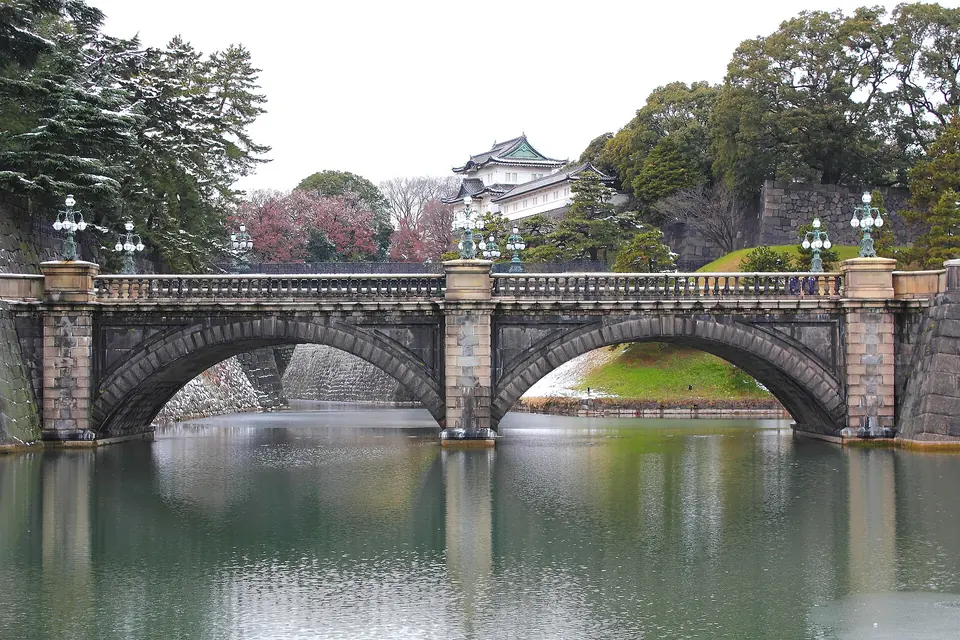
The grounds of Edo Castle, seat of the Tokugawa shoguns for 260 years. Almost nothing of the castle survives above the foundation stones — the main keep burned in 1657 and was never rebuilt — but the massive moats, gates, and stone walls remain, free to wander. The quietest history lesson in central Tokyo.
© David Kernan · CC BY 4.0 Shibuya Crossing
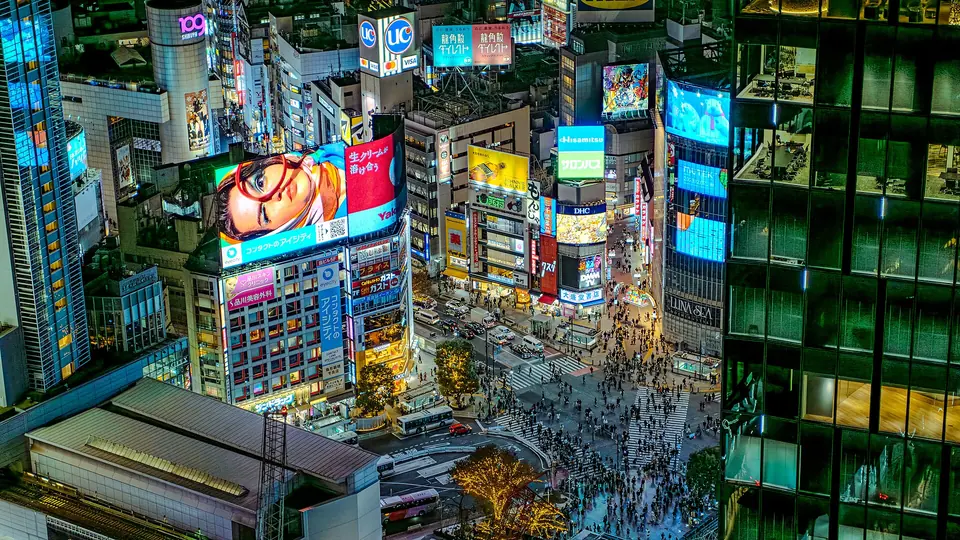
Up to 3,000 people cross at each light change, from five directions at once — the busiest pedestrian scramble on the planet. It has become Tokyo's unofficial emblem: the ordered chaos of the city made visible. The bronze Hachikō statue by the station honors the Akita dog who waited for his master here daily from 1925 to 1935.
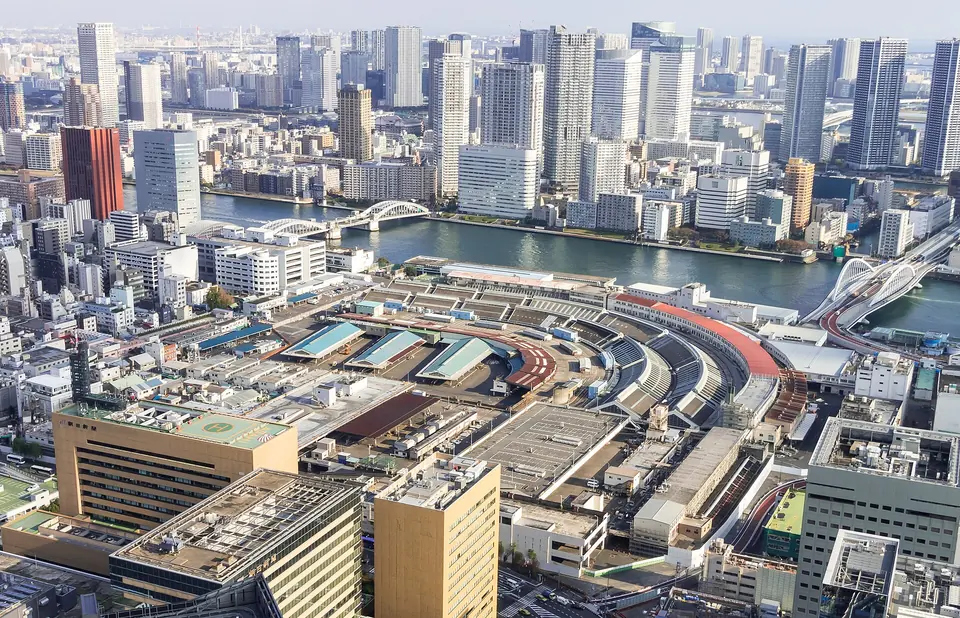
© Kakidai · CC BY-SA 4.0 Tsukiji Outer Market
When the inner wholesale market moved to Toyosu in 2018, the outer market stayed: four hundred stalls and tiny restaurants along narrow lanes, doing what they've done for generations. Come hungry and graze — tamagoyaki on sticks, sea-urchin rice bowls, knife shops older than the market's fame.
Official visitor resources
Official tourism boards and visitor bureaus.